Yes, I read their reply and remain unconvinced by their analysis. We can all quote mine (which is what I suspect you are doing) but you need to put their whole analysis under scrutinty, and when you do, it is not a robust one. For example, they didn't make a convincing response Schimmack and Carlsson either. I'm sorry this doesn't agree with what you are trying to suggest.
And again, this paper only addresses police shootings in 2015 not other use-of-force killings that are widely documented (Freddie Gray, George Floyd, Eric Garner).
And again: they are simply wrong, as shown convincingly here:
https://replicationindex.com/2019/1...vilians-a-coding-error-in-johnson-et-al-2019/
And here:
https://replicationindex.files.word...ce.shootings.commentary.500.word_.version.pdf
Since you like to quote mine, I'll make it easy for you:
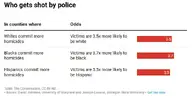
In 2019, Johnson, Tress, Burke, Taylor, and Cesario published an article on racial disparities in fatal shootings by police officers in PNAS (2). Their publication became the topic of a heated exchange in the Oversight Hearing on Policing Practices in the House Committee on the Judiciary on September 19, 2019. Heather Mac Donald cited the article as evidence that there is no racial disparity in fatal police shootings. Based on the article, she also claimed “In fact, black civilians are shot less, compared with whites, than their rates of violent crime would predict” (3). Immediately after her testimony, Phillip Atiba Goff challenged her claims and pointed out that the article had been criticized (4). In a rebuttal, Heather MacDonald cited Johnson from the authors response that the authors stand by their finding (5). Here we show that the authors’ conclusions are based on a statistical error in their analyses.
It is widely known that PNAS "direct submissions" are not always peer-reviewed. This is stated on their website. The authors do not thank anonymous reviewers as is standard practice. Also, the article sat on the psyarchiv preprint server where it garnered feedback from Knox and Mummulo, but their critique wasn't corrected in the final publication suggesting that it wasn't sent out for peer-review. You can email the lead author, Johnson, and ask him if his paper was sent out for anonymous peer review.
Nope. The central issue is that if you are involved in a use-of-force arrest are you more likely to die because of the color of your skin? That black people commit more violent crimes (as you love to point out) is thus figured into the studies on racial bias. If more black people commit crimes, then they are more likely to be arrested (i.e., arrest rates are higher) and then--and this is the central issue--are black people, when arrested, more likely to die at the hands of police than non-blacks. The answer is yes, and this is documented in numerous studies, which...erm, uh, I shouldn't have to point out to you because you apparently read the peer-reviewed literature (<--though no one, including you, actually believes that).