

Read the last sentence.He's white and was always hugely privileged.
Anyone who is black?
Read the last sentence.He's white and was always hugely privileged.
Anyone who is black?

Yes mistakes were made in the past, and we need to remember these mistakes, and not just form the opinion that we don't like that anymore get rid of it.
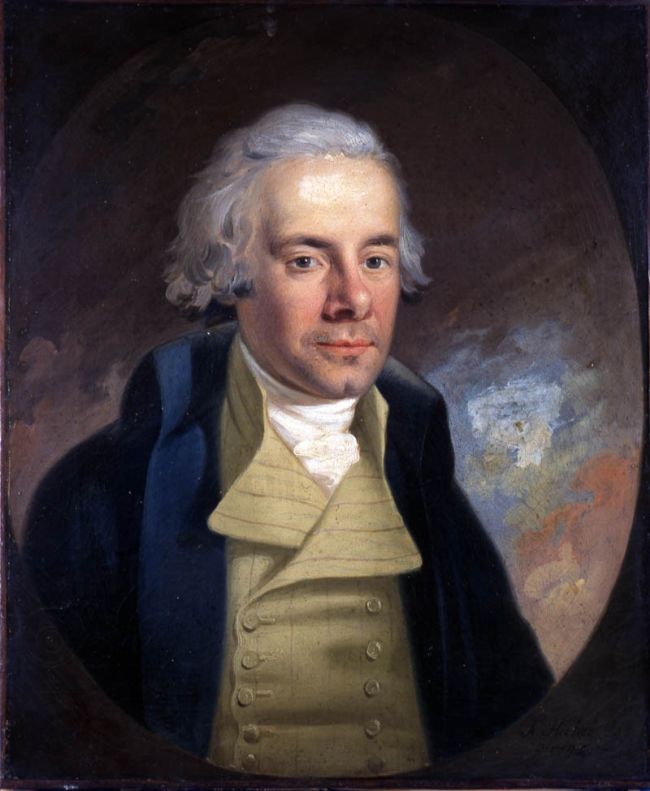
William Wilberforce - Wikipedia
en.wikipedia.org
He does already have a statue in Hull for the record. But one of the many people who fought for the abolition of slavery.
Although, in the spirit of things, maybe notable ex-slaves who also fought against the slave trade. I'll be honest and say that's something I am still learning about myself!


The issue with that is you've got to be interested in learning about slavery in the first place in order to visit the museum. The people going to the museum don't really need the statues, because they'll learn from the other exhibits there. Where the statues - theoretically at least - offer a learning opportunity is that they can just be seen by anybody who happens to walk past them.So much to unpack in this thread... lol
This week has been a real eye opener to see that there are people that will put more energy into leaping to the defense of the statues of 18th century slave traders than they would to defend the rights of people with darker skin pigment than them. Very telling.
A big one is the argument surrounding 'education' i.e. leave the statues up for people to learn about who these people are.
We have a very strange relationship with education here in the UK in regards to the darker parts of our history. I can't speak for today's curriculum, but I know large swathes of our past were completely overlooked in my school history lessons.
The British Empire was built on the bodies of the indigenous people we massacred to 'spread civilisation' and funded by the resources we looted from those countries and the local people who were sold into slavery.
I mean, it's a pretty big thing to overlook, isn't it?
I'd like to think we are going some way to rectify that. Here in Liverpool especially. I mean the whole city was practically built on the vast riches that the slave trade brought in. The International Slavery Museum is a fantastic resource for learning and I urge anyone who hasn't been before, to do so if you get the opportunity (When the place opens back up obviously)
If you really believe leaving these statues and effigies as a tool for learning, I think this is a far more appropriate setting for them.
Maybe replace the plinths with statues of the people who fought hard to end slavery. The educational value remains, we don't shy away from our past, but instead use it to highlight those that sought to change it rather than glorify those who profited from it.
As unpopular as it seems to be to most people.
21st century humans are judging history from hundreds of years ago with the same standard as it is today and finding offence.
The problem is not history , it's people today. They can't grasp that things were different in the past and as such, want to write a different narrative without considering all the facts.
We can educate and learn from it but by changing it , we are in danger of forgetting our roots for a new manufactured one influenced by people who can't grasp the reality of it.
Perhaps people should educate themselves beyond Google and Facebook posts and embrace history whilst understanding why it may not all be great. We can't change the past , after all, just being English attributes us to some horrendous crimes.
I'm talking about the swathes of people descending on the statues to defend them, who wouldn't lift a finger to support the anti-racism protests.
It's not outrageous - it's the truth.

William Wilberforce 'condoned slavery', Colonial Office papers reveal
Papers reveal that slavery in Sierra Leone – the colony established by Wilberforce – continued long after 1807, with the social reformer's full knowledgewww.theguardian.com
You'll be hard pressed to find many completely stain free from that era.
Which is of course the point.

What was the statue teaching anybody? What lesson did you learn from it?
Do we have to keep everything we don't like?
William Wilberforce 'condoned slavery', Colonial Office papers reveal
Papers reveal that slavery in Sierra Leone – the colony established by Wilberforce – continued long after 1807, with the social reformer's full knowledge
You'll be hard pressed to find many completely stain free from that era.
Which is of course the point.
Bingo.
In time, we'd be pulling his statue down. To be honest, putting one up now would be appalling for some;
He wrote to one woman friend to urge her to adhere to 'the submissive, obedient demeanour which certainly should distinguish the wife towards her husband'.
He wanted the poor to know 'that their more lowly path has been allotted to them by the hand of God'.
"Wilberforce believed that government was best left to the propertied and educated, so he was always uncomfortable with mass expressions of political opinion"
"William Wilberforce and his supporters permitted slave labour in Sierra Leone"
Let's do away with statues of any of them, then
Bingo.
In time, we'd be pulling his statue down. To be honest, putting one up now would be appalling for some;
He wrote to one woman friend to urge her to adhere to 'the submissive, obedient demeanour which certainly should distinguish the wife towards her husband'.
He wanted the poor to know 'that their more lowly path has been allotted to them by the hand of God'.
"Wilberforce believed that government was best left to the propertied and educated, so he was always uncomfortable with mass expressions of political opinion"
"William Wilberforce and his supporters permitted slave labour in Sierra Leone"

And this proves my point.Pretty patronising to suggest that those people marching here and around the world, many of them black people who have identities forged in centuries of oppression don't understand history or how it works. I'm pretty sure they know full well how it does and that having a massive statue of someone who ensalved your ancestors in the centre of your 21st Century city is unlikely to help people move on

Maybe replace the plinths with statues of the people who fought hard to end slavery. The educational value remains, we don't shy away from our past, but instead use it to highlight those that sought to change it rather than glorify those who profited from it.
Or understand the context of why they are in situ in the first place and use them as educational tools.
Which ironically is of course why so many people know about Rhodes now of course - because the statue stimulating conversation.
Join the Everton conversation today.
Fewer ads, full access, completely free.