Current Affairs Israel is an apartheid state

Status
Not open for further replies.
Dail Eireann passed a resolution yesterday that Israeli settlements of Palestinian land is a de facto annexation.

Its drawn the anticipated response from Israel but it might prove a watershed moment for EU nations. I do note that every other EU nation and the UK either voted agaisnt or abstained in the UNHRC condemning Israeli aggression today.

I'm quite proud of our parliament for doing this. The Irish foreign department (and Irish diplomatic core) are usually fairly adept at reading the room so I'd be suprised if this isnt a sentiment that isnt repeated in other national parliaments.
 
An interesting listen from a Jewish guy. It's the Russel Brand podcast but he isn't who is speaking as I know he isn't very popular lol

 
Dail Eireann passed a resolution yesterday that Israeli settlements of Palestinian land is a de facto annexation.

Its drawn the anticipated response from Israel but it might prove a watershed moment for EU nations. I do note that every other EU nation and the UK either voted agaisnt or abstained in the UNHRC condemning Israeli aggression today.

I'm quite proud of our parliament for doing this. The Irish foreign department (and Irish diplomatic core) are usually fairly adept at reading the room so I'd be suprised if this isnt a sentiment that isnt repeated in other national parliaments.
Unfortunately I don’t think it will have any impact.

Israel only answers to the US and no US president will ever publicly slap them down over an issue such as this.

Israel will continue to settle Palestinian land, the world will shake its fists but nothing more.
 
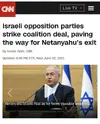
Couldn’t be happier with this news. Netanyahu’s rivals struck a deal to replace him as Israel’s prime minister, potentially ending his 12-year run in power.

1730D9E5-6195-48E2-9FD0-1DE4502B843F.jpeg
 
Last edited:
Couldn’t be happier with this news. Netanyahu’s rivals struck a deal to replace him as Israel’s prime minister, potentially ending his 12-year run in power.

View attachment 129255
Not over until the new government is sworn in, which could take 1 -2 weeks.

8 party coalition giving a 1 seat majority, with the parties ranging from the far right to the left, with an Islamist Arab party as well - not sure how long a government like that can last!

Incredibly brave decision by the leader of the Islamist party - the first Arab party to be part of government - which has seen him receive criticism and threats from the right and from the Arab communities (and from Hamas and the PA). He's received many promises from the coalition which will help the Arab communities - they have to be fulfilled.

aaaa.webp

Yair Lapid (leader of the coalition), Naftali Bennett (would be PM), Mansour Abbas (leader of Islamist party, Ra'am)
 
Not over until the new government is sworn in, which could take 1 -2 weeks.

8 party coalition giving a 1 seat majority, with the parties ranging from the far right to the left, with an Islamist Arab party as well - not sure how long a government like that can last!

Incredibly brave decision by the leader of the Islamist party - the first Arab party to be part of government - which has seen him receive criticism and threats from the right and from the Arab communities (and from Hamas and the PA). He's received many promises from the coalition which will help the Arab communities - they have to be fulfilled.

View attachment 129282

Yair Lapid (leader of the coalition), Naftali Bennett (would be PM), Mansour Abbas (leader of Islamist party, Ra'am)
You are right, this coalition is holding by a very thin thread and Netanyahu is going to do everything possible to disrupt it. Holding on to power is probably his best chance to stay out of jail.

I thought it was very significant having an Islamist Arab party participating in such coalition. Speaks highly of the disdain all these political parties feel for Netanyahu, that’s what’s uniting them at the moment but their policies and vision are so different that I wouldn’t be surprised if this government really takes hold that I could crumble in no time. But at least that will mean holding new elections and hopefully one without Netanyahu!
 
You are right, this coalition is holding by a very thin thread and Netanyahu is going to do everything possible to disrupt it. Holding on to power is probably his best chance to stay out of jail.

I thought it was very significant having an Islamist Arab party participating in such coalition. Speaks highly of the disdain all these political parties feel for Netanyahu, that’s what’s uniting them at the moment but their policies and vision are so different that I wouldn’t be surprised if this government really takes hold that I could crumble in no time. But at least that will mean holding new elections and hopefully one without Netanyahu!
Yes both Netanyahu and his supporters will do anything they can to prevent the coalition taking power. This is one example:

Right-wing and national religious groups have said they plan to hold a controversial flag parade in Jerusalem’s Old City on 10th June, a few days before the new government is due to be sworn in. The original march on 10th May was rerouted away from the Muslim Quarter, but it's not clear yet whether the same will happen this time.

The march takes place every year and, to be fair, it is usually peaceful, if often unpleasant and provocative, but it's likely that this time it will be infiltrated by right-wing troublemakers. Palestinians have said it will cause "an explosion," and Hamas have described it as a provocative act and called on their supporters to go "in droves to the Al-Aqsa Mosque to protect it from the wickedness of Zionism and their schemes, and we call on our people in the West Bank to escalate the confrontation of the occupation."

It looks like clear provocation by Netanyahu’s political allies. The Jerusalem police chief is a Netanyahu appointee and the police are still under the control of loyalist Likud minister. Any trouble will strain the left-right-Arab coalition. Equally, any Hamas reaction will be problematic for Abbas and Ra'am, a scenario which will be very tempting for Hamas and the PA, who have no desire to see an Arab party joining the Israeli government.
 
The good news is that the march planned for 10th June has been cancelled, mainly due to the efforts of Benny Gantz, who is likely to retain his position as defence minister in the new government.

In response, far-right Religious Zionism MK Itamar Ben Gvir vowed to use his parliamentary immunity to march through the Muslim Quarter with Israeli flags, and called on other Knesset members to join him.

The bad news is that the Attorney General has announced that he will not interfere in the Sheikh Jarrah case on legal grounds - "in light of the many previous court proceedings on the matter over the years and in view of the factual and legal determinations made in these proceedings." Would have been more surprising if he had intervened.

He also ruled out the idea I favoured - that the government should expropriate the land with the families paying rent - on the grounds "that a similar proposal in the past by the Supreme Court had been rejected by the Palestinian residents."

This gives credence to the belief that the families' expensive PA supplied lawyers had advised them not to pay rent as that would be an acknowledgement of the legality of Jewish land ownership, be it private or governmental.

So Sheikh Jarrah could well be the first of many headaches for the new government. One possible solution could be for the government to annul the decision (certain to be against the families) on the grounds of public security. This would, at the very least, kick it into the long grass of court cases, appeals and counter-appeals, and by the end of that process Israel will, hopefully, have developed a coherent policy towards East Jerusalem, preferably one that involves a Palestinian state!
 
for the record I'll post this here, from the conspiracy thread but maybe interesting for some of yous in here:

Trump's administration attempted less reliance on middle-eastern oil by developing american pipelines. Those 4 years were arguably the quietest, most peaceful Israel/Palestine period in living memory.

A mate of mine is from Gaza (arab muslim...lives in Germany now). We regular discuss the situation...he's been in bits of late as you can imagine, he's got family there: during one call with a cousin he heard a rocket-whizz and a loud explosion, thankfully it was seemingly a block away or so. He has heard of deaths of neighbours he once knew.

He tells me the typical sentiment among the normal folk there is not one of wanting to destroy Israel at all, they want to live amongst or peacefully near their Israeli brothers: many of them have built up relationships, working & personal. He says the issue is Israeli-politik, always been the issue, and that Hamas is a natural counter-consequence of that politics. He admits Hamas stir the pot too...generally the political-sentiment to 'wipe Israel from the map' doesn't come from arab people, it comes from shitstirring politicians & religious leaders, as a response to the brutal Israeli-settlement-politik. The people are sick of it all, they have nothing against jewish folk, they just want a peaceful life.

I've heard similar sentiments from another mate who was from Jordan, back during that awful summer from around 2012-ish, where rockets were raining down constantly. And also from, of all places, fast-food chicken restaurants where all the workers are from Lebanon. With one bloke there i'd have regular chats too.

They all sound sincere, pained even when they talk about it.

Many years ago i chatted to an israeli, his angle was quite different: he supported his country's policies as it was a defence mechanism against those random suicide-bombs. He told me i can't possibly know how intense it can be unless i've been there (Tel-Aviv). He also sounded sincere, having an attitude of 'if they attack us, we defend ourselves'.

Which is also understandable.

Horrible messy situation. I asked my Gaza mate just last night if Netanyahu being ousted is a good thing, he said not really as the new guy (Bennett) is even worse: Bennett is on record saying he's personally killed arabs etc. My mate reckons the only positive is that the new guy says exactly what he thinks, he doesn't hide behind political-rhetorik. Also, on an optimistic note, that Bennett has shown signs of willingness to compromise if it means an end to conflict.

So no, there is no conspiracy to manage middle-eastern oil to protect Israel. Oil has always been about the money: US-meddling in oil there causes local strife, which in turn ups the demand for arms, which US firms happily supply. The total number of innocent lives lost, and homes destroyed, is irrelevant to those wanting to make money. There's more money to be made this way than Trump's vision of local american pipelines.

But Orange Man Bad because his pipeline would've gone under a Native American settlement.
 
Never underestimate Netanyahu.

That was a lesson I forgot with yesterday's post. Following the cancellation of the 10th June march, Bibi summoned the police chief to a meeting and demanded he provide him with a list of alternatives for the march to go ahead, and then the 'political leadership' would decide whether to allow it. That meeting is due today, but Benny Gantz and the Attorney General have insisted the alternatives are presented to the Security Cabinet rather than just to Netanyahu and his cronies, so all is not lost.

Those who, like me, condemned the nationalistic march through the Muslim Quarter as provocative, unpleasant, and, in the present climate, dangerous, should also condemn those Palestinians who are planning to congregate at the Damascus Gate on the 10th to celebrate the cancellation of the march. The usual suspects are behind the plan, which is just another attempt to stir up trouble between the communities.

The new government is due to be sworn in on Sunday.
 
for the record I'll post this here, from the conspiracy thread but maybe interesting for some of yous in here:
A lot of truth in what your mate says. Most Palestinians and Israelis just want to live normal, peaceful lives. Some Palestinians that I know reckon it would all have been settled long ago if Arafat and the PLO hadn't interfered!

Just one thing about Bennett: this will not be his government, it's Yair Lapid who has formed the government, with Bennett as PM for the first two years (hopefully), and even during that period all decisions will be taken jointly by Bennett and Lapid, who is from the centre of Israeli politics.
 
So a new Israeli government was sworn in yesterday after winning the vote of confidence by the narrowest of margins, 60-59. As that suggests, the first priority of the new government is just to survive, especially with the wily and unscrupulous Netanyahu leading the opposition and a number of potential headaches to overcome in the coming weeks. Some of these could well test the strength of the coalition.

Such a fragile government will be unable to take any major decisions and is likely to concentrate on domestic matters where there is unanimity, plus, I hope, fulfilling the pledges that have been made to the leader of the Arab party, Ra'am, Mansour Abbas. As new PM Naftali Bennett said, “No one will be asked to give up their ideology, but everyone will have to postpone the realisation of some of their dreams.”

I would expect a freeze on new settlements in the West Bank.

I'm encouraged to see that Yair Lapid has appointed himself Foreign Minister. I would expect a thawing of the frosty relationship with Jordan and closer diplomatic links with Egypt. I think there will quickly be the resumption of government-level talks with the Palestinians, frozen for over a decade under Netanyahu, with a minster, possibly left wing Issaw Frej, the Regional Cooperation Minister, travelling to Ramallah.

While there is no prospect of any negotiations with the Palestinians both the US and the Israelis have pivoted back to strengthening the Palestinian Authority, at the expense of Hamas - something that should have been done years ago. There are some measures that even this fragile government might be able to take to improve life on the West Bank in advance of any negotiations.

The most common complaint from Palestinians is the number of security checkpoints they need to pass through when travelling around the West Bank. The PA is currently fragmented into 166 non-contiguous zones, autonomous islands with no sovereign territorial connections among them. While there are some fine highways, in the main open to both communities, the newer ones have been designed to allow better connections between settlements and central Israel. To counter this and to provide greater freedom of movement, a network of roads could be built to connect the Palestinian autonomous zones and turn the fragmented and divided PA into a single, contiguous territorial unit. The roads would be classed as sovereign Palestinian territory, allowing travel throughout the West Bank without encountering a single Israeli soldier. It wouldn't be cheap, but the plans and technology are already there to do it without endangering Israel's security.

Make it easier for Palestinians to travel abroad by measures to reduce waiting times at the Allenby Bridge crossing to Jordan and allowing Palestinians to use Ben Gurion airport, via direct shuttle buses.

Allow more Palestinians to work in Israel where wages are much higher. Currently 122,000, lifting it to around 400,000 would improve the Palestinian economy, with the added bonus of more Jews and Palestinians working together.

Re-establish some of the joint committees created under the Oslo agreement - there were 26 of them at the peak of the process. The purpose of the joint committees was to establish cross-border cooperation, not to place an Israeli veto on what the Palestinians want to do, which is what essentially happened with many of them. I suggest they start with the Economic, Water, Agriculture, and Tourism committees. Israel also needs to conclude the electricity negotiations with the PA that have been dragging along for years without progress. The main high voltage grid lines in the West Bank that deliver electricity to the Palestinians should be transferred to the PA and a joint committee for electricity should be established to encourage cooperation in bringing a significant amount of solar energy to the Palestinian electricity supply.

Now that Netanyahu has gone, relations with Jordan should improve. As the other country that borders the West Bank, and with a huge Palestinian population of their own, they should be allowed/encouraged to contribute more.

None of these suggestions are new but it will require political will on both sides for any of them to happen. Some on the Israeli right will be against these measures, but equally there are some on the Palestinian side who will oppose them as well. Some Palestinian leaders and activists fear that agreeing to policies that improve the situation in the territories would only serve to legitimise the current situation. Many of them would prefer to continue suffering under Israeli military rule - without freedom of movement, economic freedoms, or the freedom to build - rather than surrender their claim to full sovereignty. Therefore it will have to be made clear that the implementation of the above plans could not be used as an impediment to an independent Palestinian state, and that in agreeing to them the Palestinians are not giving up on any aspect of their claim to statehood.

The most exciting aspect of the government though is the presence of Ra'am in the coalition. A lot of people will want them to fail, from the extreme Israeli right to Hamas, the PA and some Israeli Arabs. Some Arab countries will also not be keen on an Arab party being part of a democratically elected government, and there are those in the west, too, who will seek to underplay its relevance or call Abbas a traitor. Some of the commitments to help the various Arab communities can be implemented quickly, others will take time - let us hope that the government lasts long enough see most of them through..


Settlers shot Palestinian and mutilated his body as he lay dying​

Witnesses say Israeli settlers shot Ismail Tubasi and attacked him with sharp objects while raiding his West Bank village. No investigation was opened.​

By Basil al-Adraa and Yuval Abraham June 8, 2021
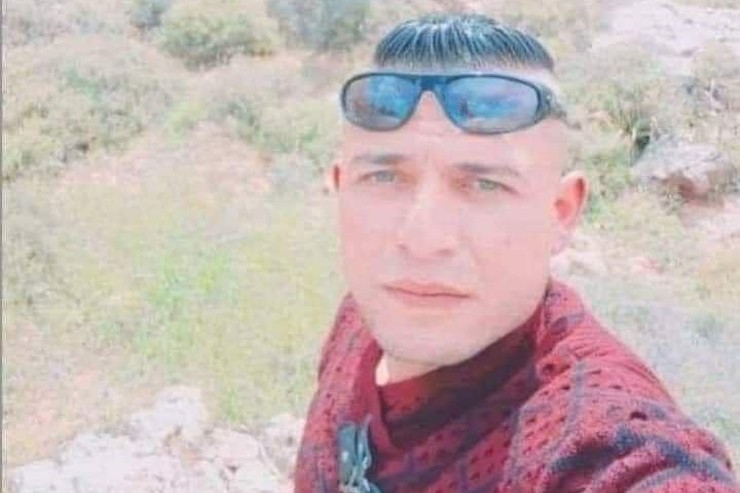
Ismail Tubasi (Courtesy of the Tubasi family)
Ismail Tubasi was shot on Friday, May 14, just south of Hebron in the occupied West Bank. Tubasi, 27, from the Palestinian village of al-Rihiya, was transferred to a local hospital with severe wounds, where he was pronounced dead.
According to evidence gathered by Local Call, it appears Tubasi was shot by Israeli settlers, who may have been accompanied by soldiers, after which he was brutally attacked with sharp objects as he lay incapacitated.
According to two witnesses, settlers shot Tubasi after they began setting fire to Palestinian-owned fields and trees in al-Rihiya. The eyewitnesses said Tubasi and other Palestinians had headed to the fields to try and put out the flames. There, settlers armed with guns, axes, and batons began chasing him, after which the witnesses heard a number of gunshots.
Get Our Weekly Newsletter
Sign up

One of the witnesses, Tubasi’s nephew, said that he saw his uncle laying on the ground after being hit by a bullet, yet did not see any wounds on his face. The nephew then fled the scene out of fear that the settlers, who were approaching the wounded Tubasi, would come after him next.
When Tubasi was evacuated to a hospital half an hour later, however, his face was bloodied by fresh and deep wounds, which were not there when he was shot. According to the testimony, Tubasi was allegedly attacked by a sharp object while incapacitated.
Tubasi was evacuated to Shaheed Abu Hassan al-Qassam Hospital in the West Bank city of Yatta, where he was pronounced dead. According to the hospital report, Tubasi’s body did not have an exit wound from the bullet. The report also said that he was wounded in his forehead by two sharp objects, one of them 20 centimeters long and the other seven centimeters. According to the report, the cause of death was a bullet that struck Tubasi’s head. The report, which included a photo of the deceased body, was viewed by Local Call and +972.
Israeli settlers in the West Bank routinely attack Palestinians, burn their crops and trees, and damage their property. Human rights group Yesh Din say they received 216 complaints of settler violence between January 2020 and June 2021. A recent report by the organization listed 63 cases of severe assaults between 2017 and 2020. In none of these cases was an indictment filed against the attackers.
The Israeli army refused to provide an official response to the incident, but military sources told the Israeli Public Broadcast Corporation (which picked up the story following Local Call’s initial investigation) that the soldiers arrived at the scene after the shooting. According to the same sources, the army reported to the police that a Palestinian had indeed been shot dead, yet the police has yet to open its own investigation.
Although brutal settler violence is pervasive, it is quite rare for such attacks to lead to the killings of victims. According to human rights group B’Tselem, since 2014, Israeli civilians have killed 30 Palestinian residents of the West Bank, many of them during alleged attempts by Palestinians to stab Israelis or throw stones at Israeli vehicles.
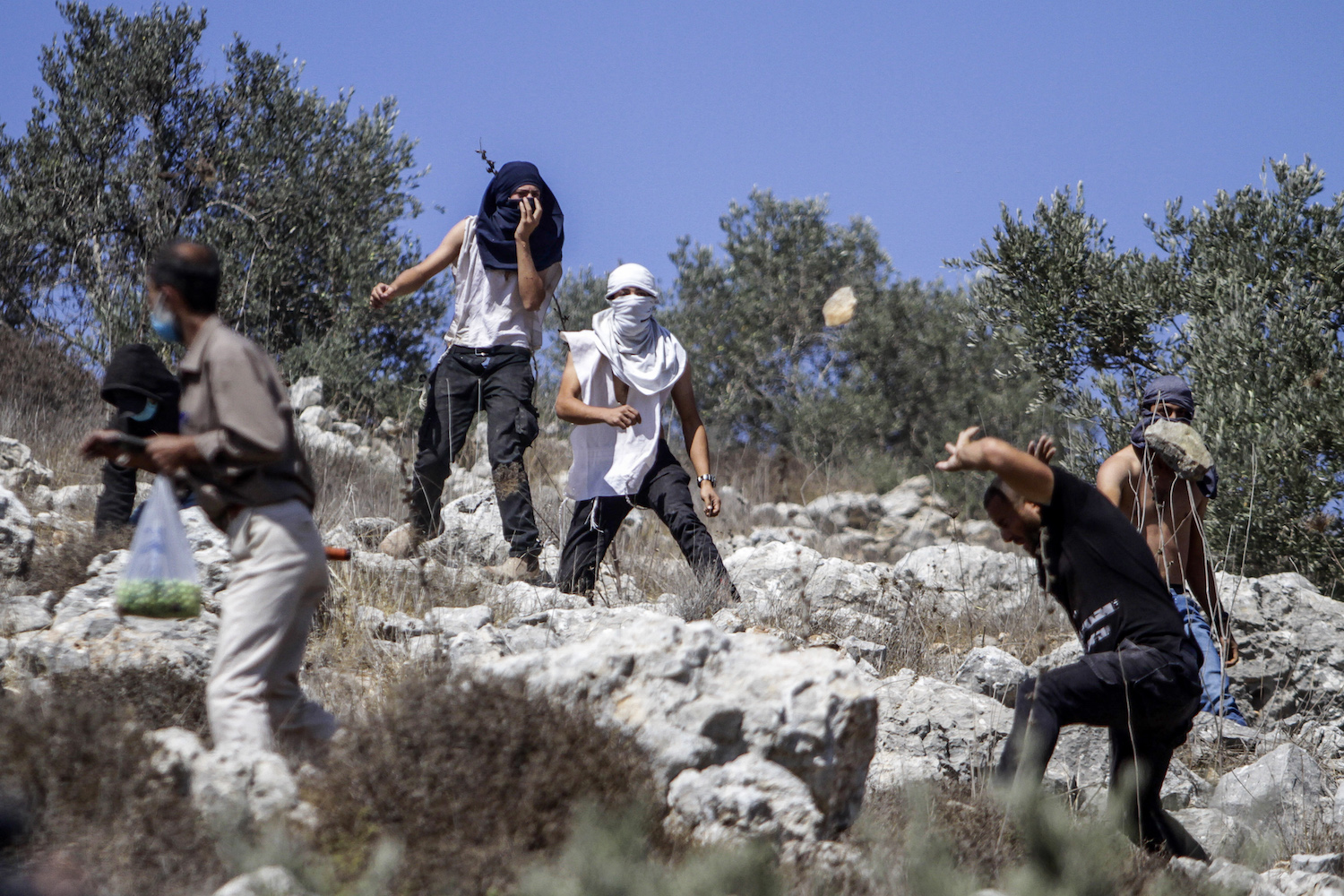
Israeli settlers hurl stones at Palestinians during the annual harvest season near the Israeli settlement of Yitzhar, West Bank on October 7, 2020. (Nasser Ishtayeh/Flash90)
Illustrative photo of Israeli settlers hurling stones at Palestinians during the annual harvest season in the West Bank. (Nasser Ishtayeh/Flash90)
In November 2017, for example, settlers shot dead Mahmoud Za’al Odeh, from the village of Qusra, claiming they were attacked with stones while they were on his land. One of the most infamous cases of deadly settler violence is the murder of members of the Dawabshe family in July 2015, who were burned alive in their homes in the village of Duma as they slept.
Tubasi’s death took place on a day of mass demonstrations across Israel-Palestine, including the West Bank, in protest of Israeli attacks on Gaza and violence against Palestinian citizens inside Israel. According to the Palestinian Health Ministry, Israeli security forces killed 11 Palestinians that day in various locations around the West Bank. According to Palestinian testimonies, besides al-Rihiya, groups of settlers, backed by a small number of soldiers, attacked four villages in the West Bank: Urif, Asira al-Qabliya, Eskaka, and Marda. Tubasi’s death at the hands of settlers refutes to Palestinian Health Ministry’s claim that Israeli soldiers were responsible for the deaths of the 11 Palestinians.
According to the heads of these four localities, the settler attacks led to a massive confrontation and the use of live fire against Palestinians from both settlers and soldiers. Four young Palestinians were reportedly killed in this manner, one in each locality, while dozens of other Palestinians were wounded. “They came to kill,” said Hafez Saleh, the head of Asira al-Qabliya.

‘The army saw everything, but did not intervene’

According to three eyewitnesses Local Call spoke to, on May 14 at 2 p.m., several dozen settlers arrived from the direction of Beit Hagai, an Israeli settlement located 700 meters from al-Rihiya, and began burning the village’s fields and trees, even entering the locality. The villagers identified them as settlers because they were dressed as civilians, wore kippahs, and some had sidelocks. The villagers said that when they tried to put out the fire, they were beaten by the settlers. Israeli soldiers arrived at the scene but did not intervene.
“I woke up at home to people screaming: ‘Fire, they set a fire,'” recalls Kazem al-Hallaq, a 62-year-old resident of Al-Rihiya. “I went outside and saw a large fire in the area of the olive trees, and the wheat and barley fields. The source of the fire was from the north, that is, from the direction of Beit Hagai. Many settlers stood by the fire, about 50 people. They continued to set fire to the fields and made sure it burned and spread.”
Al-Hallaq said that he saw two young men from his family who tried to put out the fire with blankets, but as soon as they started, he saw settlers running toward them and beating them, and at one point knocking them to the ground. “The army stood far away. They saw everything, but did not intervene,” al-Hallaq said.
“When more Palestinians arrived to put out the fire, the army intervened and began throwing gas grenades and firing rubber bullets at them,” al-Hallaq continued. “Most of the people fled to their homes and to the school. The settlers followed them, right in front of the soldiers, entered the village and began throwing stones at the homes.

“Settlers came right up to my house and smashed the car parked at the entrance. It was scary. I locked the door of the home, and went up to the roof with the children to hide them. The settlers stepped onto my car and started dancing and singing while I hid on the roof.
“Suddenly, I saw another group of settlers who were heading to the land that belongs to the Tubasi family. It was difficult to see what was happening there. I saw thick smoke rising from the ground and realized that the settlers had set fire to another field. A few minutes later I heard five gunshots, live fire. I saw residents of the village running there, and heard the sound of an ambulance approaching.
“At one point I also left the house and went to see what had happened,” said al-Hallaq. “There was a lot of confusion. Some people said that someone was dead. Others said someone had been wounded. After an hour I was told that a young man from the Tubasi family was killed. Our fields were completely burned. The settlers and the army disappeared from the area.”

‘The settlers proudly told us they burned our fields’

“At noon on Friday, my uncle Ismail called me,” said Jamal Tubasi, the victim’s nephew. “I was at my aunt’s house because of the Eid al-Fitr holiday. Ismail was stressed and asked me to come quickly. I asked where, and he said: ‘To the olive trees, in the north of the village. The settlers are burning our fields, the fire is strong.’
“I quickly ran there, about a mile from the house,” Jamal continued. “When I arrived I saw a large group, 30 settlers, most of them young, huddled about 200 meters from the burning olive trees. The settlers proudly told us they burned our fields. And not just our fields, but all over.
“Ismail told me that [Palestinian villagers] had been trying to put out the fire for a long time, but settlers were preventing them. I saw other groups of settlers who came to the place, some holding large axes in their hands, some armed with weapons and batons. The soldiers also stood there near the settlers.
“Our young men, and with them Ismail, tried to head to the fire in the olive groves, but the soldiers fired tear gas, rubber bullets, and stun grenades at them. The settlers stood behind the soldiers and tried to advance toward us to attack us. Ismail asked me to stay close to him. But it became very scary once the amount of tear gas and stun grenades increased, and the settlers managed to get very close to us along with the soldiers. We ran away and split into smaller groups.
“I saw that my uncle Ismail had run toward the olive groves. At that moment I got a call, I answered the phone; it was a relative who wanted to check that Ismail and I were okay. When I was done with the call, I could not see where Ismail had gone.
“That’s when I heard gunshots. More than five bullets. Live fire. I didn’t understand what happened. One person came over and yelled ‘Ismail was wounded.’ He pointed over at the direction where Ismail had fled, 300 meters from where I stood.”
Ismail’s brother, Ibrahim, was by his side as they went to put out the fire in the family’s fields. “The soldiers fired gas, stun grenades, and rubber bullets to cause us to split up,” Ibrahim said. “I was standing next to Ismail and I saw him run toward the [olive] trees. I ran in the opposite direction. I saw a group of settlers running in the direction where Ismail fled to, and then I heard about four shots. I did not know or see who opened fire, but the sound came from where Ismail fled. I heard some residents say that Ismail was wounded.”
According to testimonies of Palestinians who asked not to be identified by name, it was the settlers who had opened fire, rather than the soldiers who had been standing closer to the village.

‘They murdered my brother. Our land is burned’

Jamal Tubasi, Ismail’s nephew, says he then ran to where Ismail had been shot. “I saw Ismail lying on the ground between two rocks, on his right side. When he saw me, he called to me in a very weak voice. Almost in a whisper he told me, ‘I’m wounded,’ then he gave me his phone and asked me to take it to the family. ‘Put my head on the ground,’ Ismail murmured, ‘and run away as fast as possible.’ I told him I would not leave him, but he raised his hand with great difficulty, looked at me, and said again, in a very weak voice: ‘Run.’”
“At that moment I saw a group of five settlers carrying large axes, and next to them were two soldiers, all running toward us. They were about 50 meters away from me and approaching quickly. Under pressure, I flipped Ismail on his back and ran away. When I left him, his nose was bleeding and he was also bleeding from his left ear. Apart from that, his face looked fine. I could not understand what the nature of his injury was, and whether he was in serious or mild condition.
“I ran 200 or 300 meters away. From where I was standing I saw people trying to get to the area where Ismail fell. They went back and forth, as if they were looking for something. A long time passed, it’s hard for me to say how much, more than half an hour. Then I saw three or four people, medical workers, carrying Ismail on a stretcher.
“I ran there and asked them to see Ismail to make sure he was alive. They lowered the stretcher and then I saw his face. I could not believe it: his face was completely broken, with deep wounds, covered in blood that was dripping everywhere. I could not bear to look. I screamed in terror, fell to the ground, and fainted.

“All I remember after that is that people poured water on my face, and others lifted my legs up, and slapped me to wake me up. When I woke up, I was told they had taken Ismail to the hospital in Yatta.

“A car took me to the hospital. And when I arrived, I heard two people say that Ismail was dead. I fainted again. I woke up and fainted again. Truthfully, the shock has not left my body and I have a hard time believing what happened.

“The only thing I’m sure about is that when I got to my uncle, after his first injury, his face was clean, there was nothing there, only blood dripping from his nose and ear. And I remember that the group of settlers who ran to Ismail with two soldiers were carrying axes.”

Other residents of al-Rihiya said settlers surrounded Ismail as he lay on the ground, making it difficult for them to gauge exactly how he was attacked.

“My family is devastated,” said Ismail’s brother, Ibrahim. “They murdered my brother. Our land is burned. We are not able to go back there to see it. Usually the settlers come at night and uproot olive trees, but this time the army took advantage of the situation, and the settlers felt they had more power and support than usual to burn everything and murder my brother.”

Ibrahim added, “Today there is no difference between a soldier and a settler. These people destroyed us. Two days after my brother’s murder, the army revoked our work permits in Israel. Five men from my family work in Israel. Now we are all prevented from entering.”

The Tubasi family said they had lodged a complaint with the Palestinian police following Ismail’s death. It is not clear whether the Palestinian police forwarded the complaint to the Israeli police. Yet if the army did in fact inform the Israeli police that Ismail was killed, it is not clear why the police did not open its own investigation regardless of whether a complaint was filed, as per Israeli law in suspected crimes, and especially in cases of unnatural death.

Israeli police offered only the following response to the killing: “No complaint was filed with the police and the details of the incident as stated are not known to us. You can contact the police and file a complaint as is customary.”

 
Status
Not open for further replies.

Welcome

Join the Everton conversation today.
Fewer ads, full access, completely free.

🛒 Visit Shop

Support Grand Old Team by checking out our latest Everton gear!
Back
Top