
Just to be clear antifa is , and I’m presuming now , short for ‘anti-fascist ‘ right ? So Is this now a bad thing ? Should I no longer be opposed to fascism , I know historically the UK was quite proud of the whole anti-fascist attitude . Have I missed a memo ?
You are using an out of date browser. It may not display this or other websites correctly.
You should upgrade or use an alternative browser.
You should upgrade or use an alternative browser.
Current Affairs George Floyd and Minneapolis Unrest
- Thread starter TheBigIguana
- Start date
- Status
- Not open for further replies.

Knows what?
Hey Dan, there's a Dandy Dan on 1d4chan who holds a lot of similar opinions to you such as:
The Battle of Singapore

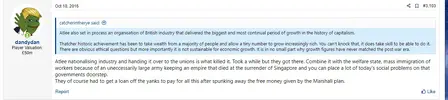

Sweden:


Wahabbism


And even Taylor Swift:


You wouldn't happen to know the guy, would you?
Just to be clear antifa is , and I’m presuming now , short for ‘anti-fascist ‘ right ? So Is this now a bad thing ? Should I no longer be opposed to fascism , I know historically the UK was quite proud of the whole anti-fascist attitude . Have I missed a memo ?
The name itself is fine; it's what the thing actually is and what they do that's the problem.
Just to be clear antifa is , and I’m presuming now , short for ‘anti-fascist ‘ right ? So Is this now a bad thing ? Should I no longer be opposed to fascism , I know historically the UK was quite proud of the whole anti-fascist attitude . Have I missed a memo ?
There is no truly anti-fascist group in America that I'm aware of. The various Antifa groups in America are more akin to anarchists (although I don't think that tells the full story either).
Hey Dan, there's a Dandy Dan on 1d4chan who holds a lot of similar opinions to you such as:
The Battle of Singapore
View attachment 89378
View attachment 89379
View attachment 89380
Sweden:
View attachment 89381
View attachment 89382
Wahabbism
View attachment 89383
View attachment 89384
And even Taylor Swift:
View attachment 89385
View attachment 89386
You wouldn't happen to know the guy, would you?

The name itself is fine; it's what the thing actually is and what they do that's the problem.
but there isn’t an actual group is there ? Genuine question is there a group an organisation as such ? I saw trump wanted to call it a terrorist organisation, so what’s he banning ?

Hey Dan, there's a Dandy Dan on 1d4chan who holds a lot of similar opinions to you such as:
The Battle of Singapore
View attachment 89378
View attachment 89379
View attachment 89380
Sweden:
View attachment 89381
View attachment 89382
Wahabbism
View attachment 89383
View attachment 89384
And even Taylor Swift:
View attachment 89385
View attachment 89386
You wouldn't happen to know the guy, would you?
Mod central discussed. He is gone.
Y'all can stop now

peteblue
Welcome back Wayne
Right, b/c this is such a simple issue, we can wave our hands and change literally hundreds of years of institutional issues in 8 years.
You're a joke
Of course it’s not a simple issue. It’s been tearing the heart out of America for a long time, but Obama’s silky platitudes just don’t do it when he had the Power for 8 years to address this. Of course he may have done, he may have ensured recruitment and training policies for the police were rolled out. He may have ensured that standards were applied and followed up. He may have put laws in place to address Police and suspect rights. Perhaps he did, or perhaps he didn’t . If he did then fine, if he didn’t then please no platitudes, not now...and no need for insults either....

Knows that using racist imagery results in an instant permanent ban maybe?Knows what?

jaycee
Player Valuation: £60m
I have seen edgier blancmangesHe’s an internet edgelord. He absolutely does know what that symbol infers.

carlos21
KING OF REP
Can I have a shout out please.Mod central discussed. He is gone.
Y'all can stop now
There is no truly anti-fascist group in America that I'm aware of. The various Antifa groups in America are more akin to anarchists (although I don't think that tells the full story either).
various groups so no actual all encompassing organisation ? Like I say I’m genuinely asking. Various groups of people who at their core , whatever you or me or anyone accuse them off , say they oppose fascism right ?

Well the obvious whys are implicit bias all the way to outright racism. There are many side by side case comparisons out there in social science literature - same districts/areas, same crime, similar criminal backgrounds etc. Black men tend to treated more harshly in the justice system. In the US that includes juries decisions.
It's interesting when you really dive into the numbers and compare across the globe. It's a rare subject I actually have some understanding of - imagine that lol Here's a short paper I produced in another lifetime around another key factor IMO, BME representation.
I'd share wider and more relevant papers but probably not the time.
Critically evaluate continued claims that the police service in this country is characterised by an internal culture of exclusion and discrimination against BME officers'
The landmark inquiry by Sir William Macpherson into the tragic racially motivated murder of Stephen Lawrence in 1993 “marked a crossroads for the police service in terms of how they dealt with racism within their own ranks” (EHRC 2009:3). Investigations that proceeded the inquiry fuelled further scrutiny upon equality within the police service (Panorama 2003), as have continuous high profile cases of discrimination (Edwards 2008), all of which “continue to challenge the way the police service provides its services to diverse communities and the way it manages its workforce” (Home Office 2008:59). Arguably the greatest of such challenges posed to the police service being allegations raised towards the treatment that BME officers receive, particularly that of the UK's first black Chief Constable Mike Fuller who believes that BME officers often “have to work twice as hard to be recognised” and "don't feel that there is a level playing field" with their white peers. (Panorama, 2008 2m:00s). A considerable amount of literature sustain the condemning accusation of the police service to be characterised by an internal culture of exclusion and prejudice against BME officers and an analysis of such literature will form the basis of the first section of this essay. Subsequent sections will then seek to critically examine the validity behind such claims.
The Home Office report that as of the 31st March 2007, BME officers contributed to 3.9% of police officers, 7.2% of police staff and 8.0% of special constables, “reflecting an overall minority ethnic representation of 5.3% across the service” (Home Office 2007:4; Home Office 2008:59). Considering BME representation stood at just 2% in 1999, the figures represent “steady progress over the last nine years to increase minority ethnic representation” (Home Office 2008b:2). Though from a projected target of 7% set by Home Secretary Jack Straw in 1999, ethnic minorities still remain considerably underrepresented given that around 7% of the economically active population are from ethnic minorities (Newburn 2003:541).To “bridge this gap”, the Equality and Human Rights Commission argue that “more should be done to encourage the growing pool of ethnic minority Police Community Support Officers, and Specials to become fully-sworn officers” (EHRC 2009:38). To do so, they recommend “greater use of positive action, correctly defined as promoting recruitment and promotion within the force, to encourage more ethnic minorities to join the police” (EHRC 2009:38).
Though, whereas such common-sense notions are relatively straightforward to recommend in theory, in reality, encouraging ethnic minorities to join the police can no doubt be a problematic issue, primarily due to damaged race relations. The Metropolitan Black Police Association exemplified such damaged race relations by recently issuing a statement in October 2008 in which they declared their stance to “totally boycott all recruitment drives initiated by the Metropolitan Police Service to attract black and ethnic minority recruits and police staff”, justifying their position in claiming they “would be failing in our duty not to tell potential applicants what a hostile and racist situation it is” (Fresco 2008, [online]). Race relations have been further damaged by prominent BME police officers, with Chief police officers being “rather more forthcoming about institutional racism than academics” (Holdaway & O’Neill 2006;353), one of such being former assistant commissioner Tarique Ghaffur who in claiming discriminatory proceedings received a reported £300,000 payout (Edwards 2008), with another senior Black police officer, commander Ali Dizaei insisting the police force to be a “hostile environment for a person of colour to join” (Panorama 2008: 0m:22s), no doubt further hindering the encouragement of ethnic minorities to join the police.
Stone & Tuffin (2000:vi-vii) illustrate the effects of such damaging race relations and further demonstrate the difficulty in encouraging BMEs to join the police. In surveying BME groups, a wide array of disincentives to joining the police were cited, primarily stemming from “The thought of having to work in a racist environment, having to face prejudice from both colleagues and the general public on a daily basis”. The predominantly white male culture further discouraged potential BME applicants who felt this could lead them to have “to deny their cultural identity in order to fit in”. Anticipated disappointed and probable hostile reactions from friends and family was a further cited factor for not finding a career within the police service appealing, as to were concerns “over pressure from the local community to decide where their loyalties were and, for Asian Muslim women with strong religious beliefs, whether the job was appropriate for a woman.”
Once BME officers are recruited, retaining them is equally problematic, with a recent report into racism within the police force conducted by the Equality and Human Rights Commission's highlighting particular concern over the retention of ethnic minority staff, with perhaps the most condemning statistic being that BME officers are more likely to resign with having fewer years of service (Cooper & Ingram 2004), with a resignation rate that is double that of white officers (Bland et al 1999). Within the first six months of 2007, the resignation rate for BME officers was 6.1%, compared with 3.1% for white officers. Statistics correlate with earlier figures in 2006, when BME resignation rate stood at 7.8%, compared to 4.4% for their white colleagues. (EHRC 2009).
Holdaway and Barron (1997) studied reasons behind the resignation of 28 former Asian and African-Caribbean police officers in comparison to 18 former white police officers. They discovered three-quarters of black officers to had experienced racist language, with one BME respondent revealing how “Obviously it doesn’t make you feel good at all because you’re working with people who you know, who don’t really like Asians and blacks” (p.145). Similar concerns were raised by other respondents, with most commonly cited reason for the resignation of Black and Asian officers to be encountering particular difficulty integrating into police culture, primarily due to factors such as aggressive policing of ethnic minorities and frustration with how everyday racist banter was dealt with at senior level.
After six months, BME officers are equally as likely to remain within the police force (Home Office 2007), though critics bemoan an apparent lack of career progression, with 62% of a surveyed 362 members of the Black Police Association believing their race to have held back career progression (Panorama, 2008 11m:18s). Such a perception “that minority ethnic police officers have little or no promotion prospects” is also highlighted as a discouraging factor for potential BME police applicants (Stone & Tuffin 2000:vii). Statistics do tend to reflect genuine reason for concern, with BME officers tending to be consistently under represented in higher positions. In 2001/2, only 16% of BME officers were in promoted ranks, compared to 22% of white officers (Newburn 2003). In 2007/08, from 22,240 sergeants, just 676 (3%) are BME and from 7,169 inspectors across the UK, only 188 (2.6%) are BME (Home Office 2008b:15; Bullock 2008:7). There is also a “sense of unfairness towards BME officers in specialist selection” (EHRC 2009:4), with Her Majesty’s Inspectorate of Constabulary highlighting ethnic minority officers to encounter particular difficulty when aiming to join specialist squads (HMIC 2006). Again, such allegations are further reflected within recruitment statistics, with just 2% of all firearm officers, and 1% of dog handlers being BME (Home Office 2008b:17). There are also allegations that BME officers are “much more likely to be investigated” than white peers (Panorama 2008 22m), which further damages career progression.
The increased likelihood of investigations suggests heightened suspicion towards BME officers, sharing similarities with public BME individuals being subject to heightened suspicion from police officers, demonstrated by BMEs being substantially over represented in police stop and arrest statistics (Newburn 2007). Black people are seven times more likely than White people to be stopped and searched, and three and a half times more likely to be arrested. An Asian person is also twice as likely to be stopped and searched as a White person (Ministry of Justice 2008:viii-xi), leading to “people from ethnic minorities to feel simultaneously over-policed” (Leishman et al 2000:235). Statistics which demonstrate such over-policing have been widely used to interpreted institutional racism within the police. If the police are prejudice and less likely to trust those that are BME, then it is inevitable that such officers will be equally as prejudice towards BME officers, demonstrated by “many accounts of distressing behaviour, or at best managerial indifference towards ethnic minority staff” (Newburn 2003:541). Her Majesty’s Inspector also reported disappointment “to hear evidence from individuals within the Force that there may be instances of an unacceptable tolerance of bullying, racist or sexist behaviour." (HMIC 2003:2.39)
Graef (1989:131) discovered police sergeants to regard black people as prone to violence, suspicious, excitable, aggressive and lacking in brainpower. Considering “new recruits learn the norms and expectations of their peers through the police subculture beginning from the first day of training” (Stevens 2008:11), considerable efforts have been made to bring about changes in such prejudice views, attitudes and behaviour of police officers, with training initiatives being a prominent feature of efforts (Leishman et al 2000:236). Police in England and Wales provide in-house community and race relations training (CRR), spending £450 million on promoting 'equality and diversity' from 2004 to 2006 (Daily Mail 27/10/2006). Though, following criticism from the Black Police Association, literature evaluating the effectiveness of police diversity training have deemed it to “have only a limited impact” (Rowe & Garland 2003:411), and only “reasonably efficient in terms of meeting targets, but not totally effective in delivering organisational change” (HMIC 2003b:27). Further reiterated by an official inquiry into racism within the Metropolitan Police Force which claimed diversity to be “poorly understood” within training (Morris Inquiry 2004:60), whereby “a culture of “ticking boxes” exists, meaning officers are allowed to “act in a way which goes through the motions and implies a commitment to valuing difference but which lacks any real substance” (Morris Inquiry 2004:104)
Despite the recent increased turbulent race relations, of which prompted the Metropolitan Police Commissioner Sir Ian Blair to resign in December 2008 (BBC 2008), in some areas “the police service is making clear progress in delivering race equality” (EHRC 2009:vi), with Policing Minister Vernon Coaker stating minority ethnic officer representation in the police service to have doubled over the last 10 years (Westminster Magazine 2009). Further encouraging is 12% of police community support officers being from ethnic minority groups, “exceeding the Home Office target for ethnic minorities to make up at least 7% of the service in England and Wales by 2009” (EHRC 2009:3).
There are arguments that over-emphasis on police racism has effectively ‘paralysed’ some officers who are reluctant to enforce the law upon BME individuals due to senior managers placing emphasis on pursuing political goals (Rowe 2004). Such political goal pursuit has also attributed towards ‘reverse racism’, with senior managers allegedly fast tracking under-qualified ethnic minority officers to high positions in order to meet race representation targets. As such, controversial race diversity employment targets have been dropped, having been deemed unlawful (Slack 2009). The influence of a pursuit of political goals has also been suggested to have been caused from senior officers and the Home Office making cynical use of diversity statistics. An example of such being an apparent lack of high BME earners within the police service being often directly attributed to institutional racism (Green et al 2000), though such a trait is not specific to the police service, with almost half of England’s 411 local authorities to not contain a BME person among their top 5% earners (Audit Commission 2006).
Although there is an argument of BME officers being under represented in higher ranked positions, the Metropolitan Police Federation (2008 [online]) assert that “a BME officer can expect faster career progression at every level than a non-BME officer”, citing statistics which illustrate BME officers to progress within their career at a quicker rate than non-BME officers. Such is exemplified within an annual report into race equality conducted by the Home Office (2006/07), wherein BME officers are consistently portrayed to reach high ranks with less year’s service than non-BME officers. For example 13.1% of BME officers with 5 to 10 years service are at the rank of Sergeant compared to 12.3% of white officers. 2.8% of BME officers with 5 to 15 years service are Inspectors, equal to non-BME officers. BME officers reach the rank of Chief Inspector earlier than non-BME officers, with 1.9% of minority ethnic officers with 10-15 years of service reaching the rank of Inspector compared to 0.9% of white officers with equal years of service. 0.4% of minority ethnic officers with 10 to 20 years service reached the rank of Superintendent compared to 0.5% of white officers, questioning the validity behind accusations that BME officers are intentionally held back.
Though such statistics, and others which typically demonstrate BME representation within the police force can be good indicators when evaluating if the police service is indeed characterised by an internal culture of exclusion and discrimination against BME officers, they are by no means infallible and can not be relied upon to present irrefutable judgement on either the existence or measure of racism or even the success of police reform. Rowe (2004:157) draws attention to this point in stating “quantitative measures of performance shed little light on qualitative issues such as public trust and confidence in the police” (Rowe 2004:157).
There has also been recognition from black police association officials towards an improvement of discriminatory attitudes within the police service following the Macpherson report, with one officer explaining “When I joined the police service, it was outrageous. I used to be called ‘black this, black that’ all the time. Now the police have moved on” (Holdaway & O’Neill 2007:400). Though the same officer also believed “people will still be slightly racist”, when it is considered that “racist beliefs, xenophobic attitudes and racial prejudices remain widespread in British society” (Newburn 2003:529), it is inevitable that some police officers will be racially motivated, given that the police are effectively a cross-section of society. As such, the police service will always remain prone to containing characteristics of discrimination and consequently, potential exclusion against BME officers, therefore “it seems probable that race equality will remain on the political agenda for some time to come” (Coretta 2005:373).

Grinch
*Sips Coffee*
I honestly never knew it had another meaning. I always just give it in real life as a "sarcastic" okNo need to be a jerk, it's a legitimate question. I assume it was universal but I haven't gone around the world using it or anything.
- Status
- Not open for further replies.
Welcome
Join the Everton conversation today.
Fewer ads, full access, completely free.