
Current Affairs EU In or Out

In or Out

  • In

    Votes: 688 67.9%
  • Out

    Votes: 325 32.1%

  • Total voters
    1,013
Status
Not open for further replies.

There's no one rate for the entire EU and you charge the rate based on where the customer is. Not sure this bloke really knows what he's doing.

That ended up being my conclusion.

Useful link. Thanks.

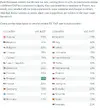
To me, the link says the bloke is doing it right. It says;

If your business stays below €10,000 in cross-border sales of digital goods per year, throughout the EU, then you can charge the VAT rate of your home country on all those cross-border sales. Once you pass the €10,000 annual sales threshold, you must charge the VAT rate of your customer’s country. For non-European businesses, simple rules apply. In B2B you should reverse-charge VAT. In B2C transactions, always charge the VAT of the customer’s country.

1611247812211.png
As @peteblue said earlier, he's charging 24% so he must be in Finland or Greece.

He wont have sold over 10k yet so he's charging the rate of his home country. After 10k he'll charge EU citizens the rate of their own country.
 
Useful link. Thanks.

To me, the link says the bloke is doing it right. It says;


View attachment 114896
As @peteblue said earlier, he's charging 24% so he must be in Finland or Greece.

He wont have sold over 10k yet so he's charging the rate of his home country. After 10k he'll charge EU citizens the rate of their own country.


From Finland as his email ends "fi"

Subject: Re: AMPXF contact request, anyway he answered my question-

"Hi,

This is in accordance with EU tax regulations when selling from a
company to a citizen.

If you have a EU company, the VAT is 0%, or outside EU same thing.

Hope that answers your question

Cheers"
 
Thing is - doesn't this approach hurt UK suppliers of goods (not just limited to digital goods)?

Say @Joey66 wants to buy some Dyson parts - he checks on line and sees that a company in London are selling them at £100 + 20% vat = total spend of £120. However he also notes that the same parts are available from a Belgian Company at a cost of £100 (Euro conversion) and as he's outside the EU, the there is no VAT to pay so its a total spend of £100. No brainer - he orders the parts from Belgium.

If we all adopt that approach then its surely going to impact on UK suppliers/dealers? Under the new rules who has to pay the VAT on imported goods and how is that managed after Brexit?
 
Thing is - doesn't this approach hurt UK suppliers of goods (not just limited to digital goods)?

Say @Joey66 wants to buy some Dyson parts - he checks on line and sees that a company in London are selling them at £100 + 20% vat = total spend of £120. However he also notes that the same parts are available from a Belgian Company at a cost of £100 (Euro conversion) and as he's outside the EU, the there is no VAT to pay so its a total spend of £100. No brainer - he orders the parts from Belgium.

If we all adopt that approach then its surely going to impact on UK suppliers/dealers? Under the new rules who has to pay the VAT on imported goods and how is that managed after Brexit?

This means that UK VAT registered businesses importing goods to the UK will be able to account for import VAT on their VAT return, rather than paying import VAT on or soon after the time that the goods arrive at the UK border.
 
Thing is - doesn't this approach hurt UK suppliers of goods (not just limited to digital goods)?

Say @Joey66 wants to buy some Dyson parts - he checks on line and sees that a company in London are selling them at £100 + 20% vat = total spend of £120. However he also notes that the same parts are available from a Belgian Company at a cost of £100 (Euro conversion) and as he's outside the EU, the there is no VAT to pay so its a total spend of £100. No brainer - he orders the parts from Belgium.

If we all adopt that approach then its surely going to impact on UK suppliers/dealers? Under the new rules who has to pay the VAT on imported goods and how is that managed after Brexit?

Its an odd one isnt it?
 
Thing is - doesn't this approach hurt UK suppliers of goods (not just limited to digital goods)?

Say @Joey66 wants to buy some Dyson parts - he checks on line and sees that a company in London are selling them at £100 + 20% vat = total spend of £120. However he also notes that the same parts are available from a Belgian Company at a cost of £100 (Euro conversion) and as he's outside the EU, the there is no VAT to pay so its a total spend of £100. No brainer - he orders the parts from Belgium.

If we all adopt that approach then its surely going to impact on UK suppliers/dealers? Under the new rules who has to pay the VAT on imported goods and how is that managed after Brexit?
It must work two ways is that the other 27 counties in the EU zero VAT my Dyson parts used to come via the car boots before Covid.......
It will take time for goods to move properly I was around in 1973 when we just jumped into a trade deal with 5- 6 counties it was mayhem food prices shot up ......
The time will come when it's acceptable to all ...,..one hopes .....
 
It must work two ways is that the other 27 counties in the EU zero VAT my Dyson parts used to come via the car boots before Covid.......
It will take time for goods to move properly I was around in 1973 when we just jumped into a trade deal with 5- 6 counties it was mayhem food prices shot up ......
The time will come when it's acceptable to all ...,..one hopes .....
I think the Govt are making the carriers handle the VAT. Not sure if this is a long term permanent solution.

So let’s say you order goods from an EU country and the carrier is let’s say DPD, then the carrier has to contact the purchaser and demand additional costs to pay the VAT before the goods can be released from customs.

The whole thing is bonkers
 
Status
Not open for further replies.

Welcome

Join the Everton conversation today.
Fewer ads, full access, completely free.

🛒 Visit Shop

Support Grand Old Team by checking out our latest Everton gear!
Back
Top