Fracking Chemicals List – What’s involved and what’s dangerous
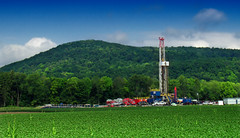
Photo by
 Nicholas A. Tonelli
Hydraulic-fracturing uses a great deal of water, but many other chemicals may also be involved in the fluids used for fracking. There are not large quantities of many chemicals, ranging from just 0.5 to 2.0 % of the fracturing fluid total volume, but the possible effects can still be negative on people and the environment.
- Proppants, also known as “props”, are chemicals that open the fractures and then allow the fluids or gases to flow in a freer way to the wellbore. Sand, including zirconium oxide and sintered bauxite, is used to keep fractures open, so that the gas or oil can be extracted. Ceramic beads are also a part of this mixture.
- Acid is used in cleaning intervals of drilling mud and cement before the fluids are injected. Hydrochloric acid HCL, also known as muriatic acid, is used in this process. Breaker chemicals, like Peroxydisulfates, reduce fluid viscosity so that proppants can be released into fractures. They also enhance the fracturing fluid recovery.
- Bactericides and Biocides including Gluteraldehyde inhibit the growth of certain organisms that might otherwise produce gases that could contaminate the methane gas. These also prevent bacteria growth which could reduce the fluid’s ability to carry the proppant into new fractures.
- Buffers, or pH adjusting agents, like potassium carbonate or sodium carbonate and acetic acid are able to adjust and control the pH levels of the fluid so that other additives will work properly.
- Clay controls or stabilizers, including potassium chloride and tetramethyl ammonium chloride prevent the migration and swelling of formation clays, so that they do not block pore spaces. Otherwise, they might reduce the permeability of the shale.
- Corrosion inhibitors like ammonium bisulfate and methanol help to reduce the growth of rust on the steel tubing, tanks, tools and well casings.
- Friction reducers including petroleum distillates and sodium acrylate-acrylamide copolymer allow the fluids used in fracking to be injected at the best possible rates, by lowering the amount of friction between the fluids and the piping.
- Iron control chemicals like polyacrylate, ethylene glycol and Ammonium chloride prevent any precipitation of sulfates and carbonites, so that they can’t plug off the shale formation.
- Surfactants like ethoxylated alcohol, isopropanol and methanol reduce the tension in the surface of the fracturing fluids, to aid in the recovery of the fluid.
Some of the chemicals used in fracking are toxic to the environment, as well as to humans and to wildlife. Some may cause cancer. The substances that are potentially damaging can contaminate water in the areas around the fracking wells.
Health and fracking
http://www.hazards.org/oil/fracking.htm
Silica
Silica sand is the main ‘proppant’ used to fracture rocks underground and keep those cracks open. This ‘frac sand’ if not properly controlled can cause lung cancer, silicosis and other fatal diseases in exposed workers. The US has the same occupational exposure limit for silica as the UK. It is a level
a study by the US government’s safety research agency NIOSH(11) found could be exceeded by a factor of 10 in fracking operations, prompting an official
Hazard Alert.
(12) Face masks did not reduce exposures below the limit, NIOSH found.
An
ongoing attempt by the workplace safety regular, OSHA, to halve this permissible limit for crystalline silica exposure has been opposed by the American Petroleum Institute (API) and the rest of the fracking industry. OSHA calculated that additional protections – including better ventilation, a misting system and enclosed “operator booths” for the most exposed workers – would be required for 88 per cent of fracking workers in order to comply with a tighter standard. API has refused to release the findings of its own evaluation of silica exposures.
Even at the current exposure standard – the UK and the US have the same occupational exposure limit for silica, at least for now - exposure can cause potentially fatal cancers and lung and kidney diseases, and may lead to arthritis and other chronic health problems. In general, the more you are exposed, the greater the risk.
Volatile hydrocarbons In May 2014,
NIOSH(13) reported that workers were facing hazardous levels of volatile hydrocarbons from used fracking fluids. It said since 2010 there have been at least four deaths linked to acute chemical exposures during flowback operations, the transferring, storing and measuring of fluids that return to the surface after fracking. The research body said as a consequence it had launched an investigation. These volatile chemicals can affect the eyes, lungs and nervous system and at high levels also may lead to an abnormal heartbeat, NIOSH said.
Hormone disrupters A report presented to the
Endocrine Society conference in June 2014 warned that the hormone disrupting properties of many fracking chemicals was worse than initially thought. “Among the chemicals that the fracking industry has reported using most often, all 24 that we have tested block activity of one or more important hormone receptors,” said co-author Christopher Kassotis of the University of Missouri. “The high levels of hormone disruption by endocrine-disrupting chemicals (EDCs) that we measured, have been associated with many poor health and safety outcomes, such as infertility, cancer and birth defects.”
(14)
Other exposures An estimated 600 chemicals are used in fracking operations. Oil giant
Halliburton lists 27 chemicals plus water used in a “typical European frac formulation”. These include chemicals more traditionally seen in pesticides, stain removers, degreasers, paint thinners, inks and disinfectants. Exposures at fracking sites can include heavy metals, benzene and other carcinogens and nerve poisons. The use of heavy equipment and haulage vehicles can also create a risk from diesel exhaust fumes, a cause of lung diseases and associated with lung, bladder and other cancers.
The industry has been criticised for claiming the precise formulations used are ‘trade secrets.’
The TUC, in its submission to the House of Lords fracking inquiry, called for “transparency and disclosure of the full range of chemicals used in fracking,” adding “variations in operations between companies pose significant challenges for occupational health which have yet to be comprehensively addressed.”



