Current Affairs EU In or Out

In or Out

  • In

    Votes: 688 67.9%
  • Out

    Votes: 325 32.1%

  • Total voters
    1,013
Status
Not open for further replies.
Or, if the merry cans hadn't joined in, who knows, the Soviets may have gone on to take over western Europe.


I am not by any means an expert on Kremlinology of the early war but I am unaware of any plan the Soviets had to backstab the Germans in the way the latter went on to. I think they would have been quite happy with carving up Eastern Europe as a buffer zone between the two powers and securing their ice-free ports in the Balkans.

But who knows, Stalin was every bit as much of a lunatic as Hitler.
 
You do know it was the Americans and the Russians who really won the war
Britain would have been invaded without their intervention
I'm sorry mate but you are wrong on both counts.

Nobody is disputing the contribution both USA and Russia made in bringing about the end of WWII, but as much as we couldn't have won the war without their help, neither of them could have done so without ours either. Period. And when I say ours, I mean the British and all our other allies during WWII, including the 70,000 southern Irish people who joined the British armed forces against the wishes of their government, one of whom was my own mother.

As regards the invasion, we fought this off whilst Russia was still allied to Germany, and with the help of just a handful of US pilots. It was the British who withstood everything that the German air force threw at them. The British public who worked around the clock to build more and more British planes to replace the ones being destroyed in the fighting. And not least the British RAF who, with the not inconsiderable assistance of other allied pilots, mainly Polish and Canadian, managed to prevent the Luftwaffe gaining control of the British skies, a pre-requisite to any proposed land invasion. It was after the planned invasion failed, that Hitler then set his sights in Russia.

Having said all that, WWII has nothing whatsoever to do with Brexit. I just saw your post and thought it was fundamentally flawed so had to respond. If you'd like to take this conversation further I think it deserves it's own thread.
 
Small and irrelevant point but after the Battle of Britain, invasion was never a realistic possibility and total defeat (of the kind experienced by France) was highly unlikely.

Indeed, the battle in the Air was done and there was no chance of Germany winning the battle of the sea. they could not invade. Their strength lay in a land war, which is why they turned eastwards...Neither Russia nor the USA played a part in the defence of Britain (other than a few volunteers) as Germany had not even declared war on either of them at this point...
 
EU Observer...

”Brexit is done. That's the view of the British government, which has, according to reports, attempted to ban ministers from even using the word in official pronouncements that discuss the UK's future relationship with the European Union.
For Boris Johnson, it seems that Brexit truly was an event and not a process.
This view has interesting implications for the conduct of free trade agreement (FTA) negotiations over the next year.
Johnson has always tried to keep Brexit conceptually simple ("Take Back Control', "Get Brexit Done"), but there has been a persistent belief that, faced with the reality of the UK's hugely intricate economic relationship with the EU, its myriad entangled dependencies, Johnson would soften his rhetoric and accept that complexity necessitated compromise.
Leading Brexit analyst Charles Grant and former UK ambassador Ivan Rogers - both of whom saw Brexit on the horizon long before most commentators considered it possible - have spoken of the inevitable trade-offs between European market access and economic sovereignty that the UK must now finally confront.
For the EU, the key issue is alignment.
The greater the extent to which the UK agrees to abide by EU rules, the more it accepts an economic and regulatory 'level playing field', the less obstruction there will be to UK companies wishing to do business in the European Union.
The Commission has been explicit about its fear of the UK engaging in economic 'dumping' after Brexit; it worries that the UK will tolerate lower standards in everything from food hygiene to employment protection to climate change policy in order to gain competitive advantage over EU member states - a competitive advantage the UK is likely, in the commission's view, desperately to seek given its newly-exposed position outside the trading bloc.
Rogers, former UK permanent representative [ie ambassador] to the EU, notes that the commission sees the gigantic surplus in services that the UK runs with the EU as being particularly decisive leverage; some in the commission even believe that the UK will have to reintroduce a form of freedom of movement as the price for access to the EU services market.
Yet in his speech in Greenwich, London, this month setting out the UK's aspirations for an FTA with the EU, Johnson was no more conciliatory towards the EU position on alignment than he was last year - and last year, he had an election to win.
Why, asked Johnson, should alignment be a prerequisite for free trade? Reversing the traditional contrast between a socially-responsible EU and reckless Anglo-Saxon capitalism, Johnson went on to list many areas of policy in which the UK was more progressive than the EU (including its commitment to net-zero carbon emissions by 2050; superior maternity leave entitlements; and higher animal-welfare standards).
The British prime minister laughed off the suggestion that "it was only thanks to Brussels that we are not preparing to send children back up chimneys".
The UK, he declared with mock-exasperated glee, would not walk away from an FTA with the EU because of such 'dumping'; but nor would it agree to alignment on the EU's own terms.
Bluff?
As by far the stronger party in negotiation, the commission may be inclined to dismiss Johnson's rhetoric as a wilfully paradoxical bluff, one that will be called and exposed in short order.
Emmanuel Macron appears to think so; it has been reported since Johnson's speech that France will demand the UK agrees to full dynamic alignment of regulation (with the UK required to move in lockstep with the EU in perpetuity) as the price of a comprehensive FTA.
Economic logic says that the UK should swiftly concede.
But economic logic is precisely what has been at issue in the UK since the Brexit referendum was called. The Conservative Party (incongruously, given its history) now finds itself representing globalisation's relative losers.
Johnson may well believe that the assertion of national independence, a managed rush of national identity, is now more politically significant than any incremental hit to gross domestic product.
Cummings' role
Johnson and Dominic Cummings, Johnson's closest adviser and Brexit's true architect (as head of the Leave campaign), know that, in the long-run, they will be judged on economic performance, particularly as it impacts their newer working-class constituencies; but they are looking for a different way to square the circle.
Cummings has said that membership of the EU has long retarded the UK's scientific and entrepreneurial capabilities: for Cummings, alignment has meant stagnation.
He argues that immense and rapid economic progress is possible if the insights of the physical, behavioral and data sciences are harnessed to the power of a self-reflective de-bureaucratised state. He has advertised for "weirdos and misfits" exhibiting "genuine cognitive diversity" to join him in this project.
Cummings believes in hard deadlines, rapid transformations and visible delivery. Whether or not what he wants is possible, the EU should be sure that he will resist alignment to the end.”

This is a typical EU viewpoint. Someone wants something off us therefore we hold the power and they will follow our rules. Completely forgetting of course that the EU also wants an FTA with the U.K. , so if we suggested that they must follow our rules how would they react ?. They still haven’t twigged yet that this is a two way agreement and that the U.K. more and more is feeling quite happy to not even do a deal with them, and I don’t believe the EU will ever believe it until we actually just walk away. I had dinner at a friends house the other night, he was an International Finance Director and a staunch Remainer up until this point, but even he now sides with Boris and is of the opinion that walking away is no longer such a bad strategy.......

 
I'm sorry mate but you are wrong on both counts.

Nobody is disputing the contribution both USA and Russia made in bringing about the end of WWII, but as much as we couldn't have won the war without their help, neither of them could have done so without ours either. Period. And when I say ours, I mean the British and all our other allies during WWII, including the 70,000 southern Irish people who joined the British armed forces against the wishes of their government, one of whom was my own mother.

As regards the invasion, we fought this off whilst Russia was still allied to Germany, and with the help of just a handful of US pilots. It was the British who withstood everything that the German air force threw at them. The British public who worked around the clock to build more and more British planes to replace the ones being destroyed in the fighting. And not least the British RAF who, with the not inconsiderable assistance of other allied pilots, mainly Polish and Canadian, managed to prevent the Luftwaffe gaining control of the British skies, a pre-requisite to any proposed land invasion. It was after the planned invasion failed, that Hitler then set his sights in Russia.

Having said all that, WWII has nothing whatsoever to do with Brexit. I just saw your post and thought it was fundamentally flawed so had to respond. If you'd like to take this conversation further I think it deserves it's own thread.

Had the British (and French) not been so dishonest and actually stood by their promises to the Czechs and Poles, it's quite probable that the war would have been over a whole lot quicker than it was. Alas, they thought it better to stand alone, which worked out well.
 
Had the British (and French) not been so dishonest and actually stood by their promises to the Czechs and Poles, it's quite probable that the war would have been over a whole lot quicker than it was. Alas, they thought it better to stand alone, which worked out well.
Yeah.

My dad never spoke much about the war. But one thing I remember him saying is that he, and most of his friends, were ashamed that we didn't stand by our obligations to the Poles and Czechs. Having said that, the German army was vastly superior at the time, coupled to the fact that the British regular army was spread out across the empire, the outcome would have been the same had we joined in earlier.
 
Yeah.

My dad never spoke much about the war. But one thing I remember him saying is that he, and most of his friends, were ashamed that we didn't stand by our obligations to the Poles and Czechs. Having said that, the German army was vastly superior at the time, coupled to the fact that the British regular army was spread out across the empire, the outcome would have been the same had we joined in earlier.

That's not my understanding of it. At the time of Munich, the combined Czech, French and British forces would have comfortably outnumbered the Germans. What's more, the Czech army was highly sophisticated because their manufacturing base was incredibly good, and was arguably superior to the Germans on its own. The fact that they were essentially surrendered to the Germans not only gave Hitler an awful lot of advanced equipment, but gave them more time to bolster their own ranks.

Even then, the Poles, who had a lot of numbers but relatively primitive equipment, gave them a sufficient fight to have been in with a chance had the French not sat on their hands on the western front, and the British said they would help and actually done bugger all.

If you look at the book What If, it clearly states that in 1938, the Germans were not in a good state for war at all, and it was only their efforts in 1939 plus their plundering of the Skoda works that gave them the formidable force with which to roll through the Benelux. It's obviously conjecture, but it seems quite likely that things could have been very different had the British and French been less shitty, especially as it might have kept Russia from picking over the carcass of Poland and entering the war.
 
Yeah.

My dad never spoke much about the war. But one thing I remember him saying is that he, and most of his friends, were ashamed that we didn't stand by our obligations to the Poles and Czechs. Having said that, the German army was vastly superior at the time, coupled to the fact that the British regular army was spread out across the empire, the outcome would have been the same had we joined in earlier.

Britain stood by its obligations for Poland. Indeed we only declared war on Germany because of a guarantee of support. Why the U.K. even gave any such guarantee is one for debate, as Eastern Europe was completely outside our sphere of interest. As you say, there was very little the U.K. could actually do at the time because of our spread across the world. But let’s not blame Germany for invading, let’s blame Britain....
 
Britain stood by its obligations for Poland. Indeed we only declared war on Germany because of a guarantee of support. Why the U.K. even gave any such guarantee is one for debate, as Eastern Europe was completely outside our sphere of interest. As you say, there was very little the U.K. could actually do at the time because of our spread across the world. But let’s not blame Germany for invading, let’s blame Britain....

That's a good one Pete. What did Britain do to help Poland?

 
Why shouldn't it be a demand in a trade deal? Surely to continue the views of some of your favoured lot, nothing should be off the table?

You could walk away and you'd be harming mainly yourself, but hey, such are the Brexit lot like
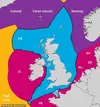
It all seems very petty and reminds me of when the negotiations on the withdrawal agreement started. A lot of negativity and conditions from the EU side. But at the end of the day Pete, the EU need to be making some wins in the negotiations. If giving up these artefacts leads to a trade deal then so what? Same with the fishing rights. UK waters are teeming with fish which is why they are so prized. We can share them with the EU and still leave our fishing fleets much better off than they are currently, and insist on tariff free trade on fishing products in return as most of our product is exported to the EU.

There's a lot of testosterone about at the moment, on both sides, so let's hope that the politicians put their penis's back in their trousers and hand over to the diplomats. when the negotiations start.
 
Status
Not open for further replies.

Welcome

Join the Everton conversation today.
Fewer ads, full access, completely free.

🛒 Visit Shop

Support Grand Old Team by checking out our latest Everton gear!
Back
Top