Current Affairs EU In or Out

In or Out

  • In

    Votes: 688 67.9%
  • Out

    Votes: 325 32.1%

  • Total voters
    1,013
Status
Not open for further replies.
You said that SF don't even bother to represent their electors in NI or Westminster. Your lack of detail once again exposes your lack of knowledge. Perhaps you may want to give us the reasons why SF 'don't bother' to represent their electors in NI or Westminster? Or don't you know?

Well they don’t even bother to attend Westminster....
 
You said neither of those things. You said SF don't represent their voters - they represent them by refusing to attend, their voters know what they are voting for. Or do you not agree with that democracy?

You also don';t tell the truth about how the negotiations have gone

Hahaha....they represent them by refusing to attend....
 
The supermarkets begin serious stockpiling for Christmas months ahead, but it is the short shelf-life fresh goods, and ingredients from/through EU for UK food manufacturers that will be threatened.

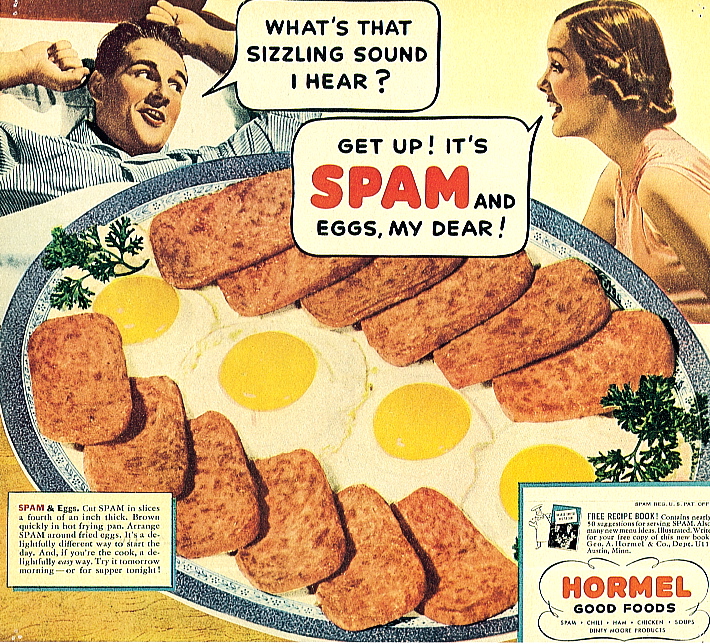
There may be an opening for SPAM to make a come-back!!

Yum yum - Christmas morning fry-up!!

Image result for SPAM sketch

Well for those of us who did used to have Spam it will make a nice change.....
 
Hahaha....they represent them by refusing to attend....
Here we observe @peteblue, a member of the Brexiter genus, who as part of their daily ritual, after becoming tired of having his hypocrisy highlighted regarding UK democratic process, now turns his attention to goading his most hated of foe; the Irish.

He will repeat this process every day for the rest of his life, only pausing briefly to return to his pub to playfully delight in the benefit of WTO terms, present a gleeful dance at the competence of a Boris Johnson government and become visibly aroused at the sight of an Esther McVey forcing the terminally ill back to work.
 
A bit like you saying that those who voted Brexit didn’t know what they were voting for perhaps.....

Well Pete, like most things it's more nuanced that you are seemingly able to understand. You seem to read the question as 'people didn't know why they voted Leave'. But that's not how I read it.

You see, 'Leave' isn't one thing. Leave and do what? Leave and join EFTA to retain the economic security of the Bloc? Leave with no thought for the consequences to the rest of the country because "I'm alright Jack"? Leave and immediately deport anyone whose grandparents weren't born here? Leave and declare war on France to recapture Calais? No matter how self-righteously assured you feel in the reasons for your own vote, you don't actually speak for all 17m Leave voters.

So, like the recent Pie video posited, you could take 1000 Leave voters and ask them for their deep-seated reason to Leave and where they want to end up, and come up with 1000 different answers. Now, whatever position the government took, it can't satisfy all of these different opinions, many of which would be mutually exclusive. Therefore saying 'people didn't know what they were voting for' is correct, in that people dididn't know how the process of a Leave vote would play out and how the targeted endpoint matched their expectation.
 
But you said above that you didn't accept it. Why? As said above, the WA fulfills the mandate of 'leave the EU'.

By any of the original definitions, Theresa's deal is a 'Hard Brexit'. Long-term, it leaves the SM, CU, and a host of other pan-continental groups. But predictably, once it was known what a Hard Brexit would actually look like, it wasn't anywhere near Hard enough for the Hardliners.

For the record, even as an ardent remainer I'd 100% support a Soft Brexit position where we actually got to retain the personal-level benefits of membership, whilst removing ourselves from the EU political processes. If this had been the aim at the start of the negotiations I have no doubt that a majority would have got behind it (Labour would have no complaints), and staying in the SM and CU would have meant no issues to resolve with Ireland. We'd have been 'out' on the 29th March 2019 as promised. Sadly, May's backroom team of Hard Brexiters immediately got in her ear and started to formulate her 'red lines' for her that could only end up in this funky 'indefinate vassal state because of NI' situation that has no resolution.

Of course, you'd have Farage screaming betrayal, Rees-Mogg banging on about 'Brexit in Name Only' etc, you'd have Liam Fox complaining we now can't get the trade deals he wants (who gives a toss as we'd retain all the better ones we have with and through the EU). But for the vast majority of the country, the Brexit morass would be 'over', everyone would have certainty and we'd have all been able to get on with our lives. Instead, the poisonous rhetoric employed by the Leave Extremists has further entrenched positions to the point where Soft Brexit is just a ghost and hasn't been mentioned for years, and a Hard Brexit isn't enough. And then the Leavers wonder why Remainers have started to push back and say 'you know what, we're tired of being the only ones compromising here'.

The Brexit Breakdown is fully owned by the hardest of the Leavers, Pete. If a Soft approach had been favoured in the beginning, we'd have been out by now. You might not have personally liked the outcome, but that's not really relevant.

There was no such thing as an original definition of a hard Brexit. It all depends on where you stand on the Brexit debate. If you support remain, you would consider staying as members of the SM and CU as a soft Brexit. Leavers would argue that doesn't constitute Brexit at all. Conversely remainers would consider a free trade deal Brexit as a hard Brexit, whereas leavers would consider it soft. It's just the way it is.
 
There was no such thing as an original definition of a hard Brexit. It all depends on where you stand on the Brexit debate. If you support remain, you would consider staying as members of the SM and CU as a soft Brexit. Leavers would argue that doesn't constitute Brexit at all. Conversely remainers would consider a free trade deal Brexit as a hard Brexit, whereas leavers would consider it soft. It's just the way it is.


I'd agree the terms weren't set in stone in the early days (because so much was undefined), but I recall that it was universally accepted that 'alignment with' the SM&CU in any way (including membership of course) was a soft Brexit, and not doing so was a hard Brexit. It was of course on a spectrum depending on what smaller bits were retained, but that distinction was the clearest. It doesn't matter where people stand on it, those were how the various outcomes were described.
 
I'd agree the terms weren't set in stone in the early days (because so much was undefined), but I recall that it was universally accepted that 'alignment with' the SM&CU in any way (including membership of course) was a soft Brexit, and not doing so was a hard Brexit. It was of course on a spectrum depending on what smaller bits were retained, but that distinction was the clearest. It doesn't matter where people stand on it, those were how the various outcomes were described.
By who though?. I'll guarantee you it wasn't the Daily Mail. It would have been written by somebody who was pro remain, even if it was the Govt who as you know, were totally pro remain. the Mail and telegraph would have had a completely different view of what a soft Brexit was.
 
Status
Not open for further replies.

Welcome

Join the Everton conversation today.
Fewer ads, full access, completely free.

🛒 Visit Shop

Support Grand Old Team by checking out our latest Everton gear!
Back
Top