Current Affairs EU In or Out

In or Out

  • In

    Votes: 688 67.9%
  • Out

    Votes: 325 32.1%

  • Total voters
    1,013
Status
Not open for further replies.
That's the power of the conspiracy theory in your mind Joe. I'll reiterate again though, our deal with Nissan was a bung to them to ensure they kept their factory open. The EU-Japan trade deal was designed (as all trade deals are) to remove tariffs and standardise regulations to smooth trade between two countries/regions. There would be no payments made to individual companies.
where is there evidence of a bung Bruce - they openly gate crash our deal for one upmanship you call that a conspiracy theory - I call it a blatant coincidence that they are determined to rule like the United states of Europe which our electorate 17.4 million of them democratically wanted to leave the polictical nonsense of the EU !
 
A reminder of what the VP of Toyota said last year

"A few months ago the UK government was saying, 'We're sure we'll be able to negotiate (a deal) without any trade tax,'" Leroy said in an interview at the Frankfurt car show. "They are not saying that any more."

He added: "It's clear that if we have to wait two to three more years to have a clarity on this topic, we will have a big question-mark about our future investment in the country."

"We will not close the plant tomorrow morning, but if in two to three years we have to decide some future investments, of course the key point will be the competitiveness of this plant in future."

Leroy declined to say how much of the upgrade funds had already been spent, stressing that considerably larger sums would be needed to launch production of any new vehicles.

Without further investment, Burnaston's output "will probably start to decline before we will be able to take a decision," Leroy said. "The longer we have to wait, the more potential there is to move to another factory."
 
where is there evidence of a bung Bruce - they openly gate crash our deal for one upmanship you call that a conspiracy theory - I call it a blatant coincidence that they are determined to rule like the United states of Europe which our electorate 17.4 million of them democratically wanted to leave the polictical nonsense of the EU !

They're two completely unrelated things Joe. Carlos Ghosn went to May after the Brexit vote and basically demanded that Nissan be compensated should any tariffs be imposed on sales of their cars to Europe after Brexit. As Sunderland largely voted to leave, it was an arrangement the government made noises about giving them.

The EU-Japan trade deal was being negotiated three years before that, and long before we even voted to leave the EU where such tariffs would not only not apply within the EU but between the EU and Japan. The Japanese have strong doubts about whether the UK government will be able to match this, and between that first visit by Ghosn in 2016, their companies have become less and less confident.

It's not hard really and is largely in line with the 'project fear' stuff you've dismissed. Your boys are messing it up unfortunately, but I'm sure things will be just fine under WTO rules.
 
They're two completely unrelated things Joe. Carlos Ghosn went to May after the Brexit vote and basically demanded that Nissan be compensated should any tariffs be imposed on sales of their cars to Europe after Brexit. As Sunderland largely voted to leave, it was an arrangement the government made noises about giving them.

The EU-Japan trade deal was being negotiated three years before that, and long before we even voted to leave the EU where such tariffs would not only not apply within the EU but between the EU and Japan. The Japanese have strong doubts about whether the UK government will be able to match this, and between that first visit by Ghosn in 2016, their companies have become less and less confident.

It's not hard really and is largely in line with the 'project fear' stuff you've dismissed. Your boys are messing it up unfortunately, but I'm sure things will be just fine under WTO rules.
I really give up Bruce how you can defend this EU organisation - you label our deals as bungs yet theirs above board ?....
 
I really give up Bruce how you can defend this EU organisation - you label our deals as bungs yet theirs above board ?....

Pretty much, yes. Ghosn went to a very weak prime minister and demanded that any tariffs they would have to pay after Brexit (if we went onto WTO rules for instance) to be essentially paid by the government rather than the company. May being weak suggested that would happen, but as negotiations have gone on, Ghosn and other companies are increasingly unhappy with developments and are now actively seeking alternative bases. In the meantime, the EU concluded their trade negotiations with Japan, and it looks increasingly like companies are looking at what we offer and what the EU offers and leaning towards the latter.

We were part of the EU, but as you've taken no delight in reminding us, we voted OUT. Why should the EU do us any favours after we've told them to do one? It's natural that they will try and be as attractive as they can be to a whole bunch of companies. With the Medicines Agency already having moved, it wouldn't surprise me too much if various life sciences firms hopped over the channel.

This is what you voted for Joe.
 
This just out from the University of Birmingham btw Joe.

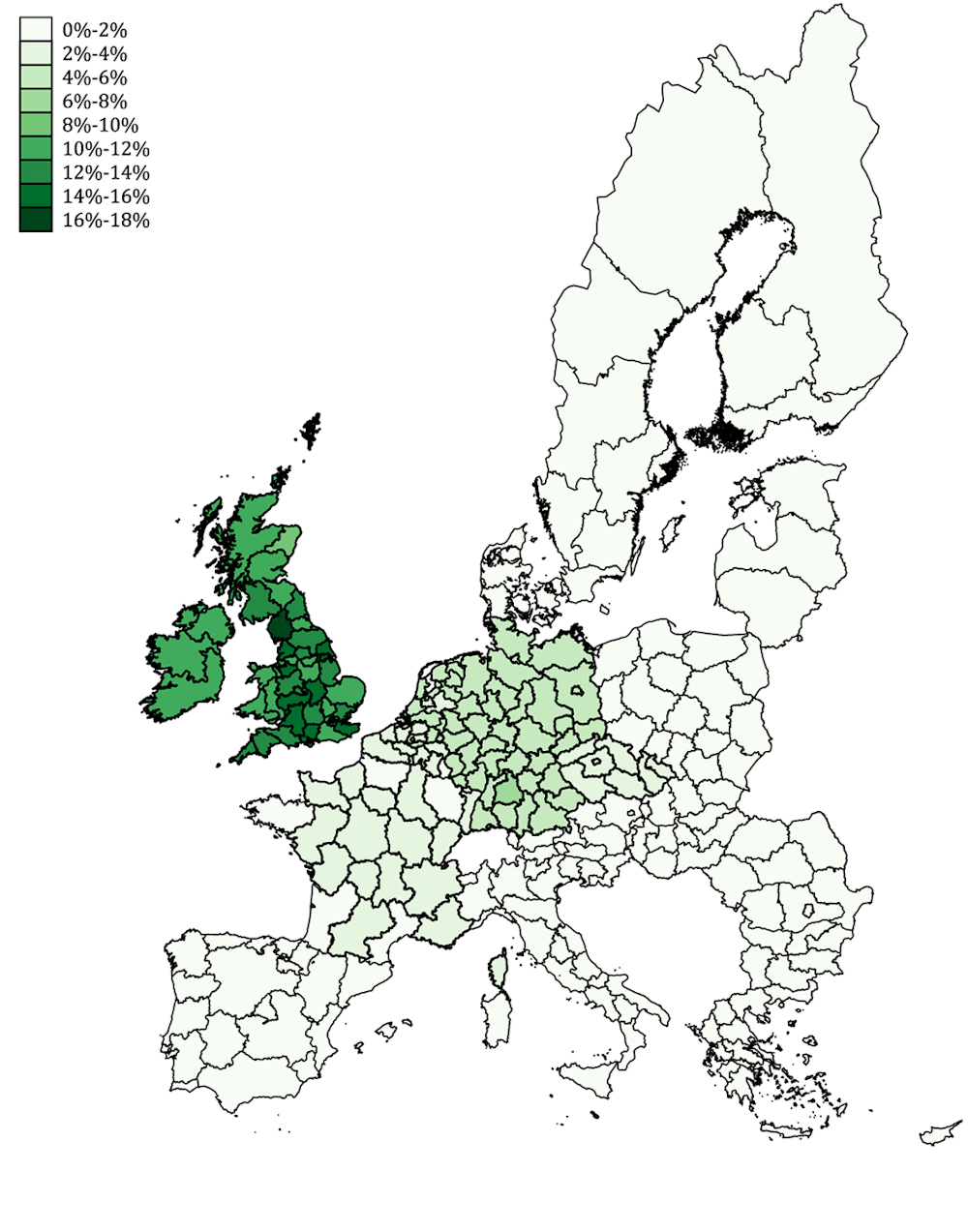
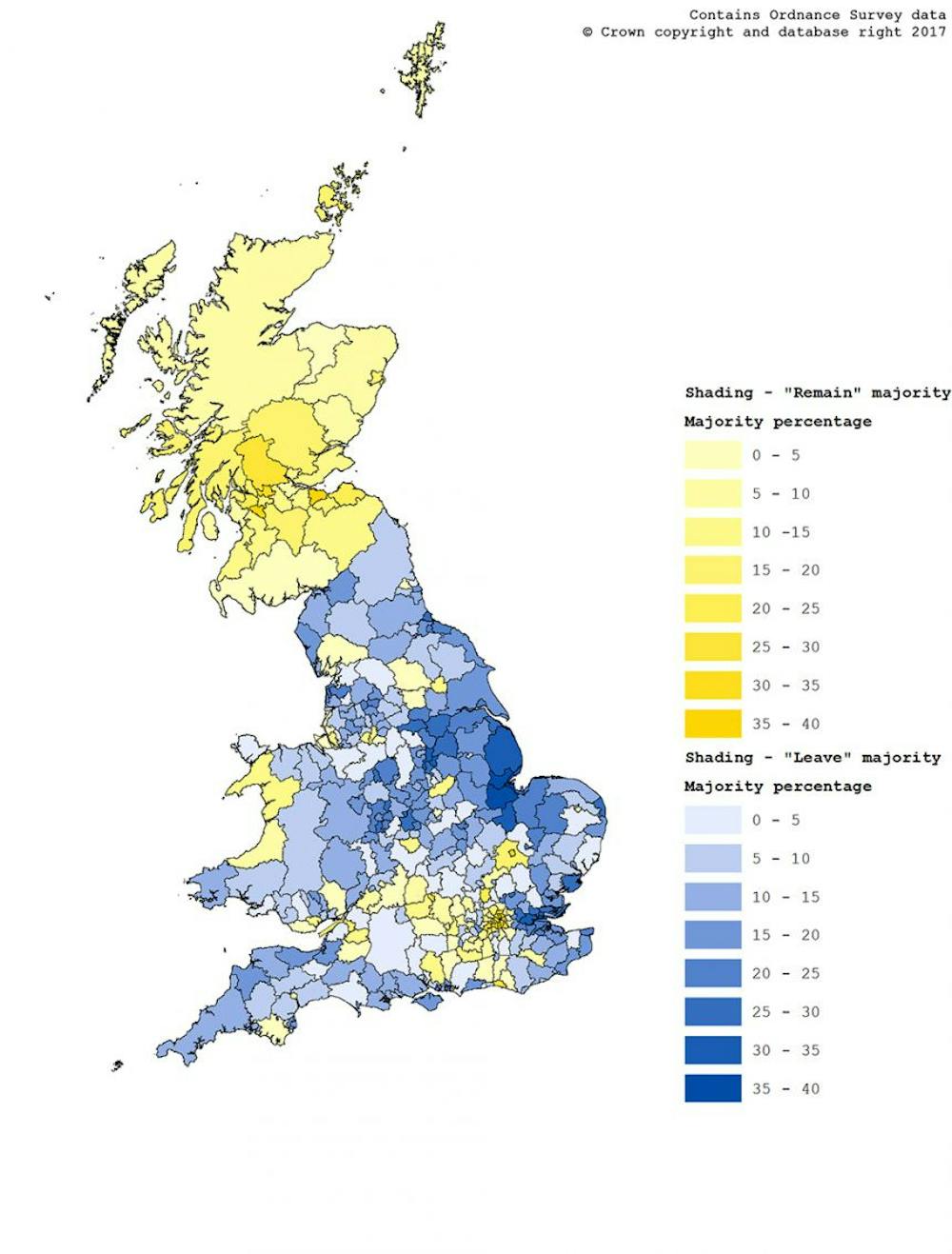
The very areas of the UK which voted Leave in June 2016 are likely to be the ones hardest hit by Brexit. Our research on the likely economic consequences of leaving the European Union on different regions and industries is consistent with the recently leaked government analysiswhich suggests that London will be one of the areas least hit in the event of a no-deal Brexit. The north-east of England, meanwhile, will be one of the worst affected.

An important element here is that these regions (and the sectors of the economy based there) have little representation in the Brexit negotiations and rarely figure in media discussions. When it comes to the potential impact of Brexit, the most prominent stories are those with underlying political or business interests. For example, the case for special treatment of particular industries after Brexit tends to revolve around financial services, automobile and aerospace firms.

On the one hand this is because these industries are widely understood as critical for the UK economy. But it’s worth noting that these industries also have strong lobbying power and access to government policymakers. In contrast, many other parts of the UK economy do not. Our analysis suggests that, in reality, it is many of the less high-profile sectors – and the regions where they are located – that could be the most exposed to Brexit.

file-20180209-51723-1dhe54c.jpg

London’s financial services sector will likely be better off than less high-profile industries. shutterstock.com
We examined the extent to which British industries depend on trade with the EU. On the basis of an analysis of global trade patterns across 43 countries and 54 industries, we were able to calculate a Brexit risk-exposure index.

We did this for each UK sector under a “no deal” Brexit scenario in which much of UK trade faces severe disruptions and impediments. We also put together a “hyper-competitive” scenario in which UK industries can rapidly adapt and mitigate against the effects of losing single market access.

In our analysis, an industry’s exposure to Brexit is defined by the extent it is dependent on products or services that cross a UK-EU border at least once. We calculated exposure levels for different industries. They indicate how much the industry has to restructure its supply chains and employees to mitigate against the losses caused by reduced post-Brexit trade and movement with the EU. This gives us a picture of which industries are likely to be hit hardest by a no-deal Brexit and which ones will most likely remain virtually unaffected.

Deal or no deal
Across the UK, the results for a no-deal Brexit scenario show:

  • More than 2.5m jobs are directly at risk.
  • Almost £140 billion of UK economic activity annually is directly at risk.
  • Many important manufacturing and primary industries are at risk, but so are many service industries – not just financial services.
  • Many of these services are not only exported directly to EU countries, but are also sold to UK manufacturing firms who then export to the EU.
  • Workers in the jobs at risk are on average slightly more productive than the average British worker – so Brexit is likely to exacerbate the UK’s productivity problems.
The findings show that in 15 out of 54 industries, more than 20% (and up to 36%) of economic activity is at risk from Brexit. Industries include fisheries, chemicals and motor vehicle manufacturing.


GDP exposure to Brexit of European regions. Chen et al (2018)
The industries facing the highest risks overall, and likely to be the hardest hit by a no-deal Brexit, are service industries such as professional, scientific, administrative and technical services. Others at high risk include the wholesale trades, legal and accounting services, retail trade, warehousing, land transport services, computer programming, and activities that support financial services. These are all industries which are dissipated across the wider economy and have very little structured lobbying power or media profiles.

Alternatively, in a “hyper-competitive scenario” – where UK industries can rapidly adjust to life outside the single market by sourcing parts in the UK that are currently sourced from the EU – our findings suggest that increases in UK employment and GDP could be about one-third of the losses in a no-deal scenario. So the risks for the UK would be much less in this scenario.

But current UK productivity figures suggest that most of the UK economy is nowhere near being hyper-competitive, so this case appears to be largely unrealistic.

Sector and region inequality
Our research also found that financial services is one of the least vulnerable sectors to Brexit with an exposure level of 8% of its GDP being at risk. This is still significant, but it is low in comparison to many other sectors – largely because the financial services sector is already highly globalised and therefore displays a low dependence on EU markets.


Brexit vote map. Chris Green
Instead of financial services, greater emphasis should be placed on helping other, much more exposed sectors. Those that are likely to be the hardest hit by a no-deal Brexit are a range of other services industries. But these are parts of the economy which don’t lobby Westminster and rarely get the attention they need.

Our other analyses also show that it is the Midlands and the North of England which are by far the most vulnerable. They are more exposed to Brexit than any other region in Europe. The reason is that the Midlands and north of England are much more dependent on EU markets for their trade than London, the South-East or Scotland.

As such, in the UK-EU negotiations there is no real representation from either the most exposed sectors or the most exposed regions. Instead, the focus of government discussions tends to be on those sectors and regions which are actually the least exposed parts of the UK economy. This means that whatever is finally negotiated is unlikely to alleviate the effects of Brexit on the vast majority of the UK.
 
An interesting Bagehot column in this week's Economist too

AFTER much searching, Bagehot has found a book that at last explains what is going on in British politics. This wonderful volume not only reveals the deeper reasons for all the bizarre convulsions. It also explains why things are not likely to get better any time soon. The book is Michael Young’s “The Rise of the Meritocracy”—and it was published 60 years ago this year.

Young argued that the most significant fact of modern society is not the rise of democracy, or indeed capitalism, but the rise of the meritocracy, a term he invented. In a knowledge society the most important influence on your life-chances is not your relationship with the means of production but your relationship with the machinery of educational and occupational selection. This is because such machinery determines not just how much you earn but also your sense of self-worth. For Young, the greatest milestones in recent British history were not the Great Reform Act of 1832 or the granting of votes to all women in 1928. They were the 1854 Northcote-Trevelyan report, which opened civil-service jobs to competitive examinations, and the Education Act of 1944, which decreed that children should be educated according to their “age, ability and aptitude”.


Young was a Labour Party grandee whose extraordinary CV included co-writing his party’s 1945 election manifesto and co-founding the Open University. But he was only half-successful when it came to launching the debate about “meritocracy”. Young used the term pejoratively on the grounds that meritocracy was dividing society into two polarised groups: exam-passers, who would become intolerably smug because they knew that they were the authors of their success, and exam-flunkers, who would become dangerously embittered because they had nobody to blame for their failure but themselves. The book is as odd as it is brilliant. It purports to be a government report written by a sociologist in 2033. It is also a product of its time. Young was preoccupied by the 11-plus exam which divided British state-school pupils on the basis of IQ tests. Today the 11-plus exam survives only in pockets of the country. Young believed that IQ would supplant other determinants of life chances like wealth.

Today, the top 10% of households own 44% of the wealth. That said, however, it is impossible to look at the country without seeing Young’s dystopian meritocracy everywhere. Parents agonise about getting their children into the right schools and universities. The public sector is run by manager-despots who treat their workers as “human resources”. The number of MPs with working-class origins has shrunk to about 30. The penalty for failing exams is rising inexorably. The proportion of working-age men without qualifications who are “not active in the labour force” is more than 40% today compared with 4% two decades ago.

Some of the biggest changes in recent decades have made the meritocracy even more intolerable than it was in the glory days of the 11-plus. One is the marriage of merit and money. The plutocracy has learned the importance of merit: British public schools have turned themselves into exam factories and the children of oligarchs study for MBAs. At the same time the meritocracy has acquired a voracious appetite for money. The cleverest computer scientists dream of IPOs, and senior politicians and civil servants cash in when they retire with private-sector jobs. A second is supersized smugness. Today’s meritocrats are not only smug because they think they are intellectually superior. They are smug because they also think that they are morally superior, convinced that people who don’t share their cosmopolitan values are simple-minded bigots. The third is incompetence. The only reason people tolerate the rule of swots is that they get results. But what if they give you the invasion of Iraq and the financial crisis?

The brains went to their heads

It is also impossible to read Young’s book without being struck by how prescient it is. This imagined revolution begins in the north as people become sick of the arrogance of London and the south. The revolution is led by a “dissident minority” from the elite who, by striking up an alliance with the lower orders, rouse them from their traditional docility. The tension between the meritocrats and the masses that Young described is driving almost all the most important events in British politics. It drove Brexit: 75% of those with no educational qualifications voted to leave while a similar proportion of those with university degrees voted to stay. It is driving Corbynism, which is, among other things, a protest against identikit politicians who promised to turn Britain into a business-friendly technocracy and ended up with stagnant wages. Older Brexiteers bristle at the cosmopolitan elites who sneer at traditional values. Young Corbynistas are frustrated by the logic of meritocracy. They cannot join the knowledge economy unless they go to university and move to a big city, but universities cost money and big cities are expensive.

The tension also lies behind the growing culture wars. The most effective way to rile the meritocrats is to attack their faith in expertise: Lord Turnbull, a former Cabinet secretary, has said that Brexiteers’ willingness to question current Treasury forecasts of the impact of Brexit was reminiscent of pre-war Nazi Germany. The easiest way to rile the populists is to imply that their attachment to symbols of national identity, such as blue passports or the Cross of St George, is a sign of low intelligence.

The conflict between the meritocracy and the masses also explains the most depressing fact about modern politics: why voting intentions over Brexit remain so fixed despite mounting evidence that the Brexit negotiations are a shambles and that leaving the European Union will damage the economy. Changing your mind doesn’t just mean admitting that you’re wrong. It means admitting that the other side was right. The likelihood that the losers in the meritocratic race are going to give the other side yet another reason to feel smug is vanishingly small.
 
I've tried to tell people that the Ireland Act 1947 (under Clement Atlees government) granted freedom of travel, labour, citizenship, and voting rights between ROI and UK. And this legislation clearly predates the European Union.

But it's almost like people want to ignore this and just shout "IT CAN'T WORK!!!" even though it blatantly can and already did.
There was a customs border before 1947 and after 1947.
If you wanted to drive from Dundalk to Newry in, say, 1933 or 1955, your car was stopped and checked at a customs checkpoint.
What's being proposed now has never happened before.
Maybe it will work but the mechanics of it are hardly being clearly laid out.
 
The government aren't too worried about that. The only people worried are back bench tories.

The idea that Newry, Dundalk or Strabane could turn into a Calais is insane. It won't happen.

POLITICS
22/01/2018 00:01 GMT | Updated 22/01/2018 10:59 GMT
Theresa May Facing Brexit Clash As 75% Of Tory MPs Want Free Movement To End During Transition Period
May's has said the UK/EU's 'current terms' will continue after Brexit for around two years.
382
5a64b1811c00002600cce82b.jpeg
PA WIRE/PA IMAGES
Theresa May is facing a showdown with her own MPs over her Brexit deal, with 75% of Tories wanting freedom of movement to end immediately after the UK leaves the EU.


In her landmark speech in Florence in September last year, the Prime Minister confirmed she would seek an “implementation period” with the EU after Brexit day – March 29 2019 – which would see the UK continue to trade with the bloc on “current terms”.


If that agreement was carried through, freedom of movement would continue during the implementation period, as would jurisdiction of the European Court of Justice (ECJ).

A survey of MPs carried out in the months after the speech revealed that three-quarters of Tories think it would be unacceptable for freedom of movement to continue during a transition period, while 63% oppose the ECJ having jurisdiction in the UK after March 2019.


With May only staying in power thanks to a deal with the DUP, backbench influence over Government thinking has arguably never been stronger.

One leading Tory who has already spoken out against freedom of movement continuing as it is is Foreign Secretary Boris Johnson.

Just days after May’s Florence speech, he told a radio station in the Czech Republic: “The relevant date for cutting the current model of free movement of persons and EU immigration into Britain is still 2019. We must be clear about this.

“The approval of the transitional period did not extend this deadline – that is, if I was right to understand the prime minister’s proposal.

“In 2019, union citizens living in the UK must meet the conditions, so they can stay in the country automatically and get ‘landlord status’. Other people who arrive in the UK can still stay and try to get the same rights after five year
s.”

Boris Johnson is in the government and wants free movement to end.

“In 2019, union citizens living in the UK must meet the conditions, so they can stay in the country automatically and get ‘landlord status’. Other people who arrive in the UK can still stay and try to get the same rights after five years.”

I assume he is talking about 'union citizens' that are living in the north of the island of Ireland - the UK - who hold Irish passports and claim Irish citizenship.
 
POLITICS
22/01/2018 00:01 GMT | Updated 22/01/2018 10:59 GMT
Just days after May’s Florence speech, he told a radio station in the Czech Republic: “The relevant date for cutting the current model of free movement of persons and EU immigration into Britain is still 2019. We must be clear about this.

It was interesting speaking to various relatives in Czech this past week, many of whom had voted for a president who actively campaigned to keep out migrants (Muslims really). They didn't seem to grasp that this same rhetoric was being used elsewhere and applied to them.
 
The EU earlier last year after the UK had done a expansion deal with Nissan in the UK set up a trade deal with Japan - one upmanship at its highest order - Now nissan are concerned over the UK as they have the EU to fall back on - a underhand tactic they are famous for - its ok to negotiate trade deals, but try to scupper our trade deals we are dealing with the devil ie the EU!

Joey lad you're doing a great impression of the slippery politicians you say you can't stand. You keep avoiding the question. So, for the 3rd time, why would the UK be able to negotiate a better trade deal with Japan than the EU?

Cheers.
 
Joey lad you're doing a great impression of the slippery politicians you say you can't stand. You keep avoiding the question. So, for the 3rd time, why would the UK be able to negotiate a better trade deal with Japan than the EU?

Cheers.

He still hasnt told me how the NI/ROI border will be sorted after he said a solution is easy. Ish
 
Northern Ireland
Brexit plan to keep N Ireland in customs union triggers row


EU says full regulatory alignment is only viable option for inclusion in draft withdrawal agreement

Daniel Boffey in Brussels, Lisa O'Carroll in Dublin and Anushka Asthana in London

Fri 9 Feb 2018 18.06 GMTFirst published on Fri 9 Feb 2018 05.00 GMT


A pedestrian walks past a Sinn Féin billboard in west Belfast that calls for a special status for Northern Ireland. Photograph: Paul Faith/AFP/Getty Images


Officials from the UK and EU are drawing up a plan to in effect keep Northern Ireland in the customs union and the single market after Brexit in order to avoid a hard border.

The opening of technical talks followed a warning from Brussels that keeping the region under EU laws was currently the only viable option for inclusion in its draft withdrawal agreement.

The development, first reported by the Guardian on Friday and later confirmed by the EU’s chief negotiator, Michel Barnier, triggered an immediate row.

Scotland’s first minister, Nicola Sturgeon, tweeted: “If NI stays in single market, the case for Scotland also doing so is not just an academic ‘us too’ argument – it becomes a practical necessity. Otherwise we will be at a massive relative disadvantage when it comes to attracting jobs and investment.”

Anne-Marie Trevelyan, a Tory MP and officer in the European Research Group of Brexit-supporting Conservatives, accused Barnier of “playing hardball”. “I am surprised that the media are reporting his comments as if they are the only voice and hard fact,” she said. “Perhaps Mr Barnier could remember that the UK is in negotiations, which is a two-way discussion.”

“It is important to tell the truth,” Barnier said. “The UK decision to leave the single market and to leave the customs unions would make border checks unavoidable. Second, the UK has committed to proposing specific solutions to the unique circumstances of the island of Ireland. And we are waiting for such solutions.

“The third option is to maintain full regulatory alignment with those rules of the single market and the customs union, current or future, that support north-south cooperation, the all-island economy and the Good Friday agreement.

“It is our responsibility to include the third option in the text of the withdrawal agreement to guarantee there will be no hard border whatever the circumstances.”

British officials negotiating in Brussels had been told by their counterparts on Tuesday that while full alignment would be the only option included in the withdrawal treaty, there could be a “sunset clause” included in the legally binding text, which is expected to be published in about two weeks.

Such a legal device would make the text on Northern Ireland null and void at a future date should an unexpectedly generous free trade deal or a hitherto unimagined technological solution emerge that could be as effective as the status quo in avoiding the need for border infrastructure.

As it stands, however, the UK is expected by Brussels to sign off on the text, which will see Northern Ireland remain at the end of the 21-month transition period under a large expanse of customs union and single market legislation relevant to the north-south economy and the requirements of the Good Friday agreement.

The move is widely expected to cause ructions within both the Conservative party and between the government and the Democratic Unionist party, whose 10 MPs give Theresa May her working majority in the House of Commons.

The UK will be put under even greater pressure to offer up a vision of the future relationship that will deliver for the entire UK economy, but the inability of that model to ensure frictionless trade is likely to be exposed. A meeting of the cabinet to discuss the Irish border on Wednesday failed to come to any significant conclusions.

In Northern Ireland, the UK government’s contradictory position on the customs union and frictionless trade is said to present not only a danger to trade but a risk to peace.

Earlier this week George Hamilton, chief constable of the Police Service of Northern Ireland, warned that any infrastructure at the border, however light, would become a target for armed groups and pose a danger to his officers. “The terrorists only have to be lucky once and get a result with catastrophic consequences,” he said.

The EU’s proposed text is said to be the logical consequence of the agreement reached between the European commission and the UK government in December to allow the talks to move on from the issues of citizens’ rights, the financial settlement and the Irish border.

The UK government had said that “in the absence of agreed solutions, the United Kingdom will maintain full alignment with those rules of the internal market and the customs union which, now or in the future, support north-south cooperation, the all-island economy and the protection of the 1998 [Good Friday] agreement”.

Despite initial protests from the DUP, the unionists were bought off with paragraph 50 of the joint agreement, in which the British government promised to ensure that there would be no barriers to trade between the British mainland and Northern Ireland.

The DUP MEP Diane Dodds said any suggestion of “unavoidable” customs controls on the Irish border was out of step with the three approaches set out in the joint report published in December. “That agreement makes it clear that the integrity of the UK must be preserved as our nation leaves the single market and customs union,” she said.

“Everyone has committed to avoiding a hard border and the UK has said it will not impose physical infrastructure at the border. It seems it is only the EU that is brandishing the threat of customs controls.”

David Davis, the Brexit secretary, has suggested that the whole of the UK could remain in regulatory alignment with the EU. The DUP trumpeted the concession as evidence that Northern Ireland and Great Britain would be leaving the EU on the same terms.

Those commitments to the DUP are regarded by the EU, however, as an internal arrangement for the British government outside the scope of the legal text".

 
It was never an issue before the troubles!

Sorry Joey but that made me laugh out loud. Did you really mean to say the border was never an issue before the ‘troubles’?

Without meaning to derail the thread, I’m curious to find out when you think the ‘troubles’ started and what it was all about?

May’s about turn re membership of the customs union must be embarrassing for her. Makes you wonder if the exit deal will be designed with the UK in mind or just the Tories..
 
Sorry Joey but that made me laugh out loud. Did you really mean to say the border was never an issue before the ‘troubles’?

Without meaning to derail the thread, I’m curious to find out when you think the ‘troubles’ started and what it was all about?

May’s about turn re membership of the customs union must be embarrassing for her. Makes you wonder if the exit deal will be designed with the UK in mind or just the Tories..

Its literally pointless mate.

"Voted LEAVE, get over it, all will be sound" will kinda cover the response. If you get one
 
Status
Not open for further replies.

Welcome

Join the Everton conversation today.
Fewer ads, full access, completely free.

🛒 Visit Shop

Support Grand Old Team by checking out our latest Everton gear!
Back
Top