That's understandablem, and I look forward to your response.
Right, I'm back.
Here goes. I'll try to keep this as brief as possible, but it may require some detailed explanations, so bear with me please. Please understand these are my personal views, and enshrined within them are my opinions, which is a singular thing, and I cannot claim it applies to the broad mass of people.
I was in my twenties in the 1970s when the issue of joining the Common Market finally came into focus. We had tried to join on several occasions, but de Gaulle had always said 'Non!'. At the time, it was sold to us as being a trading agreement that would facilitate all manner of trade between those in the Common Market. Note: at that time there was no mention of a common European currency, no mention of any kind of European State machinery that would have precedence over individual State's legislation or judiciary, no mention of 'free movement' of peoples (the hot topis of 'immigration', as it is now known), nor of a unified European army. The vote to join was carried, and we were in.
Over time, this 'market' began to morph into something quite different to what we were originally told in the 1970s. As the 'empire building' continued within the central base of what I will now call the EU (for convenience sake), I began to see more and more dictation from the EU in legal matters. Some may be seen as beneficial on the whole; others fly in the face of what was currently the law in this country. Having worked on the legal side of things in the Government Department I worked in, I was seeing legislation being passed that was in direction contradiction to what was presently on the statute book. The EU was telling us how we should conduct our affairs in certain areas of our Government business. I was (one might say 'we were') also seeing EU interference in the judicial system of this country. Notwithstanding the fact that the appellate process is a necessary, indeed obligatory, mechanism within the whole system in this country, I was seeing ruling by our Judges being overturned by a central European body. This harks back to the point I made in my previous paragraph: "...no mention of any kind of European State machinery that would have precedence over individual State's legislation or judiciary...". That was of some concern to me then, as it still is now. So, over time, we were subjected to the double-edged sword of the EU dictating to the UK in matters of Legislature and Judiciary. I do not believe that should ever have happened, but as we know the EU has grown and expanded over the decades taking in many things within its remit that were not there when the question was put to us in the 1970s. And having a role to play in certain matters that rendered us 'impotent' (for want of a better word) - the Port Talbot steel works for one (having to ask permission of the EU regarding any financial help) and the EU grant of a loan to help Ford move some of its work from the UK to Turkey another. Is this the future? We lose control of certain matters, or have to go cap-in-hand requesting permission from the EU state to do certain things?
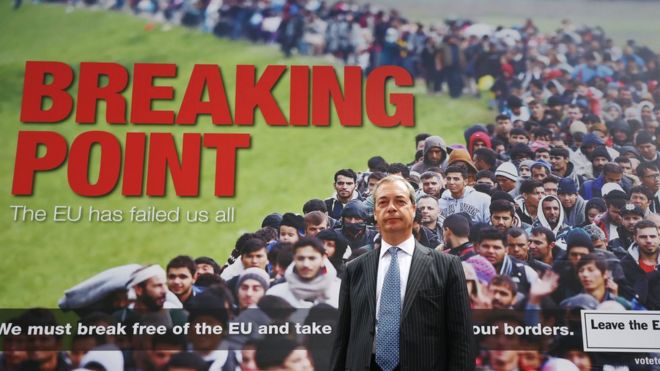
As for immigration, well I am in no position to pontificate about that, given my southern European surname, and being a Scouser, three generations back via census records and you are into a very strong influx of Irish to Liverpool during the middle half of the 19th century. My simple take on immigration is that it needs to be sensibly managed. Not open door, not shut door (both extremes are equally invalid, in my view).
European Army. It has been a topic in the media for quite some time. A unified European army to represent/protect the interest of the EU member states. Many have poo-pooed the idea, saying we are almost there already anyway, in that concerted action is always being undertaken, and there is some merit in that point. However, should the independent military scenario of the UK be 100% subsumed to European military, or European bureaucrats whose vested interests may lie only with their own country and not that of the UK? That might sound jingoistic, but one must look at how it would transpire in real terms if taken to its logical conclusion.
So, 25, I weighed everything up that had transpired over the decades, looked at how things were shaping now, and projected how they would shape in the future, and came to the singular conclusion that I believed the UK would be better out of the EU in order to determine its future path without the constraints placed upon it by the EU machinery.
I've re-read through this whole psot and see it is quite lengthy, but I hope it gives you a better idea of why just one person decided to vote leave. Both campaigns left me cold - posturing on both sides by big political names given a free role for once, and 'expert' economists spouting doom and glooom at every opportunity (when have they EVER actually got it right???).
I would welcome your further comments on the above, 25.