
D
You are using an out of date browser. It may not display this or other websites correctly.
You should upgrade or use an alternative browser.
You should upgrade or use an alternative browser.
Current Affairs Palestinian Elections
- Thread starter BigMick
- Start date
- Status
- Not open for further replies.

Toffeeslam
Player Valuation: £40m
Got no problem with that.
However the fact that nothing is said or done with regards to illegal settlement construction and abuses of Palestinians by Israeli government tell you that this government is Israel’s best friend

BigMick
Player Valuation: £20m
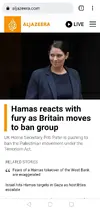
Long overdue. The claim of a difference between the political wing and armed wing of Hams, and other organisations like the PFLP, is a myth. The idea that the likes of Haniyeh, Sinwar and Mashal are not involved in military operations is a joke, as Hamas inadvertently proved when they lauded Sinwar for his role in the May war.
The PA reaction made me chuckle, showing the dilemma they face. They regularly arrest Hamas activists in the West Bank - not to mention Friday's gun battle in Jenin - but are so weak that they were forced to condemn Britain's move, calling it a “capitulation to Israeli pressure and an unjustified assault on the Palestinian people.”
It didn't take too long for the 'political wing' to show its true colours. One dead and three injured in Jerusalem today after Sheikh Fadi Abu Shkhaydam, a Hamas member, community leader, Islamic scholar, and regular preacher at Al Aqsa mosque opened fire.

Planned in advance - his wife and children left the country thee days ago - Hamas claimed responsibility and celebrated his actions.
BigMick
Player Valuation: £20m
A little more about the murderer who went on a shooting spree in Jerusalem at the weekend.
I listed some of his roles in the community - Hamas member, community leader, Islamic scholar, and regular preacher at Al Aqsa mosque - but I missed out probably the most sickening one.
Teacher.
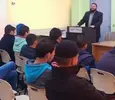
Turns out he taught at a school in East Jerusalem. The night of the murder a few thousand strong crowd, consisting of mainly young men, teenagers and children brandishing their Hamas flags, marched to his house to celebrate his death as a 'martyr'. At least some of them would have been pupils or ex-pupils of the murderer.
One of his young pupils was asked what he was like:
"God bless him, he was an amazing teacher. He never cursed anyone, except the Jews - may God burn them!"
Actually, there's plenty of clips available of him cursing Arab and western leaders and anyone who transgresses Sharia law, especially women. (Appropriate that he was shot by two female border police).
This was his last message:
“From when I first walked, and I drank of the Qu’ran, I dreamed of meeting God as a martyr.
We must steer the ship with our blood, and serve as a practical example of the way of jihad.”
How would you like your children to be taught by such a hate-filled man?
Sadly, that is the fate of far too many Palestinian children, whether in Jerusalem, Gaza, or the West Bank.
I listed some of his roles in the community - Hamas member, community leader, Islamic scholar, and regular preacher at Al Aqsa mosque - but I missed out probably the most sickening one.
Teacher.
Turns out he taught at a school in East Jerusalem. The night of the murder a few thousand strong crowd, consisting of mainly young men, teenagers and children brandishing their Hamas flags, marched to his house to celebrate his death as a 'martyr'. At least some of them would have been pupils or ex-pupils of the murderer.
One of his young pupils was asked what he was like:
"God bless him, he was an amazing teacher. He never cursed anyone, except the Jews - may God burn them!"
Actually, there's plenty of clips available of him cursing Arab and western leaders and anyone who transgresses Sharia law, especially women. (Appropriate that he was shot by two female border police).
This was his last message:
“From when I first walked, and I drank of the Qu’ran, I dreamed of meeting God as a martyr.
We must steer the ship with our blood, and serve as a practical example of the way of jihad.”
How would you like your children to be taught by such a hate-filled man?
Sadly, that is the fate of far too many Palestinian children, whether in Jerusalem, Gaza, or the West Bank.
BigMick
Player Valuation: £20m
With the first stage of the local elections due on 11th December, a new opinion poll covering the West Bank and Gaza has been published.
81% said it is important to hold local elections, 14.2% not important.
Are Hamas right to boycott local elections: No 52.2%, yes 20.3%
Voting intentions if legislative elections were to be held: FATAH 34.3, HAMAS 10.2, PFLP 1%
Trust in leaders: Abbas 9.3, Barghouti 5.8, Haniyeh (Hamas) 4.2, Dahlan 2.2, No-one 54.1
Trust in parties: Fatah 26.3, Hamas 11.7, None 45.9
Things to take from those figures: the post-May war Hamas bubble has, as predicted, well and truly burst - they are almost back to the pre-election poll figure of 8%; without a noisy propaganda campaign Barghouti's popularity plummets; no leader is trusted!
96.8% demanded a social security system from government. History of social security for Palestinians is a long, complex story but its absence gives additional fuel to those who point out how immoral the 'pay to slay' payments are - they are given to prisoners, prisoners families, and to the families of those who died committing attacks.
72.3% said the Personal Status Law should be based on Islamic Sharia, as opposed to 3.8% who said it should be based on international treaties, 9.8% on civil laws and 11.1% on customs and traditions.
In favour of 2 state solution: 29.4%
Prefer one bi-national state with equal rights for all 26%
One Palestinan state (no equal rights for Jews) 24.2%
Want an Islamic state 0.5%
Prefer peaceful negotiations 33.7%
Armed resistance 33.1%
Peaceful resistance 20.8%
54% say they've had a covid vaccine, 34.5% don't want vaccine, with supposed side effects being the biggest reason.
81% said it is important to hold local elections, 14.2% not important.
Are Hamas right to boycott local elections: No 52.2%, yes 20.3%
Voting intentions if legislative elections were to be held: FATAH 34.3, HAMAS 10.2, PFLP 1%
Trust in leaders: Abbas 9.3, Barghouti 5.8, Haniyeh (Hamas) 4.2, Dahlan 2.2, No-one 54.1
Trust in parties: Fatah 26.3, Hamas 11.7, None 45.9
Things to take from those figures: the post-May war Hamas bubble has, as predicted, well and truly burst - they are almost back to the pre-election poll figure of 8%; without a noisy propaganda campaign Barghouti's popularity plummets; no leader is trusted!
96.8% demanded a social security system from government. History of social security for Palestinians is a long, complex story but its absence gives additional fuel to those who point out how immoral the 'pay to slay' payments are - they are given to prisoners, prisoners families, and to the families of those who died committing attacks.
72.3% said the Personal Status Law should be based on Islamic Sharia, as opposed to 3.8% who said it should be based on international treaties, 9.8% on civil laws and 11.1% on customs and traditions.
In favour of 2 state solution: 29.4%
Prefer one bi-national state with equal rights for all 26%
One Palestinan state (no equal rights for Jews) 24.2%
Want an Islamic state 0.5%
Prefer peaceful negotiations 33.7%
Armed resistance 33.1%
Peaceful resistance 20.8%
54% say they've had a covid vaccine, 34.5% don't want vaccine, with supposed side effects being the biggest reason.
D
Deleted member 48881
Guest
BigMick
Player Valuation: £20m
I don't know but I suspect if she'd said Be'er Sheva, Ashdod or West Jerusalem the answers would be the same.
However, if your point is that Palestinians are too often ignored or not given the respect they deserve then I would agree with you, but I can think of plenty more important examples, rather than a speaking clock!
For instance, Prime Minister Shtayyeh gave a press conference recently specifically for foreign media, a very rare event. No matter what anyone thinks of him, Shtayyeh is responsible for the day to day running of the government and is the 2nd most powerful man in it after President Abbas. He also frequently represents Palestine on the world stage and speaks fluent English, having attended university over here.
With the PA staggering from crisis to crisis, various cities in the West Bank descending into lawlessness and anarchy, people demanding human rights, the death of Nizar Banat, not to mention Israel and the prospects for peace, there were plenty of important matters to question him about.
Not one representative of the British media bothered to attend, let alone ask a question or report on the meeting.
Here are some of the questions that were asked.
Abbas's opinion poll rating is at an all time low. Why is he so unpopular?
Wasn't cancelling the elections a huge mistake and when will they be reinstated?
On violence in Hebron, Nablus and Jenin (add Bethlehem to that list), what is causing it and how are the PA going to stop it?
Four universities have recently been closed due to violent clashes amongst students, usually affiliated to different political parties. What are you doing about this?
You condemned Israel's designation of 6 NGOs as terrorist organisations due to their links with the PFLP. Why have the PLO (controlled by your party) cut funding to the PFLP?
On the financial crisis, of the $100 million that the Arab League member countries had committed to the PA as part of a financial “security net,” less than $2 million has been paid. Why?
On 'Pay to Slay', how can you justify making payments to the families of someone who commits or attempts murder when, for instance, the widow of someone who dies of an illness gets nothing?
What are your views of the measures the Israel government has taken to improve the West Bank economy and other proposals it has made? Does your government have any proposals of its own or is it totally passive?
You recently said, "Jerusalem has Canaanite, Roman, Islamic, and Christians antiquities and is theirs alone, and no one else has any traces in it." As an educated man, do you really believe that? If so, by denying any Jewish connection to Jerusalem, how do you expect the Israelis to negotiate seriously with you?
There were other questions on Nizar Banat, social security protests and women's rights, and countless others that could have been asked. Maybe one of our highly paid 'Jerusalem Correspondents' could have come up with an original question of their own, if only they'd thought it worthwhile turning up. Sadly they didn't, and that lack of interest is far worse than a speaking clock not giving the time in Ramallah - the city where Shtayyeh's press conference was held.
BigMick
Player Valuation: £20m
Palestinians finally had a taste of democracy - more like a snack - last weekend as the 1st round of voting in the local elections took place. Turnout of 66% was much higher than in previous years.
Voting was held in West Bank villages, with municipal areas having to wait until the 2nd round due in March. The rural areas are traditionally strongholds of Abbas’s Fatah party, whereas the 90 or so towns and cities are less predictable.
Unfortunately, Hamas allowed no voting in the Gaza Strip, and there was also none in 60 West Bank villages where no candidates were registered, or in another 162 where there was just one candidate who was elected automatically. That left 154 villages where voters actually went to the polls.
Officially, Hamas boycotted the election, resulting in a lack of political party affiliation in campaigning, meaning the field was largely left to traditional clan-based lists and issue-based campaigns.
Fatah won 123 out of the 162 uncontested council lists - they fielded by far the largest number of lists, the Democratic Front had 25 lists, the PFLP had 6, the left-wing People’s Party had 5 and the Palestinian Struggle faction fielded 2.
Independent lists won 70.86% of the total contested council seats of 1,503, whereas partisan lists got 29.14% of seats, the majority Fatah.
Deciphering the results in the contested seats is tricky as many of the local candidates are not necessarily affiliated or loyal to any particular political movement. Generally they represent powerful clans, with clan chiefs often negotiating independent nominations with one party, usually the traditionally powerful Fatah.
It's thought that numerous Fatah members chose to run as part of independent or clan lists because they were unhappy with the composition of the faction’s official electoral lists. This suggests Fatah have not learned from their 2006 election defeat when they frequently fielded several candidates in the same seat, taking votes off each other and allowing Hamas to win.
A chief Fatah official admitted that the movement "did not retreat or advance," and claimed that "the most important thing for Fatah is the high turnout in the elections, not the results." Other Fatah officials claimed the absence of Hamas meant many of their supporters felt free to vote independent rather than support the party against their biggest opponents.
I don't think too much can be read into the results apart from it underlining the strength and importance of the clans in Palestinian politics and society, and perhaps a disillusionment with the established parties. The second round of voting should present a clearer picture, provided they are not cancelled - if Fatah fear humiliation they could once again 'postpone' them. The high turnout (for local elections) once again underlines the hunger for democracy.
Voting was held in West Bank villages, with municipal areas having to wait until the 2nd round due in March. The rural areas are traditionally strongholds of Abbas’s Fatah party, whereas the 90 or so towns and cities are less predictable.
Unfortunately, Hamas allowed no voting in the Gaza Strip, and there was also none in 60 West Bank villages where no candidates were registered, or in another 162 where there was just one candidate who was elected automatically. That left 154 villages where voters actually went to the polls.
Officially, Hamas boycotted the election, resulting in a lack of political party affiliation in campaigning, meaning the field was largely left to traditional clan-based lists and issue-based campaigns.
Fatah won 123 out of the 162 uncontested council lists - they fielded by far the largest number of lists, the Democratic Front had 25 lists, the PFLP had 6, the left-wing People’s Party had 5 and the Palestinian Struggle faction fielded 2.
Independent lists won 70.86% of the total contested council seats of 1,503, whereas partisan lists got 29.14% of seats, the majority Fatah.
Deciphering the results in the contested seats is tricky as many of the local candidates are not necessarily affiliated or loyal to any particular political movement. Generally they represent powerful clans, with clan chiefs often negotiating independent nominations with one party, usually the traditionally powerful Fatah.
It's thought that numerous Fatah members chose to run as part of independent or clan lists because they were unhappy with the composition of the faction’s official electoral lists. This suggests Fatah have not learned from their 2006 election defeat when they frequently fielded several candidates in the same seat, taking votes off each other and allowing Hamas to win.
A chief Fatah official admitted that the movement "did not retreat or advance," and claimed that "the most important thing for Fatah is the high turnout in the elections, not the results." Other Fatah officials claimed the absence of Hamas meant many of their supporters felt free to vote independent rather than support the party against their biggest opponents.
I don't think too much can be read into the results apart from it underlining the strength and importance of the clans in Palestinian politics and society, and perhaps a disillusionment with the established parties. The second round of voting should present a clearer picture, provided they are not cancelled - if Fatah fear humiliation they could once again 'postpone' them. The high turnout (for local elections) once again underlines the hunger for democracy.
BigMick
Player Valuation: £20m
Congratulations to Mahmoud Abbas who today celebrates the beginning of the 18th year of his 4 year term as President of the Palestine Authority, following his election on 9th January 2005.
Unsurprisingly there are no celebrations; instead, Abbas is on a two-day visit to Egypt at the invitation of President Sisi. He will also attend the World Youth Forum in Sharm el-Sheikh, an annual conference organised by an international NGO of the same name.
Only last week Abbas crossed the Green Line into Israel for a meeting with Israeli Defence Minster Benny Gantz - his first visit to Israel for more than 10 years.
He's 86. He may have many faults but he certainly doesn't lack energy.
Unsurprisingly there are no celebrations; instead, Abbas is on a two-day visit to Egypt at the invitation of President Sisi. He will also attend the World Youth Forum in Sharm el-Sheikh, an annual conference organised by an international NGO of the same name.
Only last week Abbas crossed the Green Line into Israel for a meeting with Israeli Defence Minster Benny Gantz - his first visit to Israel for more than 10 years.
He's 86. He may have many faults but he certainly doesn't lack energy.
BigMick
Player Valuation: £20m
There has long been speculation about who would replace Mahmoud Abbas once age or ill health catch up with him, forcing his removal from the three leadership roles he currently holds: PA President, head of Fatah, and chairman of the PLO.
There have been long time candidates such as Mahmoud al-Aloul, Jibril Rajoub, and Tawfiq Tirawi. Aloul, the 72-year-old deputy chairman of Fatah, was thought to be the person most likely to succeed Abbas. He was entrusted with coordinating the anti-settlement activities of the “popular resistance” in the West Bank, a mission that has earned him much respect among the Palestinian public. Aloul shows up at many major anti-settlement protests and is a frequent participant in various rallies in different parts of the West Bank.He has a strong base of support in Nablus and the northern West Bank, including the refugee camps.
Rajoub, 68, has long sought to end the dispute between Fatah and Hamas but suffered a major blow when the deal he brokered with Hamas to hold general elections collapsed after Abbas called off the vote. He's thought to have backing in the southern West Bank, especially in the Hebron area, as well as among Gazans whose leaders in Fatah support the dismissed Fatah leader Mohammad Dahlan. He represents Palestine at sporting occasions where he plays to his domestic gallery by regularly calling for Israel to be banned from whatever competition it is. Tirawi is a long-time Abbas critic and has been ostracised in recent years. His chance has likely gone, but the other two cannot be discounted, particularly Rajoub.
Over the past year, however, Abbas has sidelined Aloul and Rajoub, keeping them away from the decision-making process of the Ramallah leadership and allowing a new favourite to emerge, a process that has accelerated dramatically in recent weeks.
Hussein al-Sheikh accompanies Abbas wherever he goes and attends all his important meetings, such as those with Benny Gantz. He has also represented Palestine in meetings with Egypt and Jordan and recently held a meeting with Yair Lapid, Israeli foreign minister and slated to take over as prime minister in less than 18 months time. The 1st meeting of two future leaders?
Last week Fatah unanimously elected him to the position of Secretary of the Executive Committee of the PLO, succeeding Saeb Erekat, who died in November 2020, a decision almost certain to be ratified by the PLO Central Council, if and when it convenes in Ramallah early next month.
Here are some facts about Hussein al-Sheikh:
Born in 1960 in Ramallah
Has been the head of the General Authority of Civil Affairs since 2007. In this capacity, he serves as one of the primary contacts with Israeli authorities regarding civilian matters in the Occupied Palestinian Territory
Claims to have been detained eleven times by Israeli forces between 1977 and 1988.
Became a member of the Unified National Leadership of the Uprising during the 1st Intifada.
Following the Oslo Accords and the establishment of the PA, he served briefly in Preventive Security with the rank of colonel, before becoming secretary general of Fatah in the West Bank in 1999.
Claims he was wanted by Israel for a period of five years after the 2nd Intifada erupted in 2000.
Has strong relations with Israel, the US and Russia.
A Western diplomat who met with Sheikh recently described him as a “real Palestinian gentleman,” adding “he is the type of Palestinian the Israelis and Americans can do business with.”
Appears to have the backing of the powerful Head of Security, Majed Faraj.
In 2020 his brother Khalil was killed in a gun battle with a PA security officer in el-Bireh, a suburb of Ramallah. This caused family members to march through Ramallah, shooting at government buildings and at the headquarters of the Preventive Security, the security force that employed the suspected killer.
After his brother's funeral Hussein al-Sheikh lamented the lack of unity in the “national fabric” which he said led to his brother’s death.
“I almost wish that the bullets that killed Khalil were Israeli bullets. But we’re responsible in this place, we’re responsible for the people…I’ll be straight with you: my heart aches.”
He wouldn't be a Palestinian leader without the whiff of corruption hanging around, in particular the employment of several relatives and friends in well paid positions, such as his nephew who was appointed deputy director-general of the Health Ministry.
Regarded as a moderate, he believes Hamas have done untold damage to the Palestinian cause and favours contact and talks with Israel rather than resorting to violence. However, being regarded as too close to the Israelis would do him no favours domestically so it's unsurprising that in the days since meeting Lapid he has issued several statements condemning Israel. Expect more.
In another sign of his emerging prominence Hamas controlled media last weekend featured several articles rubbishing him.
Sadly no-one is asking the Palestinian people who they want to see as their president. The only way to choose a leader should be through free and fair elections but when Abbas goes I foresee a temporary Emergency Government being formed with the positions currently held by Abbas perhaps split amongst these candidates and possibly one or two others such as Nasser al-Qudwa, but the position of president will likely go to the winner of the coveted position of Fatah leader, with al-Sheikh now the favourite. This 'temporary' government will announce that elections will be held 'as soon as possible' but will, like Abbas, find a reason not to hold them for as long as they can get away with.
Critics say al-Sheikh is 'continuity Abbas' - true in some respects - but he's Abbas without the baggage, at least internationally. If his accession to power coincides with Lapid's premiership - 50/50 chance of the Israeli government lasting that long - then some progress towards a treaty could be made, although I doubt either man has the political base to do more than simply start discussions and right a few wrongs.
There have been long time candidates such as Mahmoud al-Aloul, Jibril Rajoub, and Tawfiq Tirawi. Aloul, the 72-year-old deputy chairman of Fatah, was thought to be the person most likely to succeed Abbas. He was entrusted with coordinating the anti-settlement activities of the “popular resistance” in the West Bank, a mission that has earned him much respect among the Palestinian public. Aloul shows up at many major anti-settlement protests and is a frequent participant in various rallies in different parts of the West Bank.He has a strong base of support in Nablus and the northern West Bank, including the refugee camps.
Rajoub, 68, has long sought to end the dispute between Fatah and Hamas but suffered a major blow when the deal he brokered with Hamas to hold general elections collapsed after Abbas called off the vote. He's thought to have backing in the southern West Bank, especially in the Hebron area, as well as among Gazans whose leaders in Fatah support the dismissed Fatah leader Mohammad Dahlan. He represents Palestine at sporting occasions where he plays to his domestic gallery by regularly calling for Israel to be banned from whatever competition it is. Tirawi is a long-time Abbas critic and has been ostracised in recent years. His chance has likely gone, but the other two cannot be discounted, particularly Rajoub.
Over the past year, however, Abbas has sidelined Aloul and Rajoub, keeping them away from the decision-making process of the Ramallah leadership and allowing a new favourite to emerge, a process that has accelerated dramatically in recent weeks.
Hussein al-Sheikh accompanies Abbas wherever he goes and attends all his important meetings, such as those with Benny Gantz. He has also represented Palestine in meetings with Egypt and Jordan and recently held a meeting with Yair Lapid, Israeli foreign minister and slated to take over as prime minister in less than 18 months time. The 1st meeting of two future leaders?
Last week Fatah unanimously elected him to the position of Secretary of the Executive Committee of the PLO, succeeding Saeb Erekat, who died in November 2020, a decision almost certain to be ratified by the PLO Central Council, if and when it convenes in Ramallah early next month.
Here are some facts about Hussein al-Sheikh:
Born in 1960 in Ramallah
Has been the head of the General Authority of Civil Affairs since 2007. In this capacity, he serves as one of the primary contacts with Israeli authorities regarding civilian matters in the Occupied Palestinian Territory
Claims to have been detained eleven times by Israeli forces between 1977 and 1988.
Became a member of the Unified National Leadership of the Uprising during the 1st Intifada.
Following the Oslo Accords and the establishment of the PA, he served briefly in Preventive Security with the rank of colonel, before becoming secretary general of Fatah in the West Bank in 1999.
Claims he was wanted by Israel for a period of five years after the 2nd Intifada erupted in 2000.
Has strong relations with Israel, the US and Russia.
A Western diplomat who met with Sheikh recently described him as a “real Palestinian gentleman,” adding “he is the type of Palestinian the Israelis and Americans can do business with.”
Appears to have the backing of the powerful Head of Security, Majed Faraj.
In 2020 his brother Khalil was killed in a gun battle with a PA security officer in el-Bireh, a suburb of Ramallah. This caused family members to march through Ramallah, shooting at government buildings and at the headquarters of the Preventive Security, the security force that employed the suspected killer.
After his brother's funeral Hussein al-Sheikh lamented the lack of unity in the “national fabric” which he said led to his brother’s death.
“I almost wish that the bullets that killed Khalil were Israeli bullets. But we’re responsible in this place, we’re responsible for the people…I’ll be straight with you: my heart aches.”
He wouldn't be a Palestinian leader without the whiff of corruption hanging around, in particular the employment of several relatives and friends in well paid positions, such as his nephew who was appointed deputy director-general of the Health Ministry.
Regarded as a moderate, he believes Hamas have done untold damage to the Palestinian cause and favours contact and talks with Israel rather than resorting to violence. However, being regarded as too close to the Israelis would do him no favours domestically so it's unsurprising that in the days since meeting Lapid he has issued several statements condemning Israel. Expect more.
In another sign of his emerging prominence Hamas controlled media last weekend featured several articles rubbishing him.
Sadly no-one is asking the Palestinian people who they want to see as their president. The only way to choose a leader should be through free and fair elections but when Abbas goes I foresee a temporary Emergency Government being formed with the positions currently held by Abbas perhaps split amongst these candidates and possibly one or two others such as Nasser al-Qudwa, but the position of president will likely go to the winner of the coveted position of Fatah leader, with al-Sheikh now the favourite. This 'temporary' government will announce that elections will be held 'as soon as possible' but will, like Abbas, find a reason not to hold them for as long as they can get away with.
Critics say al-Sheikh is 'continuity Abbas' - true in some respects - but he's Abbas without the baggage, at least internationally. If his accession to power coincides with Lapid's premiership - 50/50 chance of the Israeli government lasting that long - then some progress towards a treaty could be made, although I doubt either man has the political base to do more than simply start discussions and right a few wrongs.
BigMick
Player Valuation: £20m
Despite the crisis in Ukraine the UK parliament last week found time to debate the UK recognising Palestinian statehood. It made the news this week due to Labour MP Julie Elliott making the facile comparison of the situation in Palestine and the Russian invasion of Ukraine - Andy Slaughter made a similar comparison.
For those interested, the full debate can be read here:
https://hansard.parliament.uk/Commo...4785AFA7E131/RecognitionOfTheStateOfPalestine
In truth it was a sparsely attended and entirely predicable debate, and I could spend hours nitpicking through the various speeches, but it's not worth the effort., so I''ll only mention two.
This was good from Tory Matthew Offord:
"Peace between leaders will last only if the Israeli and Palestinian peoples trust and empathise with each other. As the US increases its support for peacebuilding, so too should the UK. We should join the US in the establishment of an international fund for Israeli-Palestinian peace, to invest in shared-society projects."
No-one can disagree with the first part, while the second is something I've supported for years.
This from Margaret Ferrier, a Scottish MP, fascinated me.
"In Hebron I saw Palestinian workers making their way home, walking along a convoluted route. I then visited Ramallah, a fascinating and bustling city where I was able to get a taste of what normality might look like if peace were made."
Why did she find such a contrast between the two cities? Hebron is the largest and most prosperous city in the West Bank, with two universities, and many factories, businesses, and modern shopping malls, that produce more than 40% of the PA economy. The PA controls 80% of the city, the IDF 20% with much of that a buffer zone to protect the small Jewish community that lives there. That community dates back to at least 1500BC, with only a handful of small periods when they were either massacred or expelled - the last such period being between 1949 and 1967 when the West Bank was annexed by Jordan, who ethnically cleansed the whole area of Jews. The IDF are not allowed to enter 80% of Hebron without the permission of the PA.
The reason she found such a difference is that most MPs visit on tours guided by politically motivated groups like Breaking the Silence, who take them to the contentious area but not the rest of the city where the vast majority of people live lives identical to those she found so encouraging in Ramallah. Consequently they go away with no idea how the vast majority of Hebron 215,000 residents live - clan wars are the biggest problem for most of the people, not Israel.
Regarding the UK immediately recognising a Palestinian state, I can see both sides of the argument but come down against it for the following reasons:
1 it would be far better to do it in tandem with other countries - the UK on its own is insignificant.
2. It would be detrimental to the UK relationship with Israel, which has its benefits for Palestinians as well as Israelis, and would also give the wrong signal to the PA and Hamas, encouraging them to continue with their failed and dead-end policies.
I would be in favour of it had the elections due last year been held and a unity government was now functioning and producing coherent policies.
This is not a case of making the Palestinians jump over fences, as Jeremy Corbyn suggested in his speech. I often wonder how many of those who profess support for the Palestinian cause realise just what a dire state it is in politically. Don't they know that there is a very real chance of a civil war - in the West Bank this time, not Gaza? The cancellation of the elections was an absolute disaster for the Palestinian people - for a start, there would have been no war last May. Where were the voices of those Palestinian supporters then? Silent. Unlike the Palestinian people themselves.
For evidence of a possible civil war look no further than last weekend when the leader of Islamic Jihad narrowly avoided assassination by gunmen thought to belong to Fatah's Al-Aqsa Brigade. He was visiting the families of 3 Al-Aqsa Brigade gunmen killed by Israeli security last week, because West Bank media suggested Islamic Jihad had let the Israelis know where the gunmen were, which they of course deny. There are countless other examples.
The Palestinians are human beings - they make mistakes and when they do it's ok to constructively criticise them.
What needs to happen:
1. Hold elections.
2. Form a unity government similar to that agreed between Fatah and Hamas last year, with Hamas taking a backseat in return for entry to the PLO.
3. Abbas is certain to lose the presidential election and the winner must be accepted by everyone, even if it's Marwan Barghouti, not my choice but better than some of his likely opponents.
4 Once the government has shown it can function - European nations, including the UK, recognise the State of Palestine.
5 Israel reaffirms the right of Palestinians to their own state in the West Bank and Gaza, and Palestine recognises the right of Israel to exist as a Jewish state with an Arab minority guaranteed equal rights.
After that negotiations can begin. Only with a unified government can there be any realistic chance of a settlement, otherwise we are back to 2008 when Abbas turned down Olmert's offer of everything that current proponents of the 2-State solution demand because it would have led to civil war with Hamas.
For those interested, the full debate can be read here:
https://hansard.parliament.uk/Commo...4785AFA7E131/RecognitionOfTheStateOfPalestine
In truth it was a sparsely attended and entirely predicable debate, and I could spend hours nitpicking through the various speeches, but it's not worth the effort., so I''ll only mention two.
This was good from Tory Matthew Offord:
"Peace between leaders will last only if the Israeli and Palestinian peoples trust and empathise with each other. As the US increases its support for peacebuilding, so too should the UK. We should join the US in the establishment of an international fund for Israeli-Palestinian peace, to invest in shared-society projects."
No-one can disagree with the first part, while the second is something I've supported for years.
This from Margaret Ferrier, a Scottish MP, fascinated me.
"In Hebron I saw Palestinian workers making their way home, walking along a convoluted route. I then visited Ramallah, a fascinating and bustling city where I was able to get a taste of what normality might look like if peace were made."
Why did she find such a contrast between the two cities? Hebron is the largest and most prosperous city in the West Bank, with two universities, and many factories, businesses, and modern shopping malls, that produce more than 40% of the PA economy. The PA controls 80% of the city, the IDF 20% with much of that a buffer zone to protect the small Jewish community that lives there. That community dates back to at least 1500BC, with only a handful of small periods when they were either massacred or expelled - the last such period being between 1949 and 1967 when the West Bank was annexed by Jordan, who ethnically cleansed the whole area of Jews. The IDF are not allowed to enter 80% of Hebron without the permission of the PA.
The reason she found such a difference is that most MPs visit on tours guided by politically motivated groups like Breaking the Silence, who take them to the contentious area but not the rest of the city where the vast majority of people live lives identical to those she found so encouraging in Ramallah. Consequently they go away with no idea how the vast majority of Hebron 215,000 residents live - clan wars are the biggest problem for most of the people, not Israel.
Regarding the UK immediately recognising a Palestinian state, I can see both sides of the argument but come down against it for the following reasons:
1 it would be far better to do it in tandem with other countries - the UK on its own is insignificant.
2. It would be detrimental to the UK relationship with Israel, which has its benefits for Palestinians as well as Israelis, and would also give the wrong signal to the PA and Hamas, encouraging them to continue with their failed and dead-end policies.
I would be in favour of it had the elections due last year been held and a unity government was now functioning and producing coherent policies.
This is not a case of making the Palestinians jump over fences, as Jeremy Corbyn suggested in his speech. I often wonder how many of those who profess support for the Palestinian cause realise just what a dire state it is in politically. Don't they know that there is a very real chance of a civil war - in the West Bank this time, not Gaza? The cancellation of the elections was an absolute disaster for the Palestinian people - for a start, there would have been no war last May. Where were the voices of those Palestinian supporters then? Silent. Unlike the Palestinian people themselves.
For evidence of a possible civil war look no further than last weekend when the leader of Islamic Jihad narrowly avoided assassination by gunmen thought to belong to Fatah's Al-Aqsa Brigade. He was visiting the families of 3 Al-Aqsa Brigade gunmen killed by Israeli security last week, because West Bank media suggested Islamic Jihad had let the Israelis know where the gunmen were, which they of course deny. There are countless other examples.
The Palestinians are human beings - they make mistakes and when they do it's ok to constructively criticise them.
What needs to happen:
1. Hold elections.
2. Form a unity government similar to that agreed between Fatah and Hamas last year, with Hamas taking a backseat in return for entry to the PLO.
3. Abbas is certain to lose the presidential election and the winner must be accepted by everyone, even if it's Marwan Barghouti, not my choice but better than some of his likely opponents.
4 Once the government has shown it can function - European nations, including the UK, recognise the State of Palestine.
5 Israel reaffirms the right of Palestinians to their own state in the West Bank and Gaza, and Palestine recognises the right of Israel to exist as a Jewish state with an Arab minority guaranteed equal rights.
After that negotiations can begin. Only with a unified government can there be any realistic chance of a settlement, otherwise we are back to 2008 when Abbas turned down Olmert's offer of everything that current proponents of the 2-State solution demand because it would have led to civil war with Hamas.
BigMick
Player Valuation: £20m
The two faces of Palestinian politics were in full view this weekend as the majority of political parties issued statements praising the latest terrorist attack in Israel (the PA also failed to condemn the attacks), while some of those parties also took part in the second and final leg of the local elections.
The elections took place in Areas A and B of the West Bank and included all cities and major towns. Sadly, Hamas again denied Gazans the right to vote, and also saved themselves from the embarrassment of losing seats in Gaza. They also took no part in the West bank elections, although some party members formed independent lists, while others allied with the Popular Front for the Liberation of Palestine (PFLP), which is the second largest PLO party.
In all a remarkable (and ridiculous) 259 electoral lists competed for 73 local (municipal) bodies.
Of these there were 81 partisan lists (i.e. lists registered as representing a political party or a coalition of parties) and 178 independent lists. Fatah had most official candidates running and, aware of their unpopularity in some areas, they also fielded 'shadow' candidates running as independents.
23 local bodies had only one list running, which won by acclamation.
The number of candidates in all accepted lists was 2,537, including 678 women.
Voter turnout was 53.27%. While this is higher than, for instance, the UK local elections it was a disappointing figure. Most analysts blame it on the general aversion to the existing political parties, and especially Fatah, who control the PA. Fatah worked hard to persuade people to vote so the low turnout is a blow to them.
Independent Lists won 64.4% and partisan lists won 35.6% of the seats.
Fatah finished as the largest party, simply because they had most candidates. This caused them to claim victory: "The election results confirmed the renewal of confidence in the movement, its leader, and its leadership of the national project." Presumably they are hoping people don't study the results too closely.
Fatah won in Ramallah, Jenin and Nablus, where they squeaked home by one seat.
In Tulkarm a list including Hamas and PFLP members narrowly beat Fatah.
In Hebron, the "Loyalty to Hebron" list, headed by the former city mayor, won. He is a former Fatah member who has split from the party. Given the failure of the PA to stop the clan warfare which has plagued the city for almost 12 months it was predictable that Fatah would lose there.
Qalqilya and Jericho are unclear until negotiations between independent and partisan lists are complete. It's possible that by joining with some independent lists, Fatah may be able to cling to power.
Independent lists won in Samu, Al-Sheikh, Tammun and Beit Ummar.
Overall, Fatah's vote was down and there was nothing here to persuade Mahmoud Abbas to hold the general elections he cancelled last year. Only international pressure could force a change but that hasn't happened for many years. Perhaps one day those self-proclaimed Palestinian supporters in the west might see the light and try a bit of friendly persuasion instead of waving flags, making outdated speeches, and demanding immediate recognition of a Palestinian state.
The elections took place in Areas A and B of the West Bank and included all cities and major towns. Sadly, Hamas again denied Gazans the right to vote, and also saved themselves from the embarrassment of losing seats in Gaza. They also took no part in the West bank elections, although some party members formed independent lists, while others allied with the Popular Front for the Liberation of Palestine (PFLP), which is the second largest PLO party.
In all a remarkable (and ridiculous) 259 electoral lists competed for 73 local (municipal) bodies.
Of these there were 81 partisan lists (i.e. lists registered as representing a political party or a coalition of parties) and 178 independent lists. Fatah had most official candidates running and, aware of their unpopularity in some areas, they also fielded 'shadow' candidates running as independents.
23 local bodies had only one list running, which won by acclamation.
The number of candidates in all accepted lists was 2,537, including 678 women.
Voter turnout was 53.27%. While this is higher than, for instance, the UK local elections it was a disappointing figure. Most analysts blame it on the general aversion to the existing political parties, and especially Fatah, who control the PA. Fatah worked hard to persuade people to vote so the low turnout is a blow to them.
Independent Lists won 64.4% and partisan lists won 35.6% of the seats.
Fatah finished as the largest party, simply because they had most candidates. This caused them to claim victory: "The election results confirmed the renewal of confidence in the movement, its leader, and its leadership of the national project." Presumably they are hoping people don't study the results too closely.
Fatah won in Ramallah, Jenin and Nablus, where they squeaked home by one seat.
In Tulkarm a list including Hamas and PFLP members narrowly beat Fatah.
In Hebron, the "Loyalty to Hebron" list, headed by the former city mayor, won. He is a former Fatah member who has split from the party. Given the failure of the PA to stop the clan warfare which has plagued the city for almost 12 months it was predictable that Fatah would lose there.
Qalqilya and Jericho are unclear until negotiations between independent and partisan lists are complete. It's possible that by joining with some independent lists, Fatah may be able to cling to power.
Independent lists won in Samu, Al-Sheikh, Tammun and Beit Ummar.
Overall, Fatah's vote was down and there was nothing here to persuade Mahmoud Abbas to hold the general elections he cancelled last year. Only international pressure could force a change but that hasn't happened for many years. Perhaps one day those self-proclaimed Palestinian supporters in the west might see the light and try a bit of friendly persuasion instead of waving flags, making outdated speeches, and demanding immediate recognition of a Palestinian state.
- Status
- Not open for further replies.
Welcome
Join the Everton conversation today.
Fewer ads, full access, completely free.