

You are using an out of date browser. It may not display this or other websites correctly.
You should upgrade or use an alternative browser.
You should upgrade or use an alternative browser.
Current Affairs General US politics (ie, not POTUS related)
- Thread starter Dylan
- Start date
- Status
- Not open for further replies.
Ffs, this is not a good situation for Feinstein, her constituents or the Senate as a whole.

Ffs, this is not a good situation for Feinstein, her constituents or the Senate as a whole.
We really need age limits across the board for elected officials and judicial appointment...along with term limits.
I‘d like baseline cognitive exams, repeated during their term with frequency determined by age and/or health status

Martin Alvito
Player Valuation: £50m
The problem is even broader than that. Washington is run by old people for two reasons: the seniority system in Congress, and the lifetime tenure of Supreme Court justices. A prospective justice needs a lengthy enough federal appellate record to be a clear, solid vote, but still be young enough to sit for a very long time, which means most of them are in their fifties when appointed.We really need age limits across the board for elected officials and judicial appointment...along with term limits.
I‘d like baseline cognitive exams, repeated during their term with frequency determined by age and/or health status
What term limits alone for Congress would do is accelerate the infighting within the parties. We would be looking at a succession of two-year and four-year Speakers, leaders and committee chairs, which may not be the best thing. Sufficiently low age limits for members of Congress and justices probably work out a lot better, and largely obviate the need for humiliating cognitive exams to which the members and justices will never submit.
Most western democracies (and a lot of states) have age limits for the judiciary. We don't because it's too difficult to amend the Constitution to fix the problem. It's a document we need to tear up and rebuild from the ground up at this point, but that's not possible in this political environment.
I am a little surprised that I haven't heard about anyone from California filing suit to extend the Article V protection (which precludes amending the Constitution to deprive a state of equal suffrage in the Senate) to compel the removal of a senator who is mentally incompetent. The case is a clear loser, but running it up the flagpole is a relatively inexpensive way to generate media coverage making federal judges and justices look purely motivated by self-interest on this issue. That story plays well on both sides of the media divide right now, in the wake of the Thomas and Feinstein revelations.

TN Toffee
Player Valuation: £25m
Person, woman, man, camera, TV?We really need age limits across the board for elected officials and judicial appointment...along with term limits.
I‘d like baseline cognitive exams, repeated during their term with frequency determined by age and/or health status
Martin Alvito
Player Valuation: £50m
That is about all you need to know to function as a member of Congress, other than identify the machine that records votes and input the correct one. Those 'staff' people getting paid less than a living wage can handle the rest. If you say the wrong thing, they can scramble to clarify what you 'really' meant.Person, woman, man, camera, TV?

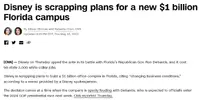
And Disney beginning to show it has some economic muscle as well.....I realize that pretty small $ in terms of the overall FL economy....but 2,000 jobs are 2,000 jobs.

Trump supporters are fxxxing poison.

 www.theguardian.com
Marjorie Taylor Greene claims white supremacist label is same as N-word
Far-right Republican congresswoman makes remarks after confrontation with Democratic congressman Jamaal Bowman

Toffee_Loaf
Player Valuation: £1m
Taking on Goliath ... Won't be long until they come after him.
Is there anyone suggesting there aren't serious problems with US law enforcement agencies?
Gaetz Demands DOJ Indict FBI Agents Following Durham Report
Rep. Matt Gaetz (R-Fla.) has suggested that the FBI should be defunded and its agents criminally indicted after special counsel John Durham concluded this week that the federal agency should have never launched an investigation into whether former President Donald Trump colluded with Russia during the 2016 election.
“I think we have to deauthorize, defang, and defund many of these authorities and entities and different task forces that actually converted the just and righteous act of protecting our country with the desire to have a particular political candidate win or lose,” he added.
“The only indictment that Durham is able to cite here is the indictment of Kevin Clinesmith,” Gaetz said, referring to the former FBI lawyer who doctored an email to state that a one-time Trump campaign associate was not a CIA asset when the associate actually was. Clinesmith has since pleaded guilty and received probation.
“And guess what? He’s already back to practicing law,” he added. “Got his law license back, and practicing law here in D.C. now. Insufficient.”
Is there anyone suggesting there aren't serious problems with US law enforcement agencies?
FBI dropped 4 probes into Hillary Clinton, family’s non-profit ahead of 2016 election: Durham report
Three of the FBI’s four investigations that were launched in early 2016 were looking into allegations that the Clinton Foundation has a hub of “criminal activity.”
Those federal probes originated from field offices in Little Rock, Arkansas, Washington, DC and New York — all of which opened audits into the charity as Hillary was in the midst of her presidential run.
The Little Rock and New York offices were investigating a claim that an outside commercial industry “likely engaged a federal public official in a flow of benefits scheme, namely, large monetary contributions were made to a non-profit, under both direct and indirect control of the federal public official, in exchange for favorable government action and/or influence,” according to the Durham report.
The DC investigation was based on allegations that the Clintons accepted millions in donations from foreign governments — as well as massive Russian corporations — in an attempt to influence US foreign policy dating back to Hillary’s days as Secretary of State, as outlined by political consultant Peter Schweizer in his book “Clinton Cash.”
The fourth investigation looked into allegations made by a “well-placed” source that Hillary continued accepting those illegal donations throughout her presidential campaign.

Matt Gaetz is an all American hero 
dylsexicbleu
Player Valuation: £8m
Downtown San Francisco commercial real estate currently has a vacancy rate of anywhere between 35%-70%. Historically a vacancy rate in any CRE market of 20% or more would be considered extremely bad. We are watching in real time a political party ruin a perfectly good city. Dems have ran plenty of rust belt/Southern cities into the ground. This is possibly their first time ruining a city that has, in theory, every advantage in the world over it's major competitors.

San Francisco’s office vacancy rate shot up to a record high of 29.4% in the first quarter, nearly eight times the pre-pandemic level. The city saw the biggest jump in vacancy among any U.S. city in the past three years, and leasing activity remained minimal at the start of 2023, according to preliminary data from real estate brokerage CBRE.
The vacancy rate, a measure of space available for lease and sublease, rose from 27.6% at the end of 2022 and 19.7% from the first quarter of 2022. Another 1.7 million square feet of vacant offices was added to the market in the past three months. Tech giants were the big winners during the early pandemic and continued record hiring and signed huge office leases even as workers stayed home. That has dramatically changed, with cost-cutting adding to San Francisco’s pain on top of remote work. The city’s biggest companies continue to downsize amid massive tech layoffs, with Meta listing all 435,000 square feet of its office space at 181 Fremont for sublease. Nearby, Salesforce listed 125,000 square feet for sublease at Salesforce Tower, the city’s tallest building. The companies have cited real estate efficiency and cost-cutting efforts as reasons to close offices, though they remain obligated to pay rent unless a subtenant is found. “There was a weak level of demand,” said Colin Yasukochi, executive director of CBRE’s Tech Insights Center. “Layoff announcements continued in the first quarter. That all translates to companies needing less space.” He expects vacancy to rise through at least the end of this year. The biggest leases in the first quarter included law firm Gibson Dunn’s 50,334-square-foot commitment at 1 Embarcadero Center and Reddit’s 47,872 square foot downsizing and relocation to 303 Second St. Law firm Shartsis Friese leased 26,158 square feet in another downsizing and relocation to 425 Market St.
Owen Thomas, CEO of Boston Properties, owner of Salesforce Tower and San Francisco’s biggest office landlord, said on an earnings call last month that U.S. “commercial real estate markets are currently in a recession,” though the broader economy is not. Despite the explosion in vacancy, asking rents are down less than 15% compared with 2019, to $75.25 per square foot annually. That’s far less than the 70% plunge in office rents after the 2000 dot-com bust and 30% drop after the 2008 recession, according to CBRE. Robert Sammons, senior research director at brokerage Cushman & Wakefield, said many properties were sold just prior to the pandemic with the expectation that high rents would continue. Lowering rents could devalue a building and make paying off mortgages or refinancing harder. It could also lead existing tenants to ask for price discounts. Major office leases also typically last a decade or more, meaning many major tenants continued to pay rent even through shelter-in-place orders when offices were closed, and afterward when offices were half empty. That has delayed the urgency of finding new tenants, though asking rents are expected to drop more this year as more leases expire. Some office landlords are offering concessions like free months of rent and paying for interior tenant office improvements as a way to lure companies without reducing the stated rent per month. Sammons said there is a “flight to quality” that has meant higher demand for the most modern and well located offices, which has also kept some rents high. Even if rents dropped in half, Yasukochi believes it would give only a small boost to demand, since many companies are not leasing offices because of remote work, rather than due to high prices. The cost of moving to a new office is also high, he said. “I would say that the building owners are a little in denial of what’s happening on the ground. And so there’s a lot of stickiness with respect to these stated rent terms,” said Arpit Gupta, an associate professor of finance at New York University who co-authored a widely read paper called “Work From Home and the Office Real Estate Apocalypse.” “Some building owners may have covenants on their debt. That means they have to go back to the bank in order to change their formal rental price,” he said. “Some building owners may be doing what we think of as gambling for resurrection, which is just maintaining the hope that maybe someday they really land that great tech tenant. And so they’re just kind of holding out hope for that.” But financial turmoil is spreading for office owners. Multiple landlords have recently defaulted on U.S. office mortgages, including Columbia Property Trust’s $1.7 billion default on seven properties that include two downtown San Francisco towers.
The pain could expand, with $270 billion in commercial mortgages held by banks expiring this year, according to real estate firm Trepp, the highest on record. That means property owners must pay up or risk losing their buildings. San Francisco could also suffer: The Controller’s Office estimated in November that property tax losses could reach nearly $200 million per year by 2028 in a worst-case scenario where office vacancy remains high — a 35% plunge in revenue compared with before the pandemic. But real estate experts remain optimistic about the city’s long-term economic resilience. “It’s not going to be an easy recovery,” Yasukochi said. “We have the biggest and strongest tech ecosystem which sets us up from future growth and innovation. That’s not going away.” Sammons said more efforts are needed from both the city government and businesses to make downtown more diverse, with more residents, restaurants and shops in addition to offices. On Tuesday, Mayor London Breed and Supervisor Aaron Peskin announced proposals to make it easier to convert offices to housing by eliminating some requirements, and to allow more flexible uses in upper-floor Union Square retail spaces. “In the near term there’s going to be pain. In the longer term, if the public and private sectors can come together, it can come back and come back strong,” Sammons said. “It’s going to have to be more mixed-use going forward. There’s no going around that.”
The vacancy rate, a measure of space available for lease and sublease, rose from 27.6% at the end of 2022 and 19.7% from the first quarter of 2022. Another 1.7 million square feet of vacant offices was added to the market in the past three months. Tech giants were the big winners during the early pandemic and continued record hiring and signed huge office leases even as workers stayed home. That has dramatically changed, with cost-cutting adding to San Francisco’s pain on top of remote work. The city’s biggest companies continue to downsize amid massive tech layoffs, with Meta listing all 435,000 square feet of its office space at 181 Fremont for sublease. Nearby, Salesforce listed 125,000 square feet for sublease at Salesforce Tower, the city’s tallest building. The companies have cited real estate efficiency and cost-cutting efforts as reasons to close offices, though they remain obligated to pay rent unless a subtenant is found. “There was a weak level of demand,” said Colin Yasukochi, executive director of CBRE’s Tech Insights Center. “Layoff announcements continued in the first quarter. That all translates to companies needing less space.” He expects vacancy to rise through at least the end of this year. The biggest leases in the first quarter included law firm Gibson Dunn’s 50,334-square-foot commitment at 1 Embarcadero Center and Reddit’s 47,872 square foot downsizing and relocation to 303 Second St. Law firm Shartsis Friese leased 26,158 square feet in another downsizing and relocation to 425 Market St.
Owen Thomas, CEO of Boston Properties, owner of Salesforce Tower and San Francisco’s biggest office landlord, said on an earnings call last month that U.S. “commercial real estate markets are currently in a recession,” though the broader economy is not. Despite the explosion in vacancy, asking rents are down less than 15% compared with 2019, to $75.25 per square foot annually. That’s far less than the 70% plunge in office rents after the 2000 dot-com bust and 30% drop after the 2008 recession, according to CBRE. Robert Sammons, senior research director at brokerage Cushman & Wakefield, said many properties were sold just prior to the pandemic with the expectation that high rents would continue. Lowering rents could devalue a building and make paying off mortgages or refinancing harder. It could also lead existing tenants to ask for price discounts. Major office leases also typically last a decade or more, meaning many major tenants continued to pay rent even through shelter-in-place orders when offices were closed, and afterward when offices were half empty. That has delayed the urgency of finding new tenants, though asking rents are expected to drop more this year as more leases expire. Some office landlords are offering concessions like free months of rent and paying for interior tenant office improvements as a way to lure companies without reducing the stated rent per month. Sammons said there is a “flight to quality” that has meant higher demand for the most modern and well located offices, which has also kept some rents high. Even if rents dropped in half, Yasukochi believes it would give only a small boost to demand, since many companies are not leasing offices because of remote work, rather than due to high prices. The cost of moving to a new office is also high, he said. “I would say that the building owners are a little in denial of what’s happening on the ground. And so there’s a lot of stickiness with respect to these stated rent terms,” said Arpit Gupta, an associate professor of finance at New York University who co-authored a widely read paper called “Work From Home and the Office Real Estate Apocalypse.” “Some building owners may have covenants on their debt. That means they have to go back to the bank in order to change their formal rental price,” he said. “Some building owners may be doing what we think of as gambling for resurrection, which is just maintaining the hope that maybe someday they really land that great tech tenant. And so they’re just kind of holding out hope for that.” But financial turmoil is spreading for office owners. Multiple landlords have recently defaulted on U.S. office mortgages, including Columbia Property Trust’s $1.7 billion default on seven properties that include two downtown San Francisco towers.
The pain could expand, with $270 billion in commercial mortgages held by banks expiring this year, according to real estate firm Trepp, the highest on record. That means property owners must pay up or risk losing their buildings. San Francisco could also suffer: The Controller’s Office estimated in November that property tax losses could reach nearly $200 million per year by 2028 in a worst-case scenario where office vacancy remains high — a 35% plunge in revenue compared with before the pandemic. But real estate experts remain optimistic about the city’s long-term economic resilience. “It’s not going to be an easy recovery,” Yasukochi said. “We have the biggest and strongest tech ecosystem which sets us up from future growth and innovation. That’s not going away.” Sammons said more efforts are needed from both the city government and businesses to make downtown more diverse, with more residents, restaurants and shops in addition to offices. On Tuesday, Mayor London Breed and Supervisor Aaron Peskin announced proposals to make it easier to convert offices to housing by eliminating some requirements, and to allow more flexible uses in upper-floor Union Square retail spaces. “In the near term there’s going to be pain. In the longer term, if the public and private sectors can come together, it can come back and come back strong,” Sammons said. “It’s going to have to be more mixed-use going forward. There’s no going around that.”
Or learn to read.
dylsexicbleu
Player Valuation: £8m
Lies, damned lies and statistics. This vacancy rate of only 29.4% does NOT include all the CRE that is still under lease but has no-one actually occupying the building. Plenty of companies leased space on fixed length contracts but still chose to leave. Cell phone traffic in downtown San Fran is down almost 70% from pre COVID times, this could be the real unoccupied rate. Unless all the office/store workers just suddenly decided to stop using their mobile phones at work & on their dinner break?San Francisco’s office vacancy rate shot up to a record high of 29.4% in the first quarter, nearly eight times the pre-pandemic level. The city saw the biggest jump in vacancy among any U.S. city in the past three years, and leasing activity remained minimal at the start of 2023, according to preliminary data from real estate brokerage CBRE.
The vacancy rate, a measure of space available for lease and sublease, rose from 27.6% at the end of 2022 and 19.7% from the first quarter of 2022. Another 1.7 million square feet of vacant offices was added to the market in the past three months. Tech giants were the big winners during the early pandemic and continued record hiring and signed huge office leases even as workers stayed home. That has dramatically changed, with cost-cutting adding to San Francisco’s pain on top of remote work. The city’s biggest companies continue to downsize amid massive tech layoffs, with Meta listing all 435,000 square feet of its office space at 181 Fremont for sublease. Nearby, Salesforce listed 125,000 square feet for sublease at Salesforce Tower, the city’s tallest building. The companies have cited real estate efficiency and cost-cutting efforts as reasons to close offices, though they remain obligated to pay rent unless a subtenant is found. “There was a weak level of demand,” said Colin Yasukochi, executive director of CBRE’s Tech Insights Center. “Layoff announcements continued in the first quarter. That all translates to companies needing less space.” He expects vacancy to rise through at least the end of this year. The biggest leases in the first quarter included law firm Gibson Dunn’s 50,334-square-foot commitment at 1 Embarcadero Center and Reddit’s 47,872 square foot downsizing and relocation to 303 Second St. Law firm Shartsis Friese leased 26,158 square feet in another downsizing and relocation to 425 Market St.
Owen Thomas, CEO of Boston Properties, owner of Salesforce Tower and San Francisco’s biggest office landlord, said on an earnings call last month that U.S. “commercial real estate markets are currently in a recession,” though the broader economy is not. Despite the explosion in vacancy, asking rents are down less than 15% compared with 2019, to $75.25 per square foot annually. That’s far less than the 70% plunge in office rents after the 2000 dot-com bust and 30% drop after the 2008 recession, according to CBRE. Robert Sammons, senior research director at brokerage Cushman & Wakefield, said many properties were sold just prior to the pandemic with the expectation that high rents would continue. Lowering rents could devalue a building and make paying off mortgages or refinancing harder. It could also lead existing tenants to ask for price discounts. Major office leases also typically last a decade or more, meaning many major tenants continued to pay rent even through shelter-in-place orders when offices were closed, and afterward when offices were half empty. That has delayed the urgency of finding new tenants, though asking rents are expected to drop more this year as more leases expire. Some office landlords are offering concessions like free months of rent and paying for interior tenant office improvements as a way to lure companies without reducing the stated rent per month. Sammons said there is a “flight to quality” that has meant higher demand for the most modern and well located offices, which has also kept some rents high. Even if rents dropped in half, Yasukochi believes it would give only a small boost to demand, since many companies are not leasing offices because of remote work, rather than due to high prices. The cost of moving to a new office is also high, he said. “I would say that the building owners are a little in denial of what’s happening on the ground. And so there’s a lot of stickiness with respect to these stated rent terms,” said Arpit Gupta, an associate professor of finance at New York University who co-authored a widely read paper called “Work From Home and the Office Real Estate Apocalypse.” “Some building owners may have covenants on their debt. That means they have to go back to the bank in order to change their formal rental price,” he said. “Some building owners may be doing what we think of as gambling for resurrection, which is just maintaining the hope that maybe someday they really land that great tech tenant. And so they’re just kind of holding out hope for that.” But financial turmoil is spreading for office owners. Multiple landlords have recently defaulted on U.S. office mortgages, including Columbia Property Trust’s $1.7 billion default on seven properties that include two downtown San Francisco towers.
The pain could expand, with $270 billion in commercial mortgages held by banks expiring this year, according to real estate firm Trepp, the highest on record. That means property owners must pay up or risk losing their buildings. San Francisco could also suffer: The Controller’s Office estimated in November that property tax losses could reach nearly $200 million per year by 2028 in a worst-case scenario where office vacancy remains high — a 35% plunge in revenue compared with before the pandemic. But real estate experts remain optimistic about the city’s long-term economic resilience. “It’s not going to be an easy recovery,” Yasukochi said. “We have the biggest and strongest tech ecosystem which sets us up from future growth and innovation. That’s not going away.” Sammons said more efforts are needed from both the city government and businesses to make downtown more diverse, with more residents, restaurants and shops in addition to offices. On Tuesday, Mayor London Breed and Supervisor Aaron Peskin announced proposals to make it easier to convert offices to housing by eliminating some requirements, and to allow more flexible uses in upper-floor Union Square retail spaces. “In the near term there’s going to be pain. In the longer term, if the public and private sectors can come together, it can come back and come back strong,” Sammons said. “It’s going to have to be more mixed-use going forward. There’s no going around that.”
Lies, damned lies and statistics. This vacancy rate of only 29.4% does NOT include all the CRE that is still under lease but has no-one actually occupying the building. Plenty of companies leased space on fixed length contracts but still chose to leave. Cell phone traffic in downtown San Fran is down almost 70% from pre COVID times, this could be the real unoccupied rate. Unless all the office/store workers just suddenly decided to stop using their mobile phones at work & on their dinner break?
And so you pulled your numbers out of where??? The vacancy, the cell phone usage?Downtown San Francisco commercial real estate currently has a vacancy rate of anywhere between 35%-70%. Historically a vacancy rate in any CRE market of 20% or more would be considered extremely bad. We are watching in real time a political party ruin a perfectly good city. Dems have ran plenty of rust belt/Southern cities into the ground. This is possibly their first time ruining a city that has, in theory, every advantage in the world over it's major competitors.
- Status
- Not open for further replies.
Welcome
Join the Everton conversation today.
Fewer ads, full access, completely free.