Current Affairs EU In or Out

In or Out

  • In

    Votes: 688 67.9%
  • Out

    Votes: 325 32.1%

  • Total voters
    1,013
Status
Not open for further replies.
Obviously it's because his image of a "leftist" (horrible word, same as alt-right) is exactly that, in the exact same way the Number_25's image of the people who voted for leaving the EU bears extremely negative connotations.

And that is where the problem is in my view, political discussions in this age of social media are not driven by the discussed subject anymore. Instead it's reduced to name calling or threats, this derails it from a serious discussion to a train wreck in a matter of seconds.

It's so easy to call people racists, nazis, snowflakes or any other word when hiding behind a keyboard, and for some reason people get the feeling that they've won the discussion after this, because the actual debate ends and now it's all about who can use the worst words.

To be honest, although both sides on this forum assume and assign various motives to the other camp, ultimately we voted the way we did depending on whether we preferred Britain as a sovereign country or whether we preferred us as part of the EU grouping of countries.

That's all there is to it.

Now over to the Liver Bird threads (where opinion seems just as polarised as it does on the EU/Brexit threads) ;)
 
What annoys me the most about Brexit is the constant, never-ending demonisation of 'traitor remoaners' and 'thick leavers'. I'm far more interested in the unity of the UK than I am about the EU. I just hope we can secure a deal that minimises disruption in our trade with the EU, because then a lot of the economic concerns of Brexit should quickly melt away and most normal, moderate people will be satisfied. Unfortunately, it'll take a lot longer than the next 2 years to hammer out a final free trade agreement and God knows how divided we'll be by then, and how the £ is fairing after years of uncertainty.
 
To be honest, although both sides on this forum assume and assign various motives to the other camp, ultimately we voted the way we did depending on whether we preferred Britain as a sovereign country or whether we preferred us as part of the EU grouping of countries.

That's all there is to it.

Now over to the Liver Bird threads (where opinion seems just as polarised as it does on the EU/Brexit threads) ;)

Genuine question, are other EU members not sovereign countries?
in fact, the fact that you can decide to leave would suggest that you are a sovereign nation with in the EU
 
Genuine question, are other EU members not sovereign countries?

People have asked what sovereign decisions we would be able to make out of the EU rather than in the EU.

Well, two big ones are set our own immigration policy and make our own trade agreements with countries outside the EU. There are others too (don't get me started on the ridiculous decision to ban tungsten light bulbs on grounds of energy consumption which in many cases we replace with several unbanned ceiling spots that actually consume more energy).

In answer to your question I would therefore say increasingly (as the EU powers have widened) the countries are not fully sovereign as they are unable to do the above individually, but only collectively with the other countries and with the EU agreement
 
Genuine question, are other EU members not sovereign countries?
in fact, the fact that you can decide to leave would suggest that you are a sovereign nation with in the EU

In its current state, EU member countries have a very weird, two-tier system of government.

EU member states have effectively traded sovereignty in certain areas in return for membership. So for example, all members of the EU forfeit their ability to make trade deals with non-EU countries, as all EU states share a common external commercial policy. All Eurozone members forfeit sovereignty over their currency - they can't control their own interest rates for example. Britain has lost the sovereignty of its waters - UK waters are currently EU waters. All EU member states must allow freedom of movement of people, so effectively losing sovereignty over their borders. EU courts are supreme, meaning high courts in member states can be overruled on an EU level.

So while to some extent, this isn't always a bad thing - most people thought the common market was a good thing, the EU since 1992 has been intent on 'ever closer union', undoubtedly with the eventual aim of complete political unity - a single government, currency and foreign policy, i.e. - the EU as a nation. Former British Home Secretary and renowned Europhile Ken Clarke is on record as saying 'he couldn't wait til the day when the British government is just an office in Brussels'. The British department of agriculture (DEPRA) is effectively already an EU institution due to the number of laws and directives the EU has issued on farming etc. When we leave the EU, policy making in this area will effectively start from scratch after we have 'grandfathered' EU law in to British law.

While some people see this transfer of power as desirable, not one EU citizen have ever voted for it. And even if people wanted it, there are serious questions about the dubious style of 'democracy' the EU has to offer. EU citizens can't vote for the executive branch of the EU - the part that proposes the laws. They can only vote for MEP's - representatives that make up the EU Parliament. They have no ability to propose laws, or to repeal existing laws. All they can do is scrutinise laws. The ultimate power in the EU resides with the Commission, which is in no way answerable to the people. It's like US citizens being unable to elect their own President, or UK citizens being unable to vote for a representative in the House of Commons.

While all member states can activate article 50 to leave, it is too late for most. The UK is in quite a unique position in that it isn't a member of the Eurozone, has many more international ties than most EU members and is one of the richest countries in the bloc. For a country like Italy to leave now would be extremely difficult to contemplate - they could theoretically leave, but it would be even harder for them to leave than it will be for the UK as they are far more integrated and would have to revert to the Lira.
 
Last edited:
In its current state, EU member countries have a very weird, two-tier system of government.

EU member states have effectively traded sovereignty in certain areas in return for membership. So for example, all members of the EU forfeit their ability to make trade deals with non-EU countries, as all EU states share a common external commercial policy. All Eurozone members forfeit sovereignty over their currency - they can't control their own interest rates for example. Britain has lost the sovereignty of its waters - UK waters are currently EU waters. All EU member states must allow freedom of movement of people, so effectively losing sovereignty over their borders. EU courts are supreme, meaning high courts in member states can be overruled on an EU level.

So while to some extent, this isn't always a bad thing - most people thought the common market was a good thing, the EU since 1992 has been intent on 'ever closer union', undoubtedly with the eventual aim of complete political unity - a single government, currency and foreign policy, i.e. - the EU as a nation. Former British Home Secretary and renowned Europhile Ken Clarke is on record as saying 'he couldn't wait til the day when the British government is just an office in Brussels'. The British department of agriculture (DEPRA) is effectively already an EU institution due to the number of laws and directives the EU has issued on farming etc. When we leave the EU, policy making in this area will effectively start from scratch after we have 'grandfathered' EU law in to British law.

While some people see this transfer of power as desirable, not one EU citizen have ever voted for it. And even if people wanted it, there are serious questions about the dubious style of 'democracy' the EU has to offer. EU citizens can't vote for the executive branch of the EU - the part that proposes the laws. They can only vote for MEP's - representatives that make up the EU Parliament. They have no ability to propose laws, or to repeal existing laws. All they can do is scrutinise laws. The ultimate power in the EU resides with the Commission, which is in no way answerable to the people. It's like US citizens being unable to elect their own President, or UK citizens being unable to vote for a representative in the House of Commons.

While all member states can activate article 50 to leave, it is too late for most. The UK is in quite a unique position in that it isn't a member of the Eurozone, has many more international ties than most EU members and is one of the richest countries in the bloc. For a country like Italy to leave now would be extremely difficult to contemplate - they could theoretically leave, but it would be even harder for them to leave than it will be for the UK as they are far more integrated and would have to revert to the Lira.
But they can leave because they are a sovereign country
 
As the people of Britain decided that we are leaving the EU, I think it is fair that they also decide how it is done. Many people have learned many things about the EU since the referendum which they didn't know beforehand. I know I have. On certain issues, minds have been changed and people have been convinced either way. We are left now with a Prime Minister who has been chosen by her party, not by the people, to make ultimate decisions about an issue which is not only incredibly divisive but was also so close in result.

For example - I would guess that many who voted were not totally clued up about the link between free movement and the single market. I bet lots of people who voted to end free movement didn't know that it also meant we would not be able to access the single market. So why not ask the people to vote on whether leaving the EU means also leaving the single market - or perhaps the public have changed their mind about weighing up the pros and cons of the free movement/single market issue. Other countries have had referendums on similar.
 
"
The triggering of Article 50 of the Treaty on the European Union by Theresa May finally signals the end of the phoney war on Brexit. For months, members of the British government have talked up the prospects of the UK outside of the EU and rejected concerns regarding the loss of unrestricted market access to its closest neighbours and biggest trade partner.

Soon the negotiations will begin. Not just on a withdrawal agreement, but also the contours of the UK’s future trading relationship with the EU post-Brexit.

Theresa May has already set out the broad outlines of the type of relationship she wants with the EU. The idea that the UK could continue as a member of the single market is not tenable given the government’s insistence on doing away with EU free movement rules and the jurisdiction of the European Court of Justice. Likewise, a customs union that sets a common external tariff is not a realistic option, as the UK wants to conduct its own trade relationships, without any restrictions.

This means that, at best, the UK will try to conclude a bilateral agreement known as an association agreement with the EU. This would include a trade agreement and some elements of cooperation in areas such as internal and external security. There are, however, a number of difficulties associated with this approach, and a range of obstacles to be faced in the meantime.

Getting a deal
The government’s preferred option thus far is the signing of an “ambitious and comprehensive” free trade agreement in line with the recently concluded comprehensive economic trade agreement (CETA) negotiated between the EU and Canada. This would fall significantly short of providing the unfettered market access currently enjoyed by British firms through the single market.

One of the unique features of the single market – which sets it apart from other regional economic integration projects – is the application of the principle of mutual recognition. It means that if something is lawfully manufactured in one member state, there is no reason why it should not be sold in another member state. This is the fundamental principle that underpins free movement of goods within the EU.

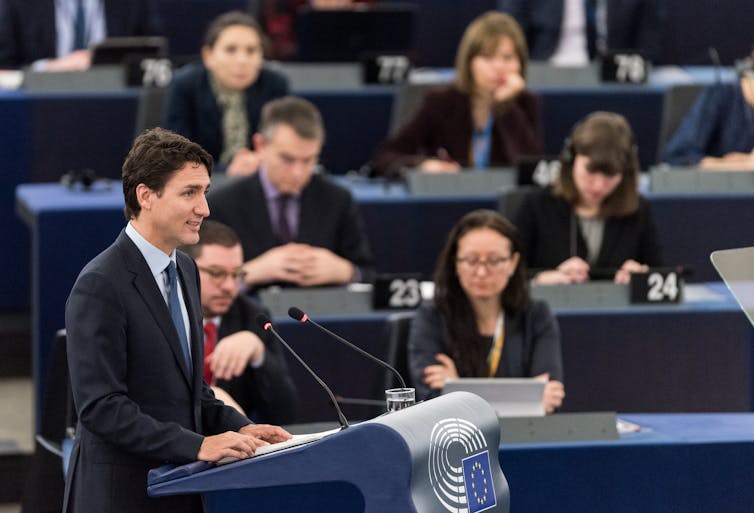
image-20170329-1664-wx3mk3.jpg

It took seven years to negotiate Canada’s trade deal with the EU. EPA/Patrick Seeger
In a free trade agreement, this would no longer be the case. Tariffs on exports would likely be eliminated, but exporters would face a multitude of barriers in the form of non-tariff measures. These include rules of origin and requirements for conformity assessments of goods. Such barriers will vastly increase the level of bureaucracy and cost of selling UK goods in the EU.

The EU single market in services remains, by comparison, relatively fragmented. But there are numerous service sectors and professions whose rules are harmonised at the EU level and where UK firms benefit from mutual recognition. This mutual recognition would be lost outside of the single market, and services are typically barely touched upon even in the most far-reaching and comprehensive modern trade agreements.

There has been talk of mutual recognition agreements in key areas such as car manufacturing and financial services but such agreements are fraught with legal and political difficulties.

The WTO nightmare
All of these difficulties pale in comparison to the nightmare scenario where the UK reverts to the World Trade Organisation’s most-favoured nation terms of trade. There is nothing favourable about this – it means the UK would be treated the same as any other of the 164 WTO members, without being granted any special status.

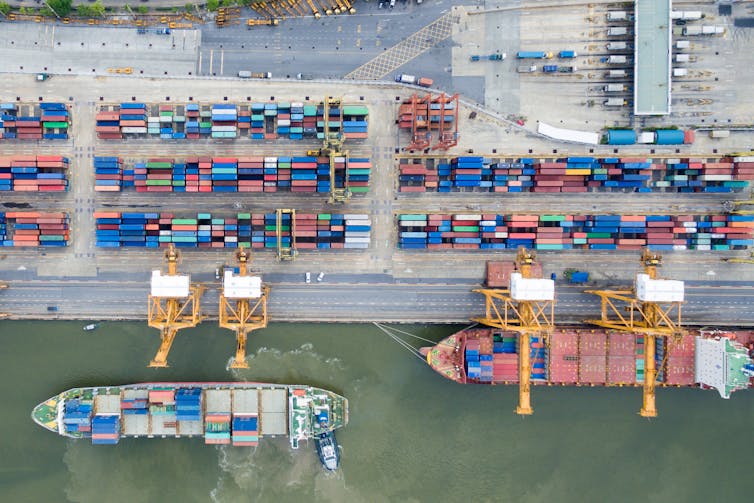
image-20170329-1637-h2xjw0.jpg

No deal would mean extra tariffs and extra bureaucracy for trade. shutterstock.com
This means paying the maximum allowed tariffs and tariff-quotas under WTO law while, at the same time, facing the full gamut of non-tariff barriers imposed by the EU. The UK would be trading with the EU on worse terms than countries such as the US and China who at least benefit from some mutual recognition arrangements with the EU. The prospect of trading with the EU on the same terms as the likes of Mongolia may not seem like a terrible ordeal for some, but for UK firms moving from unrestricted access to the EU market to trading on WTO terms, this will prove an expensive and challenging exercise.

Unrealistic time frame
Most crucially, there is the rather awkward issue of timing. Article 50 provides that the departing member state and the EU have two years to negotiate a withdrawal agreement – that is, an agreement dealing exclusively with the disentangling of the UK’s relationship with the EU. Such an agreement would focus on highly sensitive and complex issues such as the status of EU and UK migrants, as well as issues such as the UK’s liabilities under the EU budget.

Two years is also the timeline that the British government has given itself to finalise the negotiation on a trade agreement, as well as withdrawal. This is an unrealistic time frame.

With the main EU players such as France, Germany and the Netherlands focused on their own domestic elections this year, it is unlikely that much progress will be made before the close of 2017. A two-year deadline for a withdrawal agreement alone is already very ambitious. To add a trade agreement to this list when the process for negotiating such an agreement with the EU is notoriously lengthy – it took seven years to negotiate the EU-Canada deal – puts the two year trade agreement deadline in the realm of the imaginary.

The question then becomes whether the UK government will stick to its guns and crash out of the EU without the safety net of a trade agreement – or whether it will bite the bullet and accept the possibility of agreeing to some sort of transitional arrangement that would inevitably postpone Brexit. It is a choice which will have to be made sooner rather than later."

Source: https://theconversation.com/brexit-britain-and-trade-this-is-where-it-gets-tricky-74481

 
In its current state, EU member countries have a very weird, two-tier system of government.

EU member states have effectively traded sovereignty in certain areas in return for membership. So for example, all members of the EU forfeit their ability to make trade deals with non-EU countries, as all EU states share a common external commercial policy. All Eurozone members forfeit sovereignty over their currency - they can't control their own interest rates for example. Britain has lost the sovereignty of its waters - UK waters are currently EU waters. All EU member states must allow freedom of movement of people, so effectively losing sovereignty over their borders. EU courts are supreme, meaning high courts in member states can be overruled on an EU level.

So while to some extent, this isn't always a bad thing - most people thought the common market was a good thing, the EU since 1992 has been intent on 'ever closer union', undoubtedly with the eventual aim of complete political unity - a single government, currency and foreign policy, i.e. - the EU as a nation. Former British Home Secretary and renowned Europhile Ken Clarke is on record as saying 'he couldn't wait til the day when the British government is just an office in Brussels'. The British department of agriculture (DEPRA) is effectively already an EU institution due to the number of laws and directives the EU has issued on farming etc. When we leave the EU, policy making in this area will effectively start from scratch after we have 'grandfathered' EU law in to British law.

While some people see this transfer of power as desirable, not one EU citizen have ever voted for it. And even if people wanted it, there are serious questions about the dubious style of 'democracy' the EU has to offer. EU citizens can't vote for the executive branch of the EU - the part that proposes the laws. They can only vote for MEP's - representatives that make up the EU Parliament. They have no ability to propose laws, or to repeal existing laws. All they can do is scrutinise laws. The ultimate power in the EU resides with the Commission, which is in no way answerable to the people. It's like US citizens being unable to elect their own President, or UK citizens being unable to vote for a representative in the House of Commons.

While all member states can activate article 50 to leave, it is too late for most. The UK is in quite a unique position in that it isn't a member of the Eurozone, has many more international ties than most EU members and is one of the richest countries in the bloc. For a country like Italy to leave now would be extremely difficult to contemplate - they could theoretically leave, but it would be even harder for them to leave than it will be for the UK as they are far more integrated and would have to revert to the Lira.

Excellent post......
 
"
The triggering of Article 50 of the Treaty on the European Union by Theresa May finally signals the end of the phoney war on Brexit. For months, members of the British government have talked up the prospects of the UK outside of the EU and rejected concerns regarding the loss of unrestricted market access to its closest neighbours and biggest trade partner.

Soon the negotiations will begin. Not just on a withdrawal agreement, but also the contours of the UK’s future trading relationship with the EU post-Brexit.

Theresa May has already set out the broad outlines of the type of relationship she wants with the EU. The idea that the UK could continue as a member of the single market is not tenable given the government’s insistence on doing away with EU free movement rules and the jurisdiction of the European Court of Justice. Likewise, a customs union that sets a common external tariff is not a realistic option, as the UK wants to conduct its own trade relationships, without any restrictions.

This means that, at best, the UK will try to conclude a bilateral agreement known as an association agreement with the EU. This would include a trade agreement and some elements of cooperation in areas such as internal and external security. There are, however, a number of difficulties associated with this approach, and a range of obstacles to be faced in the meantime.

Getting a deal
The government’s preferred option thus far is the signing of an “ambitious and comprehensive” free trade agreement in line with the recently concluded comprehensive economic trade agreement (CETA) negotiated between the EU and Canada. This would fall significantly short of providing the unfettered market access currently enjoyed by British firms through the single market.

One of the unique features of the single market – which sets it apart from other regional economic integration projects – is the application of the principle of mutual recognition. It means that if something is lawfully manufactured in one member state, there is no reason why it should not be sold in another member state. This is the fundamental principle that underpins free movement of goods within the EU.

image-20170329-1664-wx3mk3.jpg

It took seven years to negotiate Canada’s trade deal with the EU. EPA/Patrick Seeger
In a free trade agreement, this would no longer be the case. Tariffs on exports would likely be eliminated, but exporters would face a multitude of barriers in the form of non-tariff measures. These include rules of origin and requirements for conformity assessments of goods. Such barriers will vastly increase the level of bureaucracy and cost of selling UK goods in the EU.

The EU single market in services remains, by comparison, relatively fragmented. But there are numerous service sectors and professions whose rules are harmonised at the EU level and where UK firms benefit from mutual recognition. This mutual recognition would be lost outside of the single market, and services are typically barely touched upon even in the most far-reaching and comprehensive modern trade agreements.

There has been talk of mutual recognition agreements in key areas such as car manufacturing and financial services but such agreements are fraught with legal and political difficulties.

The WTO nightmare
All of these difficulties pale in comparison to the nightmare scenario where the UK reverts to the World Trade Organisation’s most-favoured nation terms of trade. There is nothing favourable about this – it means the UK would be treated the same as any other of the 164 WTO members, without being granted any special status.

image-20170329-1637-h2xjw0.jpg

No deal would mean extra tariffs and extra bureaucracy for trade. shutterstock.com
This means paying the maximum allowed tariffs and tariff-quotas under WTO law while, at the same time, facing the full gamut of non-tariff barriers imposed by the EU. The UK would be trading with the EU on worse terms than countries such as the US and China who at least benefit from some mutual recognition arrangements with the EU. The prospect of trading with the EU on the same terms as the likes of Mongolia may not seem like a terrible ordeal for some, but for UK firms moving from unrestricted access to the EU market to trading on WTO terms, this will prove an expensive and challenging exercise.

Unrealistic time frame
Most crucially, there is the rather awkward issue of timing. Article 50 provides that the departing member state and the EU have two years to negotiate a withdrawal agreement – that is, an agreement dealing exclusively with the disentangling of the UK’s relationship with the EU. Such an agreement would focus on highly sensitive and complex issues such as the status of EU and UK migrants, as well as issues such as the UK’s liabilities under the EU budget.

Two years is also the timeline that the British government has given itself to finalise the negotiation on a trade agreement, as well as withdrawal. This is an unrealistic time frame.

With the main EU players such as France, Germany and the Netherlands focused on their own domestic elections this year, it is unlikely that much progress will be made before the close of 2017. A two-year deadline for a withdrawal agreement alone is already very ambitious. To add a trade agreement to this list when the process for negotiating such an agreement with the EU is notoriously lengthy – it took seven years to negotiate the EU-Canada deal – puts the two year trade agreement deadline in the realm of the imaginary.

The question then becomes whether the UK government will stick to its guns and crash out of the EU without the safety net of a trade agreement – or whether it will bite the bullet and accept the possibility of agreeing to some sort of transitional arrangement that would inevitably postpone Brexit. It is a choice which will have to be made sooner rather than later."

Source: https://theconversation.com/brexit-britain-and-trade-this-is-where-it-gets-tricky-74481
Google button red hot hey Bruce;)lol
 
Status
Not open for further replies.

Welcome

Join the Everton conversation today.
Fewer ads, full access, completely free.

🛒 Visit Shop

Support Grand Old Team by checking out our latest Everton gear!
Back
Top