

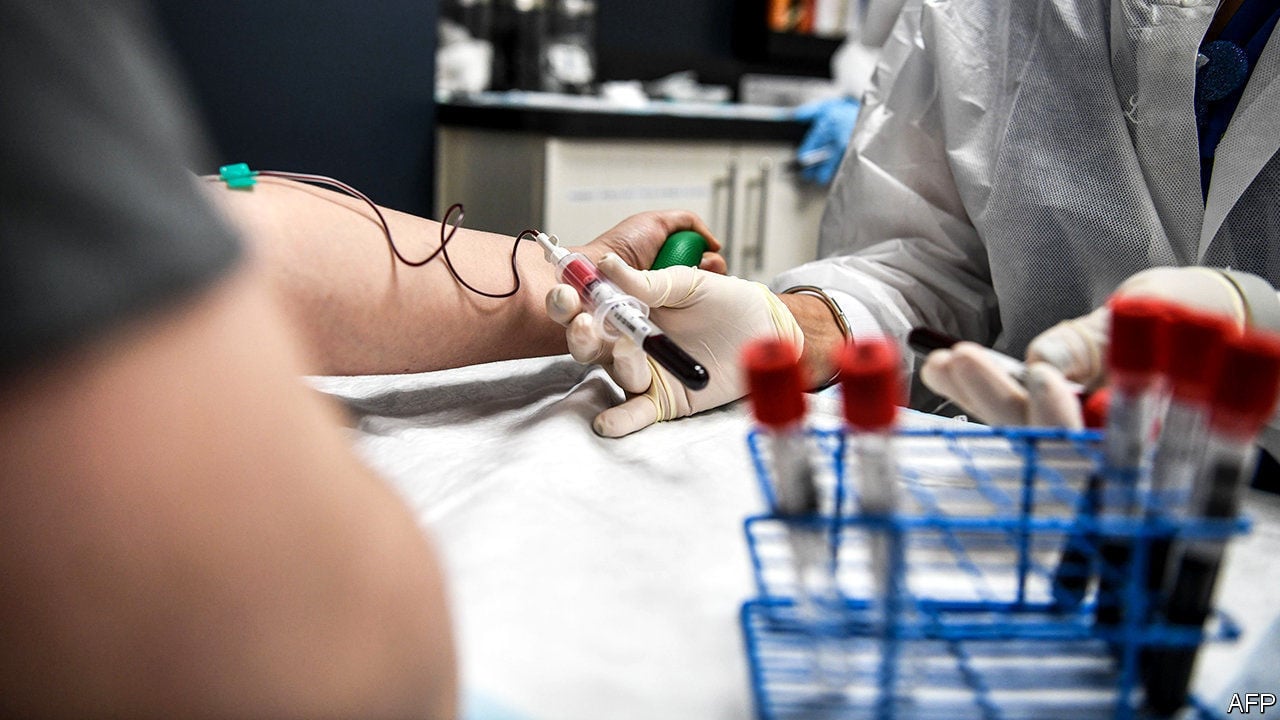
Some good news on covid-19
The virus seems to generate a robust and fairly long-lasting immune response
The news about covid-19 in two new papers is more encouraging. The first, written by a team of scientists at decode genetics, an Icelandic company, and published in the New England Journal of Medicine, reports antibody levels in 1,200 Icelanders who had been infected with the SARS-CoV-2 virus and recovered. More than 90% tested positive for antibodies twice—once immediately post-infection and again four months later. People who had suffered more serious disease, such as those who had been hospitalised, developed higher levels of antibodies. So did men and older people, both of whom are at greater risk of more severe illness.
The four-month lifespan is cheering for two reasons. Antibodies that hang around are more likely to offer immunity. That means a vaccine that provokes their production should provide reasonably long-lasting protection. They are also easier to find. That suggests that results from population-wide antibody screening programmes, which aim to chart the spread of the virus, should be fairly accurate.


