Current Affairs 2017 General Election

2017 general election

  • Lib Dems

    Votes: 24 6.5%
  • Labour

    Votes: 264 71.0%
  • Tories

    Votes: 41 11.0%
  • Cheese on the ballot paper

    Votes: 35 9.4%
  • SNP

    Votes: 4 1.1%
  • Plaid Cymru

    Votes: 4 1.1%

  • Total voters
    372
Status
Not open for further replies.
Right. Do you think it would be less in crisis if it hadn't suffered "real terms" cuts under this government?

I think it would be less in crisis if successive Governments didnt try to make political capital out of it being in crisis, and actually looked at it, decided exactly what it is supposed to do, and get folk in there who can make that happen.

You blame "Tory cuts" for deep seated, long term issues with how its been run for decades.

Why?

edit. "This"Government have been in place 3 years max. All was fine and dandy till 2014 yeah?
 
With respect, your personal experience pales in comparison to the doctor I quoted before (amongst many, many others working in the NHS and alarmed by the looming crisis), as it does in the face of the facts quoted in that previous post.

Out of interest, what would it take to convince you that the NHS was in crisis? I'm intrigued.

TBH there are areas of the NHS where it is not in crisis. I did say something along these lines earlier, but I have been to St Thomas' in London several times for tests, treatment and because mates and colleagues have been taken ill, and every time I've been there the service has been fantastic - quick, effective, compassionate, the whole works. It is how the NHS should be.

Of course it also has no PFI debt and is close enough to Parliament for MPs to realise that the nurses could be at their gates in five minutes, which might also account for how good it is.
 
TBH there are areas of the NHS where it is not in crisis. I did say something along these lines earlier, but I have been to St Thomas' in London several times for tests, treatment and because mates and colleagues have been taken ill, and every time I've been there the service has been fantastic - quick, effective, compassionate, the whole works. It is how the NHS should be.

Of course it also has no PFI debt and is close enough to Parliament for MPs to realise that the nurses could be at their gates in five minutes, which might also account for how good it is.

Of course - my wife was treated superbly by Tommy's when she had a major problem with her eye some years ago. But that is a teaching hospital in central London so it is much less likely to be "in crisis" that a district general in semi-rural England or a particular peripatetic service.

Oddly, my previous partner was was pharmacist first at the Royal Brompton Hospital then at Chase Farm District General and then at Tommy's. She was aghast at the difference in working conditions and resourcing between the two teaching hospitals and the DG. And she really didn't expect to be....
 
Of course - my wife was treated superbly by Tommy's when she had a major problem with her eye some years ago. But that is a teaching hospital in central London so it is much less likely to be "in crisis" that a district general in semi-rural England or a particular peripatetic service.

Oddly, my previous partner was was pharmacist first at the Royal Brompton Hospital then at Chase Farm District General and then at Tommy's. She was aghast at the difference in working conditions and resourcing between the two teaching hospitals and the DG. And she really didn't expect to be....

I know, and that's why what goes on at St Thomas's is what we should be looking to do in the rest of the NHS. It does not have PFI debt. Public / private partnerships are actually partnerships, and not monopolies being granted to private firms. Staff and patient concerns are listened to and addressed fairly.
 
18157250_10154321489130974_4423037929600475708_n.webp

What is perplexing is that Orwell's prediction of "doublethink," mass surveillance and a country which is in a state of perpetual warfare has come to pass and nobody seems to be in the least bit bothered.

War is peace. Freedom is slavery. Ignorance is strength.

Now, here's Tom with the weather......
 
With respect mate, you stated "Chronically underfunded by the Tories".

It isnt. Or if it is, it has been forever.

My ex Father in Law had a heart attack a few weeks ago, on a Thursday. By Sunday, he was back at home, after a triple, or double, bypass op, with home care support all sorted.

I personally think, supported by my NHS working Mrs R, that some folks expectations of the NHS, (A&E being a classic) are way too high. I also think it has serious structural and managerial issues. I also think many trusts are hamstrung by PFI payments.

But it is not chronically underfunded. It is chronically run.

Cuba (little poor Cuba subject to US sanctions for many years) spends twice it's GDP than us on health, with excellent results.

And for anyone who says we can't afford that, here's the answer:

This is at the end of the day the debate that needs to be had, not only over the NHS but also on every aspect of Government spending.

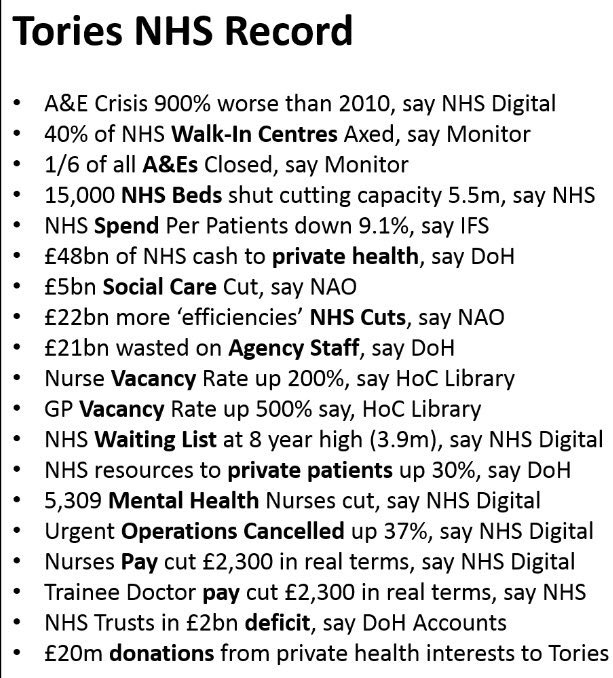
We really have never spent more on the NHS; the point is that (as Clint's list demonstrates) what it is we are (and are not) spending that money on. Our armed forces have never cost so much in peacetime - or at least what passes for it nowadays - yet they are tiny in scale to what we once had (and its not as if the money has gone on pay rises for squaddies) and were once capable of. As I mentioned earlier, we now spend £25 billion a year on housing benefit, a number which is going up as the housing crisis gets worse and worse, and yet only one party (and then only the current leadership of that party) is suggesting measures by which that spending could ever be brought down. The education bill has doubled since 1997, without a corresponding increase in any of the statistics that ministers like to seize upon to proclaim the success of their ideas (except one - the pay of University Chancellors and Vice-Chancellors has doubled in that time).
 
C-Bz4NjXsAAo2P6.jpg:large

I've posted this before but for anyone that doubts NHS cuts are happening its even worse than Clints graphic above. 4 out of my nearest 6 A and Es are closing.

Your area next.

http://www.saveourhospitals.net/
 
View attachment 36453

What is perplexing is that Orwell's prediction of "doublethink," mass surveillance and a country which is in a state of perpetual warfare has come to pass and nobody seems to be in the least bit bothered.

War is peace. Freedom is slavery. Ignorance is strength.

Now, here's Tom with the weather......

That sounds like something Laura Kuenssberg would report. Talking of whom, she has been quiet today. Must have been reprimanded for her reference to Corbyn's wife yesterday.
 
15 times when Jeremy Corbyn was on the right side of history
Paul Simpson
The World Turned Upside Down
1. Apartheid:
Jeremy was a staunch opponent of the Apartheid regime and a supporter of Nelson Mandela and the ANC. He was even arrested for protesting outside the South African embassy in 1984.
2. Chile: Jeremy was an opponent of the brutal dictator Pinochet (an ally of the British government under Thatcher) and was a leading campaigner in the quest to bring him to justice. In 1998 Pinochet was arrested in London.
3. LGBT rights: As noted in Pink News, Jeremy was an early champion of LGBT rights. At a time when the Tories decried supporting LGBT rights as ‘loony left’, Jeremy voted against section 28 which sought to demonise same-sex relationships.
4. The Miners’ Strike: Jeremy went against the Labour leadership and fully supported the miners in their effort to prevent the total destruction of their industry and communities. Cabinet papers released last year prove that the NUM were correct to claim that there was a secret hit list of 75 pits which the government were determined to close within 3 years. Ex-mining areas still suffer from the devastating effects of de-industrialisation, particularly high unemployment.
5. Iraq: In the 1970s and 1980s, while the UK and other Western government were selling weapons to their ally Saddam Hussein, Jeremy campaigned and demonstrated against it, as well as protesting against the mass killings of Iraqi Kurds by Saddam’s regime.
6. Birmingham Six and Guildford Four: Jeremy was involved in the campaigns in support of the victims of these appalling miscarriages of justice. The wrongful convictions were eventually quashed.
7. Talking to Sinn Fein: In the 1980s, along with Tony Benn and other Labour MPs, Jeremy drew intense criticism for engaging in dialogue with Sinn Fein and inviting its representatives to the House of Commons. The government claimed it ‘would not talk to terrorists’ but we now know that by 1989, it was secretly engaged in talks. Sinn Fein has been a major party of the Northern Ireland government since 1998 and even the Queen and Prince Charles have now met with its leading figures.
8. Tuition fees: Jeremy opposed New Labour’s introduction of university tuition fees, which explicitly broke Labour’s 1997 election manifesto pledge, as well as all of the subsequent increases. Fees were then trebled under New Labour before being trebled again by the coalition government, leaving the average student in £53k of debt.
9. Private Finance Initiative (PFI): Jeremy argued against this method of funding the building of new schools and hospitals, which was used partly because New Labour had committed itself to Tory spending plans. Instead of financing projects through government borrowing, private finance would build the infrastructure and then lease to the government. PFI deals cost the taxpayer £10bn a year and we will end up paying more than £300bn for assets worth just £54.7bn.
10. Afghanistan: Going against the tide of political and public opinion in the wake of the 9/11 attacks, Jeremy opposed the invasion and occupation of Afghanistan in 2001. By 2009, most polls showed a majority of British people were against the war and Britain eventually withdrew its troops in October 2014.
11. Iraq, again: Jeremy saw through the ‘dodgy dossier’, the claims of weapons of mass destruction and campaigned and voted against the Iraq war in 2003. In doing so, he helped to organise the biggest demonstration in British history and remains a leading figure in the Stop the War Coalition.
12. Palestine: Jeremy has been a long-standing campaigner for the rights of the Palestinian people, beginning his advocacy at a time when Western public opinion was largely hostile to the Palestinian cause. Last year parliament overwhelmingly voted to recognise Palestine.
13. Public ownership of the railways: Jeremy has always advocated public ownership of our railways. The argument that privatisation would result in competition and thus lower fares has been proved to be entirely incorrect. Instead not only have fares rocketed year on year but the British taxpayer now subsidies the railways to the tune of £4bn a year, around four times the cost of the previous, publicly owned system.
14. Trident: Jeremy has been a long-term campaigner in CND, and has always opposed Britain having nuclear weapons – a difficult argument to make at the height of the Cold War. But now virtually all the polling evidence shows that a majority of people are against spending £100bn on a new generation of Trident nuclear weapons.
15. Austerity: Right from the beginning Jeremy argued and campaigned against austerity. Despite inheriting a situation where the economy was growing, Osborne’s austerity budgets plunged the UK into a double dip recession in April 2012 and by February 2013 Britain lost its AAA credit rating for the first time since the late 1970s. Five years of austerity later and the UK’s debt has actually risen from £1trn in 2010 to around £1.5trn today. The social cost has been shocking, leading to a rise in child poverty, an unprecedented fall in real wages and nearly 1 million people now reliant on food banks to name but a few of the dire consequences.

 
15 times when Jeremy Corbyn was on the right side of history
Paul Simpson
The World Turned Upside Down
1. Apartheid:
Jeremy was a staunch opponent of the Apartheid regime and a supporter of Nelson Mandela and the ANC. He was even arrested for protesting outside the South African embassy in 1984.
2. Chile: Jeremy was an opponent of the brutal dictator Pinochet (an ally of the British government under Thatcher) and was a leading campaigner in the quest to bring him to justice. In 1998 Pinochet was arrested in London.
3. LGBT rights: As noted in Pink News, Jeremy was an early champion of LGBT rights. At a time when the Tories decried supporting LGBT rights as ‘loony left’, Jeremy voted against section 28 which sought to demonise same-sex relationships.
4. The Miners’ Strike: Jeremy went against the Labour leadership and fully supported the miners in their effort to prevent the total destruction of their industry and communities. Cabinet papers released last year prove that the NUM were correct to claim that there was a secret hit list of 75 pits which the government were determined to close within 3 years. Ex-mining areas still suffer from the devastating effects of de-industrialisation, particularly high unemployment.
5. Iraq: In the 1970s and 1980s, while the UK and other Western government were selling weapons to their ally Saddam Hussein, Jeremy campaigned and demonstrated against it, as well as protesting against the mass killings of Iraqi Kurds by Saddam’s regime.
6. Birmingham Six and Guildford Four: Jeremy was involved in the campaigns in support of the victims of these appalling miscarriages of justice. The wrongful convictions were eventually quashed.
7. Talking to Sinn Fein: In the 1980s, along with Tony Benn and other Labour MPs, Jeremy drew intense criticism for engaging in dialogue with Sinn Fein and inviting its representatives to the House of Commons. The government claimed it ‘would not talk to terrorists’ but we now know that by 1989, it was secretly engaged in talks. Sinn Fein has been a major party of the Northern Ireland government since 1998 and even the Queen and Prince Charles have now met with its leading figures.
8. Tuition fees: Jeremy opposed New Labour’s introduction of university tuition fees, which explicitly broke Labour’s 1997 election manifesto pledge, as well as all of the subsequent increases. Fees were then trebled under New Labour before being trebled again by the coalition government, leaving the average student in £53k of debt.
9. Private Finance Initiative (PFI): Jeremy argued against this method of funding the building of new schools and hospitals, which was used partly because New Labour had committed itself to Tory spending plans. Instead of financing projects through government borrowing, private finance would build the infrastructure and then lease to the government. PFI deals cost the taxpayer £10bn a year and we will end up paying more than £300bn for assets worth just £54.7bn.
10. Afghanistan: Going against the tide of political and public opinion in the wake of the 9/11 attacks, Jeremy opposed the invasion and occupation of Afghanistan in 2001. By 2009, most polls showed a majority of British people were against the war and Britain eventually withdrew its troops in October 2014.
11. Iraq, again: Jeremy saw through the ‘dodgy dossier’, the claims of weapons of mass destruction and campaigned and voted against the Iraq war in 2003. In doing so, he helped to organise the biggest demonstration in British history and remains a leading figure in the Stop the War Coalition.
12. Palestine: Jeremy has been a long-standing campaigner for the rights of the Palestinian people, beginning his advocacy at a time when Western public opinion was largely hostile to the Palestinian cause. Last year parliament overwhelmingly voted to recognise Palestine.
13. Public ownership of the railways: Jeremy has always advocated public ownership of our railways. The argument that privatisation would result in competition and thus lower fares has been proved to be entirely incorrect. Instead not only have fares rocketed year on year but the British taxpayer now subsidies the railways to the tune of £4bn a year, around four times the cost of the previous, publicly owned system.
14. Trident: Jeremy has been a long-term campaigner in CND, and has always opposed Britain having nuclear weapons – a difficult argument to make at the height of the Cold War. But now virtually all the polling evidence shows that a majority of people are against spending £100bn on a new generation of Trident nuclear weapons.
15. Austerity: Right from the beginning Jeremy argued and campaigned against austerity. Despite inheriting a situation where the economy was growing, Osborne’s austerity budgets plunged the UK into a double dip recession in April 2012 and by February 2013 Britain lost its AAA credit rating for the first time since the late 1970s. Five years of austerity later and the UK’s debt has actually risen from £1trn in 2010 to around £1.5trn today. The social cost has been shocking, leading to a rise in child poverty, an unprecedented fall in real wages and nearly 1 million people now reliant on food banks to name but a few of the dire consequences.

A good read mate, but some paragraphs would have stopped my head from hurting x
 
Status
Not open for further replies.

Welcome

Join the Everton conversation today.
Fewer ads, full access, completely free.

🛒 Visit Shop

Support Grand Old Team by checking out our latest Everton gear!
Back
Top