
See you’re a good man at heartThen I’m sorry and apologise……
You are using an out of date browser. It may not display this or other websites correctly.
You should upgrade or use an alternative browser.
You should upgrade or use an alternative browser.
Current Affairs The Labour Party
- Thread starter Number_25
- Start date
- Status
- Not open for further replies.

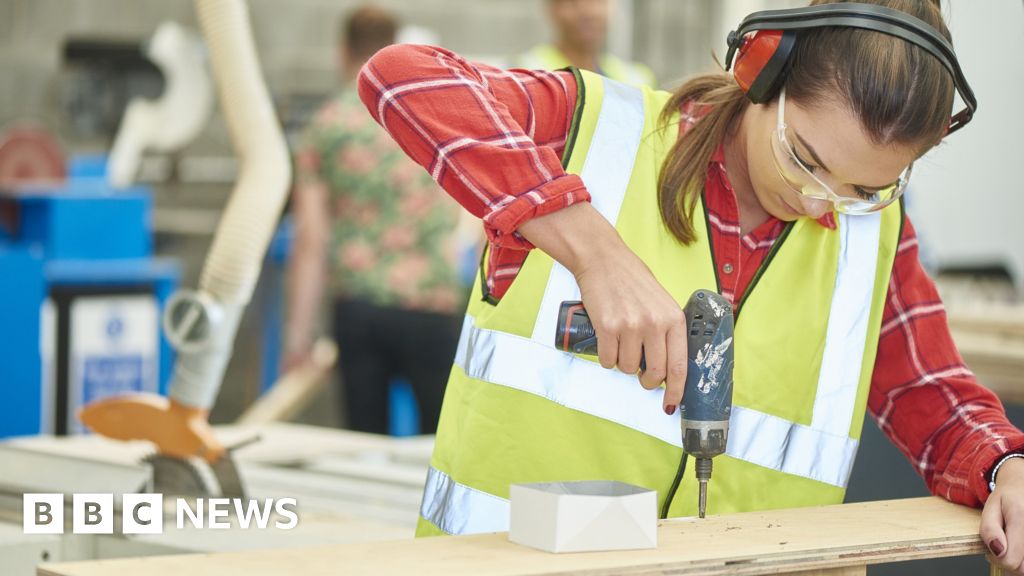
Young people who refuse to work to lose benefits, says minister
Liz Kendall says young people will have a responsibility to take up new opportunities for "earning or learning".
www.bbc.co.uk
earn or learn?
is it one of the two? because learning still sounds like hungry. Best clear a few more places in jails...

Winning in general elections is a pretty new concept to him. No wonder he wants to do it again.“I’ve never seen anything like it”, says the fella who took part in a general election 5 months ago.
Give me strength
He’s so like trump enjoys the campaigning just not the actual Job that comes at the end of itWinning in general elections is a pretty new concept to him. No wonder he wants to do it again.

peteblue
Welcome back Wayne
See you’re a good man at heart
I already knew that…..

“I’ve never seen anything like it”, says the fella who took part in a general election 5 months ago.
Give me strength
It's a basic tool from the populists' playbook, energising their followers (or wavering potentials) by convincing them that they're part of an unprecedented political movement about to sweep away any vestiges of the ancien régime.
Same deal with Brexit, same deal with MAGA, and even the same deal with all those kids enthused by Corbyn's Labour (with a little help from Russell Brand) that believed they were on the cusp of sending the Left into uncharted levels of power, rather than down a cul-de-sac.
Moving like that through the floods he must be on his way to open up a trust to oversee the ownership of his land before Farmer Harmer Starmer snatches it away.
Missed the last orders bell, obviously...Moving like that through the floods he must be on his way to open up a trust to oversee the ownership of his land before Farmer Harmer Starmer snatches it away.

NilSatisOptimum
Player Valuation: £70m
Feel bad for these petition supporters in that they are for MP's to discuss and vote on. So I'm sure with 170 Labour majority are going to vote with government to be against election. Our sovereign democracy in action... Suppose they could ask King sausages fingers to dismiss Starmers Government but he cant even get rid of Andrew.“I’ve never seen anything like it”, says the fella who took part in a general election 5 months ago.
Give me strength

Paris
What is love?
Everyone signing that is a moron who should be kicked where it hurts for the rest of their lives.Oh dear, not going well...
Petition: Call a General Election
I would like there to be another General Election. I believe the current Labour Government have gone back on the promises they laid out in the lead up to the last election.petition.parliament.uk

So right-wing loons want everyone to accept the Brexit vote, but we need to have another General Election just 4.5 mths after the last one. Nothing like hypocrisy.
Unelected Tory peer with literally no mandate or democratic accountability demands the democratically elected government that won an election 4.5 months ago be removed from office. The same idiot Tory politician who wanted Brexit to restore UK parliamentary sovereignty.
This is Hannan's prediction of what the result of Brexit would be. You can judge for yourself how accurate he is. Of course, this is seven months in the future so it may yet come to pass . . . . . .
It’s 24 June, 2025, and Britain is marking its annual Independence Day celebration. As the fireworks stream through the summer sky, still not quite dark, we wonder why it took us so long to leave. The years that followed the 2016 referendum didn’t just reinvigorate our economy, our democracy and our liberty. They improved relations with our neighbours.
The United Kingdom is now the region’s foremost knowledge-based economy. We lead the world in biotech, law, education, the audio-visual sector, financial services and software. New industries, from 3D printing to driverless cars, have sprung up around the country. Older industries, too, have revived as energy prices have fallen back to global levels: steel, cement, paper, plastics and ceramics producers have become competitive again.
The EU, meanwhile, continues to turn inwards, clinging to its dream of political amalgamation as the euro and migration crises worsen. Its population is ageing, its share of world GDP shrinking and its peoples protesting. “We have the most comprehensive workers’ rights in the world”, complains Jean-Claude Juncker, who has recently begun in his second term as President of the European Federation, “but we have fewer and fewer workers”.
The last thing most EU leaders wanted, once the shock had worn off, was a protracted argument with the United Kingdom which, on the day it left, became their single biggest market. Terms were agreed easily enough. Britain withdrew from the EU’s political structures and institutions, but kept its tariff-free arrangements in place. The rights of EU nationals living in the UK were confirmed, and various reciprocal deals on healthcare and the like remained. For the sake of administrative convenience, Brexit took effect formally on 1 July 2019, to coincide with the mandates of a new European Parliament and Commission.
During the first 12 months after the vote, Britain confirmed with the various countries that have trade deals with the EU that the same deals would continue. It also used that time to agree much more liberal terms with those states which had run up against EU protectionism, including India, China and Australia. These new treaties came into effect shortly after independence. Britain, like the EFTA countries, now combines global free trade with full participation in EU markets.
Our universities are flourishing, taking the world’s brightest students and, where appropriate, charging accordingly. Their revenues, in consequence, are rising, while they continue to collaborate with research centres in Europe and around the world.
Unsurprisingly, several other European countries have opted to copy Britain’s deal with the EU, based as it is upon a common market rather than a common government. Some of these countries were drawn from EFTA (Norway, Switzerland and Iceland are all bringing their arrangements into line with ours). Some came from further afield (Serbia, Turkey, Ukraine). Some followed us out of the EU (Denmark, Ireland, the Netherlands).
The United Kingdom now leads a 22-state bloc that forms a free trade area with the EU, but remains outside its political structures. For their part, the EU 24 have continued to push ahead with economic, military and political amalgamation. They now have a common police force and army, a pan-European income tax and a harmonised system of social security. These developments have prompted referendums in three other EU states on whether to copy Britain.
This is Hannan's prediction of what the result of Brexit would be. You can judge for yourself how accurate he is. Of course, this is seven months in the future so it may yet come to pass . . . . . .
Hannan is a weird one, he markets himself as some sort of conservative deep thinker and has somehow wangled a Lordship out of it, but is just your run of the mill Tory fantasist who is happy to pad out his columns with rants about the Woke, the same as any of the other bores.

is this your view on every subject that disagees with your view, or just this topic?Everyone signing that is a moron who should be kicked where it hurts for the rest of their live
- Status
- Not open for further replies.
Welcome
Join the Everton conversation today.
Fewer ads, full access, completely free.