Current Affairs The Conservative Party

Status
Not open for further replies.
DxDp_iIXgAAbOxV
 
Yet more money-shenanigans from hard Brexiteers:

In a letter to Kathryn Stone, the parliamentary commissioner for standards, the shadow Cabinet Office minister, Jon Trickett, said it must “immediately be determined” whether Paterson’s conduct had broken the rules governing the conduct of MPs.

“Paterson appears to be both the recipient of donations and the controlling intermediary through which they are paid,” Trickett’s letter stated. He said without information on the true source of donations, “the register of members’ interests is unable to fulfil its vital purpose”.

Trickett said the purpose of the register was to make public any private interest that might reasonably be thought to have influenced an MP’s actions or behaviour.

“Without knowing the true source of UK 2020’s funding, Paterson’s declaration of trips as being funded by his thinktank does not provide the clarity needed to make such a judgment,” he wrote.

“This could constitute a serious breach of the rules. To put it simply: where does the money come from?”
 
Even members of their own party are starting to wake up to what they have systematically and purposefully done to people

https://www.theguardian.com/society...enough-tory-mp-embarks-on-anti-austerity-tour

Visits to the poorest corners of Newcastle, Glasgow, Morecambe and Cornwall beckon, but they have started in London and Leicester, where on Thursday they heard stories of an illiterate man sanctioned so often under universal credit that he lives on £5 a week; a man so poor he sold all but the clothes he was wearing; and someone being told to walk 44 miles to attend a job interview, despite having had a stroke, to save the state the cost of a £15 bus ticket.

Time and again Allen, the MP for South Cambridgeshire, with its biotech start ups and affluent villages, was on the brink of tears as they visited two of the 15 food banks now helping sustain people in the east Midlands city and listened to people from charities, playgroups and community organisations. Away from Westminster’s attempt to solve the “mad riddle” of Brexit, Allen admitted that her patience with her party’s acquiescence over the welfare cuts, which started under George Osborne and the universal credit system, now being rolled out by Theresa May, had reached breaking point.
 
Great way to secure our intrepid hyperglocal knowledge-based high-skill tech-buzzword-production start-up dynamic synergy disruption economy of the future!

In the space of about ten years, China has gone from competing with us to pitying us

* * *

Crumbling Britain: How English schools are paying the price for austerity
https://www.newstatesman.com/politi...ow-english-schools-are-paying-price-austerity
Faced with rising pupil numbers, increasingly complex needs and inherited social work from stricken councils, teachers feel profoundly neglected.


On a misty morning in Sittingbourne, Kent, seagulls waddled across a damp rugby pitch while some school pupils smoked, laughed and yelled to their friends. In this one area of Swale borough, where a strip of sea separates mainland Kent from the Isle of Sheppey, there are three schools within five minutes of each other: a boys’ grammar, a girls’ grammar and Fulston Manor, a comprehensive academy of 1,345 pupils.

Last September, for the first time in 47 years, Fulston’s headmaster, Alan Brookes, attended a demonstration. He was one of more than a thousand head teachers who marched on Downing Street in protest against education spending cuts (last year the Institute for Fiscal Studies calculated that spending per pupil in English schools had fallen by 8 per cent since 2010).

Head teachers aren’t “militant”, Brookes tells me when we meet the following term in his office, sparsely adorned with eclectic pieces of pupils’ art. His silver “A” “B” cufflinks are neatly in place for another day at school. So what compelled him to take to the streets once more? (The last time was in 1970s Cambridge as a student – “I’m not quite certain what I was marching for then,” he says.)

Over the last five years, Brookes says, his school has suffered “death by a thousand cuts”. Annual real-terms spending reductions are continuing and “showing no signs of abating”.

After 23 years as head of Fulston, and 43 years of teaching, Brookes, who is 65, has the wry cynicism and characteristic frankness of veterans of the profession. He and his staff ring an “irony bell” when they’re being sarcastic in meetings (“God bless the DfE for uniting us by starving us of money!” is his contribution when I visit).

Brookes cannot afford heads of department, forcing his teachers to take on multiple full-time jobs. Deputy head teacher Maria Gash is also head of science, and manages the curriculum. An assistant head runs the computer science, business studies and modern languages departments.

The school rents out classrooms to local clubs and private businesses such as Slimming World – moving the entire social sciences department and the bottom floor of the sixth form block last July during exams to try to raise revenue. “We had to uproot teachers and students and house them elsewhere in the school,” Brookes says, as he shows me around those five classrooms. “We disrupted them.”

The average secondary school budget deficit in 2018 was £483,569, according to an Education Policy Institute report, while 87 per cent of head teachers told a survey by the campaign group Worth Less? this year that they have less money in real terms than in 2018.

The DfE, however, maintains that every local authority has received more money per pupil since 2017, with core funding and top-up funding (allocated to “high needs” schools) due to reach record levels in 2019-20.

Yet Brookes warned that such pronouncements lack “credibility”. Faced with rising pupil numbers, increasingly complex needs and inherited social work from austerity-stricken councils, teachers like him feel neglected.

A patchwork of buildings – from a shiny new university-style sixth form to shipping containers for history and geography lessons to a condemned block opposite a disused greenhouse for science – Fulston is a good school with a varied curriculum.

Photography A Level students proudly tell us their university offers as they pore over their final portfolios, Year Sevens cook delicious-smelling cheese and potato bakes, and former pupils are in fashion, creative arts and sport – one plays for Chelsea women’s football club, and another was in the Les Misérables film.

Yet Fulston school struggles to sustain its extensive curriculum (74 per cent of secondary schools surveyed this month have narrowed their subject range) and its special needs provision is also imperilled.

Hosted in a temporary building with a leaking gutter and a hole in the floor – scenes reminiscent of the 1990s – special needs classes and the exclusion unit are staffed by just one full-time teacher, with some extra help (Fulston has lost ten teaching assistants in the last seven years). Some of the children here have reading ages of five.

Twenty two per cent of Fulston students are covered by the pupil premium (which provides additional funding for disadvantaged children), 11 per cent have special educational needs or a disability, and 18 pupils are in care – a record number for Fulston.

“We could spend all our time being a branch of social services,” Brookes laments. The pupil referral unit in Swale has closed, and there is pressure on high needs funding from the council. Only one of Fulston’s pupils, a girl with paraplegia who cannot communicate, receives high needs funding (“and even that took a fight”, says Brookes).

Primary schools in many areas are also under financial strain. Cathy Rowland, head teacher for 14 years of the outstanding Dobcroft Infant School in an affluent Sheffield suburb, is struggling to fund basic resources.

Parents have provided boxes of glue sticks, mugs for the staff room and even tissues “for the cold season”, I was told. Nine months ago, parents set up a standing order to aid the school, funding everything from books to computers. When I visit, Rowland shows me the resurfaced playground and the worn benches to be replaced, all through parents’ munificence.

“It doesn’t sit totally comfortably with me,” Rowland admits. “Parents shouldn’t feel the need to do that.”

Dobcroft is a beautifully decorated school stretched across a main block and a 30-year-old mobile building, with immaculate, vibrant displays and polite children who queue up to hug Rowland as she shows me round. Fox faces painted on folded paper plates cover one wall, pupils have written their goals on little paper footballs, and one corner has been turned into a “Dick Whittington castle” for a pantomime.

“The displays are lovely but if you look, it’s shabby,” says Rowland. “Lack of capital is the real issue.” The library roof has been leaking since last September: a large turquoise water tray catches the drips among the little chairs where children sit to read. It flooded completely last year. “It was so dreadful,” Rowland recalls. “It was covered in water, an indoor water feature.” A tile recently fell from the ceiling of the girls’ toilets (“narrowly missing a child”) and has yet to be replaced. In one classroom, I could put my finger through a hole in the wall. But no resources are available for repairs. Rowland reveals that she’s even had to clean the school toilets herself at times.

Dobcroft has a reputation as an “inclusive school”, and children with complex needs travel from far to attend. A special sensory room, lit with fairy lights and filled with balls and cushions, helps to soothe some autistic pupils. Other children who benefit from special provision have medical needs, Down’s Syndrome and global developmental delay (an umbrella term for impaired cognitive and physical development).

Rowland fears failing to support these children adequately in the future. “The budget gets tighter and it plays on my mind – for the most vulnerable children, you can’t provide everything they need.”

In a very different community back in Kent, Alan Brookes echoes these concerns. “We’re letting some of these children down because they desperately need more than we’ve got,” he tells me. “These poor bloody waify, battered, shattered kids – God, we’ve got our share. We’ve got a chance to make a difference and it frustrates me that we haven’t got more resources for them… It’s just going to roll on until such time as we turn off the lights and go away.”

 
Wonder why the Tories are hated so much on this forum and in our city?

Wonder why we call them scummy?

Read the evidence below.

https://www.liverpoolecho.co.uk/new...fKkQA26g5ipauvTRaJI0r_gssrm6AtENXLDMeorphVQBc


The devastating numbers that show just how BADLY Liverpool is treated by the Tories

New report says city is the worst in UK in terms of cuts - and it is now at total breaking point

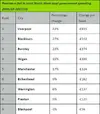
It is official - Liverpool is the UK city that has been most devastated by the Tory government's budget cuts and austerity agenda.

Since 2009/10, every person living in Liverpool has shouldered the burden of the equivalent of an £816 fall each in day-to-day council spending.

To put that into stark perspective, everyone in Oxford has had a £115 increase in day to day cash spent on them in that same period.

The figures - which form part of the Centre for Cities' latest Outlook Report - appear to confirm what many in the city and its council believe: that Liverpool and its people are treated unfairly by the Government.

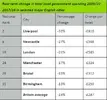
The total fall in the council budgets during this period since 2009/10 was 32%, the second highest in Britain after Barnsley.

This puts cuts to local government services in Liverpool 18 percentage points higher than the national average in real terms, which works out at £529 above the national average per head.

1548772754388.webp

These devastating statistics show how badly Liverpool has been treated by the current government


The crippling effect of the cuts

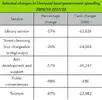
Liverpool Council has been forced to make do with less by becoming more efficient - but as the Centre for Cities points out, the severe funding cuts coupled with an increase in demand for social care across the city has led to budgets being slashed in other areas.

For example, spending on public conveniences such as toilets in the city has fallen by 98% over the past decade, while council spending on tourism has dropped by 67% and arts development and support by 57%.

The growing demand for social care has added to the squeeze on council finances in Liverpool.

Across Britain, more and more cities are spending greater proportions of their budgets on social care, adding to the overall pressure on their finances.

If this pattern continues, the only role for many councils will be to provide social care.

Liverpool Council's budget woes

The amount of cuts faced by Liverpool Council since 2010

£444m

The total amount made from Council Tax in 2010

£220m

The total amount the council makes from Council Tax now

The report found that the cities least equipped to absorb the loss of central government grants have been hardest hit due to their weaker local economies.

They are less able to raise money locally, for example through council tax increases. This applies most strongly outside the South of England.

The report urges the Government to use the Spending Review to ensure that its promise to end austerity fully applies to local government, and in particular to cities.

1548772823666.webp

These devastating statistics show how badly Liverpool has been treated by the current government
"Little more than social care providers"


Andrew Carter, Centre for Cities Chief Executive, said: “Cities drive the national economy and, while austerity has improved local government efficiency, its sheer scale has placed public services in Liverpool under huge pressure.

"Cities Outlook 2019 shows that the cities most affected are economically weaker and have been less able to absorb the loss of central government funding.

“Liverpool Council has managed as best they can but the continued singling-out of local government for cuts cannot continue. There is a very real risk that many of our largest councils will in the near future become little more than social care providers. Fairer funding must mean more funding for Liverpool.

Falling budgets and rising social care needs are hitting Liverpool hard

“If, as the Prime Minister has said, austerity is coming to an end then the Spending Review must address the financial challenges facing Liverpool councils. But this does not just mean more money

"Giving local authorities more power to decide how they raise and spend funds, providing more flexible multi-year budgets and reforming the way social care is paid for also need to be urgently introduced.”

"They just don't get it"
As Mr Carter said, at last year's Conservative Party conference, Theresa May made the bold claim that 'austerity is over.'
For Liverpool Mayor Joe Anderson, that couldn't be further from the truth.
Since he came to power in 2010, he has seen his council budget slashes massively - meaning that by 2020 they will have lost a total of £444m - that's 64% of the council’s overall budget over the last decade.
Struggling to add up

£3m

what every 1% budget cut means in real money

£8.4m

Public Health Grant cut in real terms

21,000

Adult social care requests each year

The National Audit Office has reported that local government has seen a real terms cut in funding of 49.1% from 2010/11 to 2017/18.

And the Government’s own published ‘Core Spending Power’ figures show that Liverpool City Council would have been £72m better off by 2019/20 if it had incurred funding cuts in line with the national average for all English councils.

1548772935286.webp

These devastating statistics show how badly Liverpool has been treated by the current government

Mayor Joe Anderson said: “This report confirms what I’ve been saying for years. We’ve not been asking for special treatment – just fairness. If we’d have had the average cut of other councils we’d be £80 million better off.

“Since 2010 we’ve cut around 3,000 staff, and had to take tough decisions on all areas of spending including adult social care, transferring some libraries and youth centres to the voluntary sector and selling buildings.

“We’ve worked hard to keep all of our children’s centres and leisure centres open and continued to run the best cultural events programme in the country.

"We are doing great things around infrastructure such as housing, regeneration and jobs by being entrepreneurial and creative, but we are being held back by the cuts in day-to-day spending.

“We’re making millions of pounds every year from our innovative ‘Invest to Earn’ strategy, where we make smart investments that deliver a return, but instead of using that money to grow the economy further we are having to use it to plug the cuts made by Central Government.

“My fear is that with Brexit dominating the domestic political agenda and Parliament in deadlock, the needs of desperate councils – especially larger urban authorities – are way down the ministerial pecking order."


Scummy Tories.
 
Status
Not open for further replies.

Welcome

Join the Everton conversation today.
Fewer ads, full access, completely free.

🛒 Visit Shop

Support Grand Old Team by checking out our latest Everton gear!
Back
Top