

You are using an out of date browser. It may not display this or other websites correctly.
You should upgrade or use an alternative browser.
You should upgrade or use an alternative browser.
Current Affairs National Health Service
- Thread starter Jebus_lives
- Start date
- Status
- Not open for further replies.
Spadge Vernacular
Player Valuation: £70m
If you want add your voice the link below has a very simple address box on the left. If you input your details it generates and forwards a letter to your MP. Takes about a minute.

MPs: pledge to #ReviveTheNHS this winter
Every part of the NHS is at breaking point; but things are not hopeless. Encourage your MP to stand up for NHS staff + patients and pledge to #ReviveTheNHS this winter! Contact them now:
actionnetwork.org

It really is a deliberate policy choice to manage the decline. A decision which endangers the public and workforce.
Lack of investment over 12 years is really starting to bite after the pandemic.
100% agree with this. It does not operate in isolation.Cheers mate. I did some work with Helen Bevan's team it must be nearly a decade ago now. She's a bit of a funny thing but she's been making a similar point to the guy in that video for an age now. There are people that say and think the right things, but my sense with Helen and her team was that they were largely focusing on the NHS as the confines of the complex system, when of course, the NHS only plays a small part in our health and wellbeing. I suppose that's the problem. The NHS in itself is practically impossible to change. Add in all the other actors that influence our health and the complexity ramps up several levels again.
If you take data as an example, I generate a huge quantity of data about my health, but that which is contained in my official medical record represents a tiny proportion of the overall picture. None of that data works together or is accessible to any of the stakeholders interested in the health of Bruce Wayne. If you were to argue that the NHS should transition away from trying to do it all and toward making sure that all of the stakeholders involved in our health work well together then I've no doubt you'd hear howls of privatisation and so on, but when you're dealing with the kind of complexity the chap in the video talks about it's rarely doable via a centrally planned system. When you expand the horizon out to include the huge number of organisations involved in our overall health then it's already a "village", but we only focus on one part of it (the NHS).
This will never happen, obviously, which is why I'm fairly certain the service will stumble from crisis to crisis.
I was talking to a guy in the UKHSA about structural changes in our environment to influence better health outcomes, better public spaces (would be extremely useful in another pandemic) and mould. Both have demonstrable benefits on health, but are completely outside the remit of health, which by and large focusses on cure rather than prevention. But both need national policy changes, which will never happen under this current government.
I have some hope in the Integrated Care System model at a local level, which will at least force collaboration - but I have a feeling it will just expose each organisation to the inadequacy of the others.
Last edited:
Barely has an impact. In fact, it's a positive contributor to the health service.People living longer, increased population through migration. Years of underfunding, staff retention issues, strikes, low pay and moral. It’s a perfect storm really. I’m not sure what the answer is as I don’t think just throwing more money at the NHS will solve anything.
Maybe it’s needs to be centralised as there are too many NHS Trusts. This leads to delays, especially in mental health as it becomes a fight to get one trust to take ownership of a patients treatment if they are from a different area.
Also decisions within the NHS seem bizarre at the top level. Take the new Royal. We have increased demand in hospitals with more people requiring a bed for treatment. But we build a new hospital with less bed capacity than the old one?
The reason new hospitals are built with fewer beds is because of the bottom that better health is achieved outside hospital settings than inside. So beds in the right places is probably the important factor. The theory being that people are treated in their homes/residential settings rather than hospitals - this, of course relies on social care and local authorities to achieve - which is enduring a decade of cuts and further strains on its budgets.

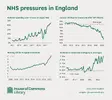
To be fair, isn't it more a case of the awful impact Covid has had on both the supply side (via burnout and other workforce departures) and demand side (via the huge backlog of cases that weren't able to be treated during the pandemic) coupled with the worst flu season in a generation due to our general lack of immunity after Covid?View attachment 199273
It really is a deliberate policy choice to manage the decline. A decision which endangers the public and workforce.
Lack of investment over 12 years is really starting to bite after the pandemic.
Healthcare "still" succumbs to Baumol's disease after all these years, so the notion that the government could magic away the huge backlog with a bit of extra cash was always fanciful as you can't magic staff out of thin air.

Graying, graying, gone: Europe’s deepening health care staffing crisis
Europe’s health and care workforce is growing older, and the figures are especially staggering when it comes to doctors, WHO/Europe report finds.
 www.politico.eu
In optimistic mode, this might be just the "burning platform" to show that we can't keep carrying on as we are at the moment, but when it comes to the NHS I'm never optimistic.
Indeed. Some of the academic work I'm doing at the moment around levelling up is focusing on social spaces in communities to help people get to know one another more, increase community cohesion and general pride of place, reduce loneliness, and so on. This kind of thing isn't within the remit of the NHS at all, but as soon as the "diseases of despair" kick in, it very much is.100% agree with this. It does not operate in isolation.
I was talking to a guy in the UKHSA about structural changes in our environment to influence better health outcomes, better public spaces (would be extremely useful in another pandemic) and mould. Both have demonstrable benefits on health, but are completely outside the remit of health, which by and large focusses on cure rather than prevention. But both need national policy changes, which will never happen under this current government.
I have some hope in the Integrated Care System model at a local level, which will at least force collaboration - but I have a feeling it will just expose each organisation to the inadequacy of the others.
Similarly, things like the perception of "caring" professions among men are very much a societal issue, as I think just 15% of nurses are men at the moment. It's well documented that gender biases kick in at an incredibly young age such that by the time the NHS actively try to recruit people, young men already think these roles aren't for them.

That line as eloquent as it is could very easily sub in, environment* judicial system* civil infrastructure* social media wasteland* brexit doldrum* and I'm sure many more. It's rather bleak at the minute.To be fair, isn't it more a case of the awful impact Covid has had on both the supply side (via burnout and other workforce departures) and demand side (via the huge backlog of cases that weren't able to be treated during the pandemic) coupled with the worst flu season in a generation due to our general lack of immunity after Covid?
Healthcare "still" succumbs to Baumol's disease after all these years, so the notion that the government could magic away the huge backlog with a bit of extra cash was always fanciful as you can't magic staff out of thin air.
Graying, graying, gone: Europe’s deepening health care staffing crisis
Europe’s health and care workforce is growing older, and the figures are especially staggering when it comes to doctors, WHO/Europe report finds.
In optimistic mode, this might be just the "burning platform" to show that we can't keep carrying on as we are at the moment, but when it comes to the NHS* I'm never optimistic.

larrygobfiend
Player Valuation: £40m
The obvious answer would be to throw more money at it by increasing taxes, but we all know what the corrupt Tories would do. Dodgy contacts and backhanders as per usual. I don’t even trust Labour to be honest.
There was a reason I said investment rather than funding. Had we invested in workforce and adequate systems, we wouldn't be as acute as it is now. But we didn't, we squeezed what was already there.To be fair, isn't it more a case of the awful impact Covid has had on both the supply side (via burnout and other workforce departures) and demand side (via the huge backlog of cases that weren't able to be treated during the pandemic) coupled with the worst flu season in a generation due to our general lack of immunity after Covid?
Healthcare "still" succumbs to Baumol's disease after all these years, so the notion that the government could magic away the huge backlog with a bit of extra cash was always fanciful as you can't magic staff out of thin air.
Graying, graying, gone: Europe’s deepening health care staffing crisis
Europe’s health and care workforce is growing older, and the figures are especially staggering when it comes to doctors, WHO/Europe report finds.
In optimistic mode, this might be just the "burning platform" to show that we can't keep carrying on as we are at the moment, but when it comes to the NHS I'm never optimistic.
The NHS gets lauded/criticised for operating at crisis mode continually (it does). I appreciate what you say about Baumol, but it's difficult to quantify what productivity looks like in a failing system. How do you measure it - patients seen vs individual outcome? The simple question of do you prioritise dignity over saving a life?
What happens in reality is everyone left working is moved to the A&E front line. The consequence; the waiting list grows longer.
We've now got Covid presenters, who didn’t come forward during the pandemic. The existing waiting list (about 8m a year), those deferred through strike action and those made increasingly worse as a result of pandemic delays (moving through the categories).
The waiting lists will continue to grow and the government, I suspect, will compromise over nursing pay but then use that wage increase as justification for lack of continued investment and tell the population it's immigration, mismanagement and lazy nurses.
This really isn't the answer.The obvious answer would be to throw more money at it by increasing taxes, but we all know what the corrupt Tories would do. Dodgy contacts and backhanders as per usual. I don’t even trust Labour to be honest.
Imagine what it is in midwifery.Indeed. Some of the academic work I'm doing at the moment around levelling up is focusing on social spaces in communities to help people get to know one another more, increase community cohesion and general pride of place, reduce loneliness, and so on. This kind of thing isn't within the remit of the NHS at all, but as soon as the "diseases of despair" kick in, it very much is.
Similarly, things like the perception of "caring" professions among men are very much a societal issue, as I think just 15% of nurses are men at the moment. It's well documented that gender biases kick in at an incredibly young age such that by the time the NHS actively try to recruit people, young men already think these roles aren't for them.
Edit: I know the answer it's about 1%.

Migrants are half as likely to use the NHS as non-migrants. Would imagine a higher percentage of them actually work in the NHS too, doing jobs British people don’t want to.
It's a matter of slack isn't it? If you want to either do things differently or do extra then you need some slack in the system to utilise. The NHS doesn't seem to have that, and instead is running at full throttle just to keep its head above water (to mix metaphors horribly). I know that there have been various attempts over the years to look at the likes of Toyota and how they manage efficiency, but I suspect they seldom include the bits where Toyota factories are routinely shut down for a period each year to allow maintenance, retooling, and so on. Even the most optimised processes have some slack built into them.There was a reason I said investment rather than funding. Had we invested in workforce and adequate systems, we wouldn't be as acute as it is now. But we didn't, we squeezed what was already there.
The NHS gets lauded/criticised for operating at crisis mode continually (it does). I appreciate what you say about Baumol, but it's difficult to quantify what productivity looks like in a failing system. How do you measure it - patients seen vs individual outcome? The simple question of do you prioritise dignity over saving a life?
What happens in reality is everyone left working is moved to the A&E front line. The consequence; the waiting list grows longer.
We've now got Covid presenters, who didn’t come forward during the pandemic. The existing waiting list (about 8m a year), those deferred through strike action and those made increasingly worse as a result of pandemic delays (moving through the categories).
The waiting lists will continue to grow and the government, I suspect, will compromise over nursing pay but then use that wage increase as justification for lack of continued investment and tell the population it's immigration, mismanagement and lazy nurses.
Even with the training side of things, an unintended consequence of that is that an existing staff member has to have that student for a number of weeks. My wife had a student for a month or so in the run up to Christmas, and while she's generally happy to do that, it does inevitably slow her down as she has to explain things, show the student how things work, do appraisals, and so on. Her targets and the expectations on her don't slow down though, so she's still expected to keep up with her non-student workload even while having an extra job to do. So by all means increase student numbers, but that's perhaps also something to think about.
I don't think they will. My take is they will drag it out and bring forward the announcement of Aprils pay rise a bit earlier.There was a reason I said investment rather than funding. Had we invested in workforce and adequate systems, we wouldn't be as acute as it is now. But we didn't, we squeezed what was already there.
The NHS gets lauded/criticised for operating at crisis mode continually (it does). I appreciate what you say about Baumol, but it's difficult to quantify what productivity looks like in a failing system. How do you measure it - patients seen vs individual outcome? The simple question of do you prioritise dignity over saving a life?
What happens in reality is everyone left working is moved to the A&E front line. The consequence; the waiting list grows longer.
We've now got Covid presenters, who didn’t come forward during the pandemic. The existing waiting list (about 8m a year), those deferred through strike action and those made increasingly worse as a result of pandemic delays (moving through the categories).
The waiting lists will continue to grow and the government, I suspect, will compromise over nursing pay but then use that wage increase as justification for lack of continued investment and tell the population it's immigration, mismanagement and lazy nurses.
Summat along the lines of 5%. Even though there is going to be a 2% cap on public sector wages apparently.
Then they can try to blag, oh we have given circa 10% in the last 6 months recently and everyone else is getting 2%. Don't forget, last years April payrise only came through in August for thr NHS.
Or 2% and an extra one off bonus for front line.
To the public it will sound a lot, but when you dig deeper, not only is it way off for 2022 interms of keeping up with inflation, it will be another real terms pay cut again considering where inflation will still be at. But the public will see nurses getting more money than everyone else in terms of a raise. The hope being public opinion turns and nurses get seen as ungrateful money hungry charlatans , they are killing people because of greed.
You can see them on breakfast news. We have given 10% recently and they will be hopefull the public say oh yeah that's pretty much hitting inflation. Without realising its for 2 years. Then back to normal service and 2024 payrise will come in the August instead of April. So 10% for best part of 2 1/2 years.
Hopefully the public will see through it.
Vault me, and pull this up in 3 months, let's see how on the nose it is.
- Status
- Not open for further replies.
Welcome
Join the Everton conversation today.
Fewer ads, full access, completely free.