

Guest viewing is limited in the Ale House.
- You have a limited number of page views remaining
- 14 guest views remaining
- Register now to remove this limitation
- Already a member? Click here to login
You are using an out of date browser. It may not display this or other websites correctly.
You should upgrade or use an alternative browser.
You should upgrade or use an alternative browser.
Groucho's Fact Hunt
- Thread starter Groucho
- Start date

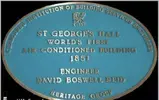

Posted this in the history thread, but I think it deserves another post here:
View attachment 342299
There are some pretty interesting ones in there!

The Texas Sharpshooter Fallacy
The Misconception: You take randomness into account when determining cause and effect. The Truth: You tend to ignore random chance when the results seem meaningful or when you want a random event t…
 youarenotsosmart.com

Jamo Martinez
Player Valuation: £70m
The country with most glaciars outside the Polar regions is Pakistan.

summerisle
The rain, it raineth every day
5 years, 4 months and 15 days, and counting. 


bcblue1878
Player Valuation: £50m

The One O'clock Gun.
Liverpool built its first astronomical Observatory in 1844, at Waterloo Dock. It was operational by January 1845. The engineer was Jesse Hartley, the same man that build the Royal Albert Dock. John Hartnup was the first astronomer.
Why should a port city like Liverpool pay for a world-class Observatory and employ a world-class astronomer? The one-word answer is “time”.
You see, when a ship called into port, one of the most useful things you could do for it was to give it an accurate fix on Greenwich Mean Time. The ship’s captain would set his chronometer to Greenwich time before setting out to sea. As he travelled around the globe, he could get local time by observing the sun or the stars and could read Greenwich Mean Time off his chronometer. The difference between the two, multiplied by a certain number, gave the ship’s longitude east or west of Greenwich. Accurate time-keeping was the solution to the longitude problem. With its own Observatory and dedicated astronomer, Liverpool could now claim that the time in Liverpool was just as accurate as the time in Greenwich itself.
At first, time was passed on to the town by dropping a time-ball at one o’clock, Greenwich Mean Time. The Observatory also took in ship’s chronometers for calibration (or “rating”) and had additonal duties to take continuous meteorological observations. This bread-and-butter work left the astronomer with a little time for his own research, enabling him to retain the respect of his peers. One of the earliest photographs of the moon was taken from Liverpool Observatory.
When the Mersey Docks and Harbour Board was established in 1858, it also took over the responsibility for running the Observatory. When they decided to expand Waterloo Dock in the 1860s, they needed to find a new home for the Observatory. Mersey Docks already owned land on Bidston Hill alongside the old lighthouse, where the “seeing” was better, away from the smog of the town. George Fosbery Lyster drew up the first plans in 1864 and the new building was completed in time for Christmas 1866. The business of rating chronometers continued at the new Observatory.
The following year, 1867, is when the one o’clock gun started. The new Observatory was too far from the city for a time ball to be visible, so a different solution was required. A cannon from the Crimean War was installed at Morpeth Dock, and connected to the Observatory by an electric cable. An accurate clock at the Observatory end was checked daily by the astronomer or his assistants.
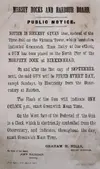
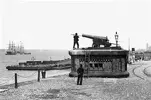
….as a kid growing up in ‘60s Everton, I can recall hearing the ‘One O’Clock Gun’ being fired everyday across the river in Birkenhead.
Liverpool built its first astronomical Observatory in 1844, at Waterloo Dock. It was operational by January 1845. The engineer was Jesse Hartley, the same man that build the Royal Albert Dock. John Hartnup was the first astronomer.
Why should a port city like Liverpool pay for a world-class Observatory and employ a world-class astronomer? The one-word answer is “time”.
You see, when a ship called into port, one of the most useful things you could do for it was to give it an accurate fix on Greenwich Mean Time. The ship’s captain would set his chronometer to Greenwich time before setting out to sea. As he travelled around the globe, he could get local time by observing the sun or the stars and could read Greenwich Mean Time off his chronometer. The difference between the two, multiplied by a certain number, gave the ship’s longitude east or west of Greenwich. Accurate time-keeping was the solution to the longitude problem. With its own Observatory and dedicated astronomer, Liverpool could now claim that the time in Liverpool was just as accurate as the time in Greenwich itself.
At first, time was passed on to the town by dropping a time-ball at one o’clock, Greenwich Mean Time. The Observatory also took in ship’s chronometers for calibration (or “rating”) and had additonal duties to take continuous meteorological observations. This bread-and-butter work left the astronomer with a little time for his own research, enabling him to retain the respect of his peers. One of the earliest photographs of the moon was taken from Liverpool Observatory.
When the Mersey Docks and Harbour Board was established in 1858, it also took over the responsibility for running the Observatory. When they decided to expand Waterloo Dock in the 1860s, they needed to find a new home for the Observatory. Mersey Docks already owned land on Bidston Hill alongside the old lighthouse, where the “seeing” was better, away from the smog of the town. George Fosbery Lyster drew up the first plans in 1864 and the new building was completed in time for Christmas 1866. The business of rating chronometers continued at the new Observatory.
The following year, 1867, is when the one o’clock gun started. The new Observatory was too far from the city for a time ball to be visible, so a different solution was required. A cannon from the Crimean War was installed at Morpeth Dock, and connected to the Observatory by an electric cable. An accurate clock at the Observatory end was checked daily by the astronomer or his assistants.
….as a kid growing up in ‘60s Everton, I can recall hearing the ‘One O’Clock Gun’ being fired everyday across the river in Birkenhead.

Charles Hawtrey
Player Valuation: £50m
As a kid I used to play up at Biddy Hill and they had several cannons on the observatory which I assumed incorrectly were fired at the 1 o'clock hour. They may have been moved from the dock location later of course (if anyone knows?). There's also a pub from much more modern times of the same name fairly nearby.The One O'clock Gun.
Liverpool built its first astronomical Observatory in 1844, at Waterloo Dock. It was operational by January 1845. The engineer was Jesse Hartley, the same man that build the Royal Albert Dock. John Hartnup was the first astronomer.
Why should a port city like Liverpool pay for a world-class Observatory and employ a world-class astronomer? The one-word answer is “time”.
You see, when a ship called into port, one of the most useful things you could do for it was to give it an accurate fix on Greenwich Mean Time. The ship’s captain would set his chronometer to Greenwich time before setting out to sea. As he travelled around the globe, he could get local time by observing the sun or the stars and could read Greenwich Mean Time off his chronometer. The difference between the two, multiplied by a certain number, gave the ship’s longitude east or west of Greenwich. Accurate time-keeping was the solution to the longitude problem. With its own Observatory and dedicated astronomer, Liverpool could now claim that the time in Liverpool was just as accurate as the time in Greenwich itself.
At first, time was passed on to the town by dropping a time-ball at one o’clock, Greenwich Mean Time. The Observatory also took in ship’s chronometers for calibration (or “rating”) and had additonal duties to take continuous meteorological observations. This bread-and-butter work left the astronomer with a little time for his own research, enabling him to retain the respect of his peers. One of the earliest photographs of the moon was taken from Liverpool Observatory.
When the Mersey Docks and Harbour Board was established in 1858, it also took over the responsibility for running the Observatory. When they decided to expand Waterloo Dock in the 1860s, they needed to find a new home for the Observatory. Mersey Docks already owned land on Bidston Hill alongside the old lighthouse, where the “seeing” was better, away from the smog of the town. George Fosbery Lyster drew up the first plans in 1864 and the new building was completed in time for Christmas 1866. The business of rating chronometers continued at the new Observatory.
The following year, 1867, is when the one o’clock gun started. The new Observatory was too far from the city for a time ball to be visible, so a different solution was required. A cannon from the Crimean War was installed at Morpeth Dock, and connected to the Observatory by an electric cable. An accurate clock at the Observatory end was checked daily by the astronomer or his assistants.
View attachment 344044
View attachment 344048
….as a kid growing up in ‘60s Everton, I can recall hearing the ‘One O’Clock Gun’ being fired everyday across the river in Birkenhead.
Jeez Biddy Hill and the NannyGoat Mountains, fond memories. I am feeling old!!!
Charles Hawtrey
Player Valuation: £50m
Icidentally I looked it up and it was last used in 1969. I was not mistaken in my belief that I heard it as a kid.
Icidentally I looked it up and it was last used in 1969. I was not mistaken in my belief that I heard it as a kid.
….definitely, I lived in Everton through the ‘60’s and heard it daily.
John Hulley.
Born: 19th February 1832 , 10 Gloucester Street , Liverpool
Died: 6th January 1875 , (aged 42) 91 Grove Street , Liverpool.
Gymnasiarch of Liverpool, and founder of the British Olympic movement in 1865.
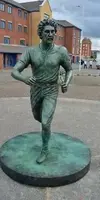
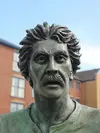
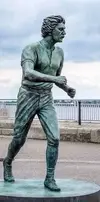
Born: 19th February 1832 , 10 Gloucester Street , Liverpool
Died: 6th January 1875 , (aged 42) 91 Grove Street , Liverpool.
Gymnasiarch of Liverpool, and founder of the British Olympic movement in 1865.

I used to fish from the one o'clock gun as a kid in the early seventies.The One O'clock Gun.
Liverpool built its first astronomical Observatory in 1844, at Waterloo Dock. It was operational by January 1845. The engineer was Jesse Hartley, the same man that build the Royal Albert Dock. John Hartnup was the first astronomer.
Why should a port city like Liverpool pay for a world-class Observatory and employ a world-class astronomer? The one-word answer is “time”.
You see, when a ship called into port, one of the most useful things you could do for it was to give it an accurate fix on Greenwich Mean Time. The ship’s captain would set his chronometer to Greenwich time before setting out to sea. As he travelled around the globe, he could get local time by observing the sun or the stars and could read Greenwich Mean Time off his chronometer. The difference between the two, multiplied by a certain number, gave the ship’s longitude east or west of Greenwich. Accurate time-keeping was the solution to the longitude problem. With its own Observatory and dedicated astronomer, Liverpool could now claim that the time in Liverpool was just as accurate as the time in Greenwich itself.
At first, time was passed on to the town by dropping a time-ball at one o’clock, Greenwich Mean Time. The Observatory also took in ship’s chronometers for calibration (or “rating”) and had additonal duties to take continuous meteorological observations. This bread-and-butter work left the astronomer with a little time for his own research, enabling him to retain the respect of his peers. One of the earliest photographs of the moon was taken from Liverpool Observatory.
When the Mersey Docks and Harbour Board was established in 1858, it also took over the responsibility for running the Observatory. When they decided to expand Waterloo Dock in the 1860s, they needed to find a new home for the Observatory. Mersey Docks already owned land on Bidston Hill alongside the old lighthouse, where the “seeing” was better, away from the smog of the town. George Fosbery Lyster drew up the first plans in 1864 and the new building was completed in time for Christmas 1866. The business of rating chronometers continued at the new Observatory.
The following year, 1867, is when the one o’clock gun started. The new Observatory was too far from the city for a time ball to be visible, so a different solution was required. A cannon from the Crimean War was installed at Morpeth Dock, and connected to the Observatory by an electric cable. An accurate clock at the Observatory end was checked daily by the astronomer or his assistants.
View attachment 344044
View attachment 344048
….as a kid growing up in ‘60s Everton, I can recall hearing the ‘One O’Clock Gun’ being fired everyday across the river in Birkenhead.
Can't honestly remember if the cannon was still there or just the plinth toi busy catching fish

Fantastic fact that, bit of history I wasn't aware of, thanks for posting.

There’s never been a premier league match played where all 22 starting players were english, the closest was 21 when QPR played Newcastle in January 1994….. the only non english starter that day was QPR goalkeeper (a friend of mine) Tony Roberts who is Welsh 

I guess that means 100% British though?There’s never been a premier league match played where all 22 starting players were english, the closest was 21 when QPR played Newcastle in January 1994….. the only non english starter that day was QPR goalkeeper (a friend of mine) Tony Roberts who is Welsh
I appreciate the Welsh aspect, I’m a Heinz 57 of mostly British Isles nations and a tad of Dutch.
Welcome
Join the Everton conversation today.
Fewer ads, full access, completely free.