Current Affairs EU In or Out

In or Out

  • In

    Votes: 688 67.9%
  • Out

    Votes: 325 32.1%

  • Total voters
    1,013
Status
Not open for further replies.
Gotcha, thanks for the clarification. I have a couple of issues with this.

Firstly, I'm not at all convinced that they could do it. If the state were in any way good at knowing what skills the economy needed then you could justly argue that we wouldn't have a homegrown skills shortage in the first place. The economy is changing at such a pace these days that it pays to be agile, which is something that governments very seldom are (more of which later). Even assuming however that they have any capability to predict what skills we need, there's little evidence to suggest that they would reduce numbers. We already have more non-EU migrants coming to the UK than EU migrants, plus it isn't often reported but the much vaunted Australian system sees Australia have more immigrants per capita than we do, even with our apparently open border.

Secondly, this assumes that it is the migrants per se that are the problem rather than how we respond to it. I've mentioned the poor way the government already responds in terms of helping communities that have been impacted by globalisation. They have a fund for this (and rejected EU assistance because of this fund), yet it has just £8 million in it, so is not really a lot of cop. We can do an awful lot more to help re-train people so that they don't feel so left out as a result of people coming in. There is also a lot we can do about how local councils and services are funded. At the moment funding is based upon census data, which as I'm sure you know means that it is very likely to be permanently out of date, and certainly ill equipped to respond to rapid changes in population numbers. One would think in our technological age that a much better way could be devised to ensure local authorities have the funding commensurate to their population in real time rather than using a once a decade, paper based exercise.
Yes we have a skill shortage down to free movement IMO, get proper training schemes hands on in the building sector, and it sector cut out the stupid media studies noneslistic topics in Universities and start hands on training in the hands on subjects trades, engineering to produce businesses of the future, only the Imigration will slow down in the right way,, you don't necessary need a points system may be just work permits!
In time when we rid ourselves of the EU shackles, and strike out on our own we are great inventors which will fetch investment worldwide!
The more borrowing to expand the economy for us will boom the tax income, and NI creating proper jobs no zero jobs get house building going to borrow 1 million interest per year a mere 25 k housing in the future should be affordable look I took a hit today on my savings but power to the UK children!
 
Last edited:
Yes we have a skill shortage down to free movement IMO, get proper training schemes hands on in the building sector, and it sector cut out the stupid media studies noneslistic topics in Universities and start hands on training in the hands on subjects trades, engineering to produce businesses of the future, only the Imigration will slow down in the right way,, you don't necessary need a points system may be just work permits!
In time when we rid ourselves of the EU shackles, and strike out on our own we are great inventors which will fetch investment worldwide!
The more borrowing to expand the economy for us will boom the tax income, and NI creating proper jobs no zero jobs get house building going to borrow 1 million interest per year a mere 25 k housing in the future should be affordable look I took a hit today on my savings but power to the UK children!

If you look at the official list of 'in demand' skills - http://www.visabureau.com/uk/shortage-occupations-list.aspx - I'm afraid building and general manual work isn't on it (although funnily enough, one media related skill is). There are an awful lot of skilled engineering areas however, and I know from speaking with the IMechE that they're working really hard to attract youngsters to engineering.

Re the startups, we are indeed fantastic, and a couple of hundred companies per year are spun-out of British universities. I work closely with the Knowledge Quarter in London, and the innovation is fantastic to behold, especially as the bulk of it comes in STEM type fields. We do receive much more than we contribute in Horizon 2020 funding however, and whilst there has been talk of the government paying the ~£2bn to plug that gap, whether they do so remains to be seen. That could really handicap the research capabilities of our universities, especially at a time when Carlos Moedas is promoting a strategy of 'open science, open innovation and open to the world'. It would be a shame if our fantastic universities weren't a part of that, so hopefully something will be negotiated to keep things much as they are in that regard. I know the likes of Imperial and Oxford (via ISIS Innovation) have big funds to support spinouts, it's just whether the raw research will be there to build companies from. Fingers crossed.

As an example though, I know the team behind Magic Pony, who came from Imperial and were recently bought by Twitter for ~$150 million. It's been working thus far, and a number of prominent studies have rated the UK as one of the best places in the world for innovation, so hopefully when we do leave the EU that gets better rather than worse.
 
If you look at the official list of 'in demand' skills - http://www.visabureau.com/uk/shortage-occupations-list.aspx - I'm afraid building and general manual work isn't on it (although funnily enough, one media related skill is). There are an awful lot of skilled engineering areas however, and I know from speaking with the IMechE that they're working really hard to attract youngsters to engineering.

Re the startups, we are indeed fantastic, and a couple of hundred companies per year are spun-out of British universities. I work closely with the Knowledge Quarter in London, and the innovation is fantastic to behold, especially as the bulk of it comes in STEM type fields. We do receive much more than we contribute in Horizon 2020 funding however, and whilst there has been talk of the government paying the ~£2bn to plug that gap, whether they do so remains to be seen. That could really handicap the research capabilities of our universities, especially at a time when Carlos Moedas is promoting a strategy of 'open science, open innovation and open to the world'. It would be a shame if our fantastic universities weren't a part of that, so hopefully something will be negotiated to keep things much as they are in that regard. I know the likes of Imperial and Oxford (via ISIS Innovation) have big funds to support spinouts, it's just whether the raw research will be there to build companies from. Fingers crossed.

As an example though, I know the team behind Magic Pony, who came from Imperial and were recently bought by Twitter for ~$150 million. It's been working thus far, and a number of prominent studies have rated the UK as one of the best places in the world for innovation, so hopefully when we do leave the EU that gets better rather than worse.
What's the point of getting an academic degrees with no job skill base behind the subject?
Also the massive unpaid loan system now in place?
Also that link is 354 pages really!
 
Last edited:
I agree that we are not ready as a species for that...but that would be the ultimate goal of globalization.
Planet Earth dude.

We can all smoke pot and sing kumbaya together it'll be great.

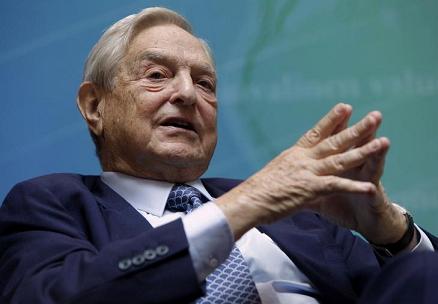
Aren't you worried that your views line up with extreme left wing globalist shills like Soros?

sorospic.jpg
 
Last edited:
You harassed me yesterday to present support. I present support accompanied by evidence from three organisations (PwC, LSE and Oxford) who have clearly researched the economic issues thoroughly. You then dismiss them and go on to reaffirm how you use rag tabloids as evidence because they contain snippets of truth. Surely you can see a little bit of a problem with that.

I get that you are a smart guy and I'm not trying to "show my superiority" by raising points, but if you are simply going to sit there and dismiss every pro EU point as wrong simply because they are made by someone pro EU, there is not much point in debating with you.

I can happily admit that the ability to make our own trade deals is a massive plus of leaving the EU as you have said earlier. It is one element of "the big picture" which is worth discussing further. To be honest though, it's been done to death and at this point of time I'm more interested in discussing the way forward and how we will achieve these deals including the deal we need with the EU (funnily enough there are some good articles on this at the CER website but I'm not going to dare suggest you visit there again).

I agree, it's been done to death and we should now be fully focussed on how we take advantage of where we are and how we are going to grow our economy, for the benefit of our people, outside of the EU.

On the point of evidence, as you know, its not the validity or accuracy of what evidence exists but the way that's it's presented and which bits are left out or even ignored.

I will read the CER article, but the last one I read only put forward a few options for negotiation, the Norway or Switzerland model etc, without thinking about other options for how the worlds 5th largest economy might engage with the EU. I hope this one has a wider field of vision.......
 
I don't agree with everything in this, but it does nonetheless underline what I (and others) have been saying about the difficulties in 'taking back control' in a globalised world. It's written by Jennifer Johns from the University of Liverpool.

https://theconversation.com/britain...he-nature-of-globalisation-at-its-peril-61392

There remains great uncertainty in the aftermath of the UK vote to leave the European Union. Few seem to have a plan for what Brexit will look like and how the UK’s relationship with the outside world will take shape.

But while the desire for sovereignty and to “take back control” were top of many voters' list of reasons to vote to leave, the fact that we live in a globalised world where economies and trade supersede national boundaries cannot be ignored.

Much of the confusion about how Brexit will affect the British economy has resulted from the inability of those for and against it to acknowledge the realities of the position of the UK in the contemporary global economy. This failure to understand the realities of globalisation is partly why there is such confusion about how to deliver the kind of post-Brexit UK demanded by those who voted leave. But regaining national sovereignty is extremely difficult, if not impossible, in today’s global economy.

The interconnected world
The recent global financial crisis should have sent a powerful message. The degree of interconnection between places in the global economy has reached unprecedented levels and attempts to “unpick” these interconnections are highly problematic.

Globalisation is complex. It is no longer a case of “us” and “them”. Capital, goods and services flow within, between and across national borders – and the flow is uneven. It is often directed through key cities. So when we talk about flows of foreign direct investment between the UK and Germany, we are actually discussing flows of people and money between cities such as London and Berlin.

In fact, cities are the key drivers in trade. It is no surprise therefore that there were significantly higher votes to remain in the EU in cities such as London and Manchester. This is because these cities are points in the global economy through which trade, services and people flow. It is in these locations that we can most easily see the benefits of interconnection with cities in the EU and beyond.

image-20160803-12192-k9huwu.jpg

Cities have benefited disproportionately from globalisation. Andy Sedg, CC BY-NC-ND
Outside of the major cities, the regions of the UK have experienced a downward shift in the scale at which economic activity takes place and political power is exercised. The national shift from manufacturing to a service-based economy has had a geographically uneven impact. Many manufacturing industries in the UK’s regions have shrunk or disappeared. This has not been helped by UK national policy which focuses on the financial services sector (predominately in London).

Globalisation’s disconnect
Globalisation has brought with it disconnection between the way that economies and their management have been simultaneously downscaled and upscaled. So, as well as the concentration of decision making in Westminster, there are also a number of decisions being made abroad that affect regions across the UK – the evolution of the European Union epitomises this process.

This upscaling of power is necessary. Many of the most important issues of the last three decades are shared across national boundaries – take for example environmental concerns. The formation of supra-regions begins with an acknowledgement of the benefits of removing trade barriers and having free movement of goods and services, which should create opportunities for all regions of the UK.

image-20160803-12223-p60o51.jpg

Cross-border concerns are better shared. motiqua/flickr, CC BY
In fact, the best hope for deprived areas of the UK is not to place decision making squarely back in the hands of the UK government. This gives power back to the very institutions that created and exacerbated the regional inequalities seen in the UK today. Benefits such as investment in local enterprises and infrastructure, improvements in working conditions and levels of employment result from international engagement and cooperation.

Those who – justifiably – feel isolated and economically depressed should call for greater decision-making power at a more local level. Local power, combined with access to international resources and opportunities, can start rebuilding local economies. Globalisation makes this possible as cities and regions do not necessarily need to go via London for trade and investment. These connections are essential for local economies to compete in the globalised world.

But leaving the EU means leaving the hundreds of trade agreements the UK has with non-EU countries and also possibly the freedom of movement of goods and services there is within the EU. Until these are rearranged (which will take several decades), the UK’s constituent regions may struggle to access international markets. So the “take back control” rhetoric offers no solutions, only problems.

The UK government has consistently failed to articulate the rationale and benefits of upscaling in its relations globally (specifically in the form of EU membership), despite the economic benefits it has brought. It is not about the removal of national boundaries but rather an acceptance of how so much of what drives the global economy occurs outside of these strict boundaries.

Closer economic cooperation is the only logical response to globalisation and the best way to ensure stable growth. Indeed, the short, medium and long-term impacts of the Brexit vote will surely serve to provide the UK with a harsh lesson in the dangers of going it alone.

 
I don't agree with everything in this, but it does nonetheless underline what I (and others) have been saying about the difficulties in 'taking back control' in a globalised world. It's written by Jennifer Johns from the University of Liverpool.

https://theconversation.com/britain...he-nature-of-globalisation-at-its-peril-61392

There remains great uncertainty in the aftermath of the UK vote to leave the European Union. Few seem to have a plan for what Brexit will look like and how the UK’s relationship with the outside world will take shape.

But while the desire for sovereignty and to “take back control” were top of many voters' list of reasons to vote to leave, the fact that we live in a globalised world where economies and trade supersede national boundaries cannot be ignored.

Much of the confusion about how Brexit will affect the British economy has resulted from the inability of those for and against it to acknowledge the realities of the position of the UK in the contemporary global economy. This failure to understand the realities of globalisation is partly why there is such confusion about how to deliver the kind of post-Brexit UK demanded by those who voted leave. But regaining national sovereignty is extremely difficult, if not impossible, in today’s global economy.

The interconnected world
The recent global financial crisis should have sent a powerful message. The degree of interconnection between places in the global economy has reached unprecedented levels and attempts to “unpick” these interconnections are highly problematic.

Globalisation is complex. It is no longer a case of “us” and “them”. Capital, goods and services flow within, between and across national borders – and the flow is uneven. It is often directed through key cities. So when we talk about flows of foreign direct investment between the UK and Germany, we are actually discussing flows of people and money between cities such as London and Berlin.

In fact, cities are the key drivers in trade. It is no surprise therefore that there were significantly higher votes to remain in the EU in cities such as London and Manchester. This is because these cities are points in the global economy through which trade, services and people flow. It is in these locations that we can most easily see the benefits of interconnection with cities in the EU and beyond.

image-20160803-12192-k9huwu.jpg

Cities have benefited disproportionately from globalisation. Andy Sedg, CC BY-NC-ND
Outside of the major cities, the regions of the UK have experienced a downward shift in the scale at which economic activity takes place and political power is exercised. The national shift from manufacturing to a service-based economy has had a geographically uneven impact. Many manufacturing industries in the UK’s regions have shrunk or disappeared. This has not been helped by UK national policy which focuses on the financial services sector (predominately in London).

Globalisation’s disconnect
Globalisation has brought with it disconnection between the way that economies and their management have been simultaneously downscaled and upscaled. So, as well as the concentration of decision making in Westminster, there are also a number of decisions being made abroad that affect regions across the UK – the evolution of the European Union epitomises this process.

This upscaling of power is necessary. Many of the most important issues of the last three decades are shared across national boundaries – take for example environmental concerns. The formation of supra-regions begins with an acknowledgement of the benefits of removing trade barriers and having free movement of goods and services, which should create opportunities for all regions of the UK.

image-20160803-12223-p60o51.jpg

Cross-border concerns are better shared. motiqua/flickr, CC BY
In fact, the best hope for deprived areas of the UK is not to place decision making squarely back in the hands of the UK government. This gives power back to the very institutions that created and exacerbated the regional inequalities seen in the UK today. Benefits such as investment in local enterprises and infrastructure, improvements in working conditions and levels of employment result from international engagement and cooperation.

Those who – justifiably – feel isolated and economically depressed should call for greater decision-making power at a more local level. Local power, combined with access to international resources and opportunities, can start rebuilding local economies. Globalisation makes this possible as cities and regions do not necessarily need to go via London for trade and investment. These connections are essential for local economies to compete in the globalised world.

But leaving the EU means leaving the hundreds of trade agreements the UK has with non-EU countries and also possibly the freedom of movement of goods and services there is within the EU. Until these are rearranged (which will take several decades), the UK’s constituent regions may struggle to access international markets. So the “take back control” rhetoric offers no solutions, only problems.

The UK government has consistently failed to articulate the rationale and benefits of upscaling in its relations globally (specifically in the form of EU membership), despite the economic benefits it has brought. It is not about the removal of national boundaries but rather an acceptance of how so much of what drives the global economy occurs outside of these strict boundaries.

Closer economic cooperation is the only logical response to globalisation and the best way to ensure stable growth. Indeed, the short, medium and long-term impacts of the Brexit vote will surely serve to provide the UK with a harsh lesson in the dangers of going it alone.
My you google far too muchlol;)
 
Status
Not open for further replies.

Welcome

Join the Everton conversation today.
Fewer ads, full access, completely free.

🛒 Visit Shop

Support Grand Old Team by checking out our latest Everton gear!
Back
Top