Current Affairs EU In or Out

In or Out

  • In

    Votes: 688 67.9%
  • Out

    Votes: 325 32.1%

  • Total voters
    1,013
Status
Not open for further replies.
But against comparable countries it's Ok. What does Nigeria have to do with it ? There are numerous underdeveloped countries or those going through growth spurts who will have one off amazing growth figures. So eventhough WW3 was predicted and everything will fall apart, they are still forecasting that we will do better than France and Germany. Tbh, I wouldn't believe a word the IMF says as they are wrong so often.......
The International Monetary Fund (IMF) has said the UK's decision to leave the European Union has "thrown a spanner in the works" of its global growth forecast.

Instead of predicting 3.2% growth in 2016, the IMF's World Economic Outlook (WEO) now expects only 3.1%.

It says the UK will be the worst affected of all the advanced economies.

Its 2017 UK growth forecast has been slashed from 2.2% to 1.3% and this year's has been cut from 1.9% to 1.7%.

The IMF's global growth forecast for 2017 has also been revised down from 3.5% to 3.4%.

Before the referendum vote on 23 June, the IMF says that the global economy had been showing promising signs of growth.

(BBC tonight) - Not sure why they would make it up.
 
We're heading for a stalling economy with higher import prices giving inflation a nudge up also.

It's a shambles - politically and economically.


Esk, I've said it before, and I'll say it again.

You need to have reference to the legal tenet: He who asserts must prove.

You have NO proof to back up any of your assertions, because all you are doing is urinating into the proverbial breeze...

No proof whatsoever. Give me the 100% proof, and I'll start to believe what you say. Until then, you may as well say Everton won the Premier League last season...
 
Siemens sums up what UK manufacturing is and the export market with Europe and the rest of the world.

"Siemens employs 14,000 people in Britain, from wind power, to turbo-machinery, transport signals, MRI scanners, and health care diagnostics, mostly in highly-skilled jobs. It is a central pillar of Britain’s manufacturing and hi-tech sector, crucial to a nexus of sub-contractors.

Mr Kaeser said the company would step up investments in UK research and innovation regardless of whether there is any trade deal, and would build a new factory to manufacture railway rolling stock “in a heartbeat” if it won the order. Less clear is whether any trains would be for the export market, and exports are what the UK vitally needs to plug a current account deficit of 7pc of GDP.

Juergen Maier, head of Siemens UK, said the company is not calling for a Norway-style trade deal within the European Economic Area, or for any specific formula that would safeguard UK access to the EU single market. “Obviously, the closer we can get to free trade, the better it will be,” he said.

"The company warned before the referendum that plans to expand its wind turbine plant in Hull might be frozen if there was a vote to leave, but Mr Kaeser was careful to stress that it was far too early to reach any conclusion. “The Hull investment is not in trouble at all. It was built for the projects we have and for those we anticipate getting,” he said.

"The problem could arise later with the Phase II expansion of the plant intended to serve the export market and create a manufacturing hub large enough to serve a 70 gigawatt capacity of renewable energy, and to drive down costs by 30pc to 40pc.

Blades would still be built in the UK for the local market but it might no longer be worth trying to ship them to Denmark and Germany. “If there were trade barriers, it would lead straight to higher costs. We would lose economies of scale,
” he said. Telegraph Ambrose Evans-Pritchard 11 JULY 2016.


Siemens would not be wanting any sort of tariff trade war that will lead to higher costs and this will affect their investment plans in Hull, for instance. Also, Siemens are clear, as are most foreign firms, 'if you give us the contracts we will invest. If not we wont'. They hold a good hand due to the lack of UK manufacturers.

A tariff war would not help Germany or the UK. Many jobs in Britain are dependent of German companies who have built plants here to send parts back to Germany for say German cars. Tariffs would make the parts more expensive and the Uk would lose economies of scale.

"In the UK, 37% of the total value of spend in the supply chain (£33 billion in 2012) is currently sourced locally. Depending on the manufacturer, between 20-50% is imported from the EU and the rest from outside the EU".

A tariff would increase the cost of components for UK made cars which would make them more expensive. Also protectionist measures by the likes of China and Brazil will hinder the UKs ability to strike up trade deals in cars.

"However, growth is impeded by protectionism and trade barriers Emerging markets have been increasing the use of trade barriers to defend themselves against free trade, particularly through the economic downturn.

In June 2013, the ACEA, the European Automotive Manufacturers Association, highlighted 154 new tariffs and restrictive measures that had been introduced over the previous 12 months. China is an important growth market for UK built premium and luxury cars. However, growth is hindered by trade and tariff barriers. For instance, the Range Rover Evoque currently attracts a 25% import tariff, 17% sales tax and 9% consumption tax in China.

Brazil also increased its import tariff across a range of imported goods in October 2012 including vehicles. It has targeted the car industry through the Inovar-Auto programme, which incentivises OEMs to establish local manufacturing plants through reduced import tariffs2". The UK Automotive Industry and the EU An economic assessment of the interaction of the UK’s Automotive Industry with the European Union April 2014 kpmg.co.uk

Protectionism is being partly blamed for a slow down in the world economy. Attempting to overcome protectionism measures in very difficult indeed. A UK trade negotiator would have to be able to offer China and Brazil something in return for lowering their tariffs on cars for instance. Allowing China to 'dump' steel in the UK would be a hot topic of conversation.

There is no guarantee that trade talks with the US will run smoothly if Trump is elected. He is very keen on protectionist measures for US industry and commerce.

The financial sector is the UKs Achilles heel when it comes to trade deals with Europe.

"In the EU, the UK has by far the largest financial sector and the British financial industry has strongly benefited from access to the single financial market. According to data from TheCityUK, a financial sector lobby group, the EU is the biggest market for UK exports of financial services, generating a trade surplus of £15 billion, a third of the UK’s total trade surplus in financial services, which totalled £46 billion in 2012. The UK’s financial services trade surplus with the EU has more than doubled over the past decade.

About 70% of the EU’s foreign-exchange trading and 40% of global trading in euros takes place in the UK. The UK hosts 85% of the EU’s hedge-fund assets, 42% of EU private-equity funds, half of EU investment bank activity, half of EU pension assets and international insurance premiums".

Frankfurt and Paris have already started the charm offensive towards the financial sector to move to their cities. As long as the UK is/was in EU it was able to fend off, not completely mind, overtures by Paris and Frankfurt to tax UK financial sector.

Neither Germany nor the UK has the upper hand when it is to do with tariffs/trade deals. Germany is interested in trade in goods and the UK is more interested in protecting its financial services.

It will be interesting to see what compromise the UK and the EU arrive at regarding trade and migrants. Maybe, it will be let those migrants here already stay. And future migration with limits -a points based or employer based system on new arrivals. But if David Davis' comments about, 'not wanting another internal border, between England and Scotland, as there is between Northern Ireland and the Republic' is anything to go by then the UK is being led by a person out of their depth.

 
Esk, I've said it before, and I'll say it again.

You need to have reference to the legal tenet: He who asserts must prove.

You have NO proof to back up any of your assertions, because all you are doing is urinating into the proverbial breeze...

No proof whatsoever. Give me the 100% proof, and I'll start to believe what you say. Until then, you may as well say Everton won the Premier League last season...
Wondering where your 100% proof is that something better is going to happen, Pete.
 
Wondering where your 100% proof is that something better is going to happen, Pete.


Now, now, don't muddy the waters. Stay on topic.

Esk made definitive statements. I've simply asked him to back up his assertions with FACTS.

Which, of course, he cannot do...

And my name isn't Pete! :) ;)
 
Now, now, don't muddy the waters. Stay on topic.

Esk made definitive statements. I've simply asked him to back up his assertions with FACTS.

Which, of course, he cannot do...

And my name isn't Pete! :) ;)
Sorry Old, wrong Blue.

Will maintain a close eye for positive assertions, then I can pounce!:Blink:
(Nice guitar btw)
 
Esk, I've said it before, and I'll say it again.

You need to have reference to the legal tenet: He who asserts must prove.

You have NO proof to back up any of your assertions, because all you are doing is urinating into the proverbial breeze...

No proof whatsoever. Give me the 100% proof, and I'll start to believe what you say. Until then, you may as well say Everton won the Premier League last season...

No-one can prove the future, but we can use the past for guidance. Economics shocks such as Brexit always create a slow down because naturally the uncertainty created slows down investment decisions which slows down economic activity.

Investors can always create models but models can never predict the unpredictable and Brexit is such an event. The effect of unpredictable events is almost always negative because given their nature they're not expected and run completely at odds with the psychological bias that pervades through Governments and boardrooms alike.

I'm not denying you your Brexit, it's going to happen, and it should as that was the will of the people - I'm saying there's a cost to the decision and that cost is a reduction in our economic performance. Definitive.
 
Sorry Old, wrong Blue.

Will maintain a close eye for positive assertions, then I can pounce!:Blink:
(Nice guitar btw)

No problem, JP.

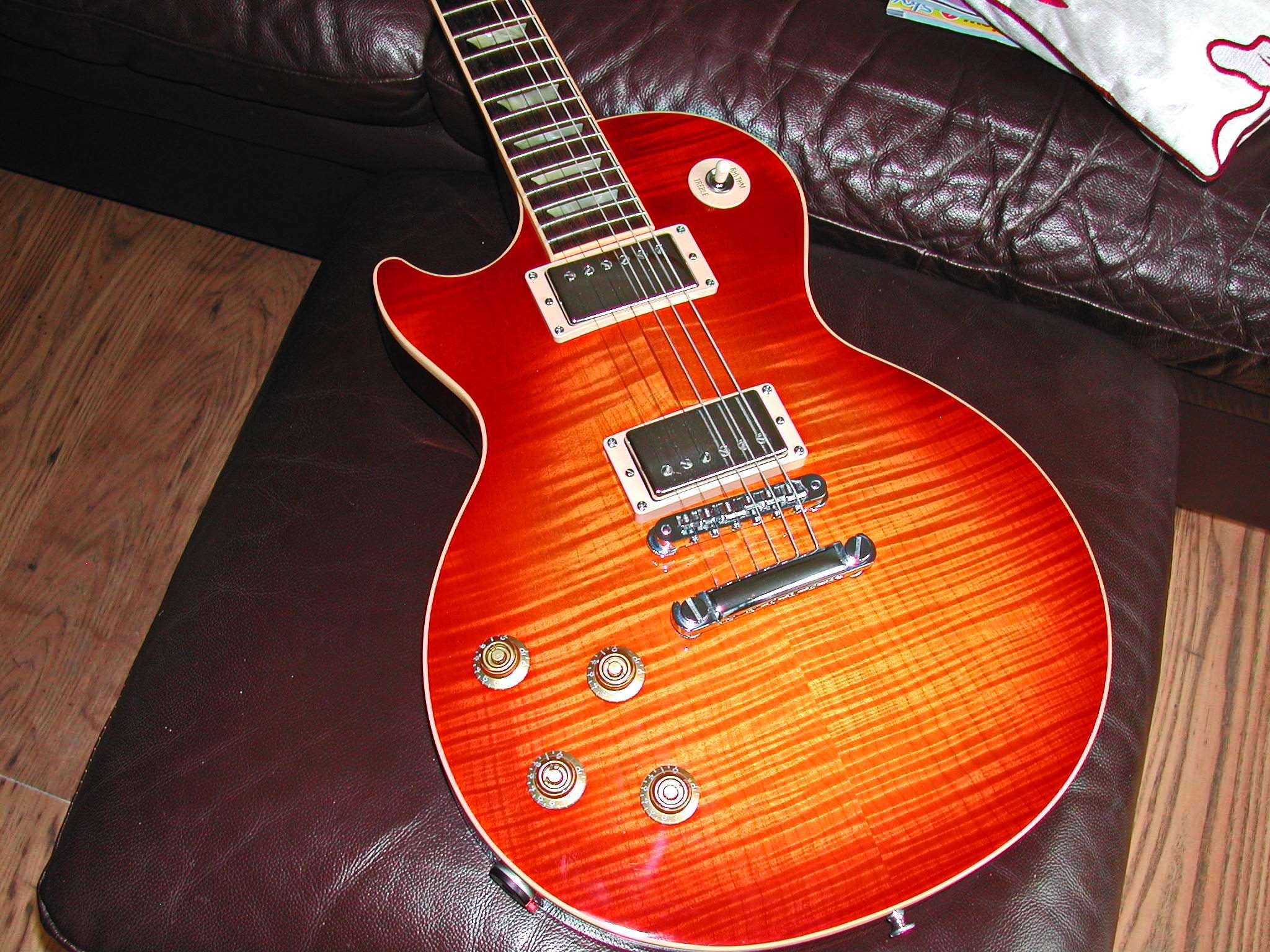
Thanks for your kind words about my guitar.

Here's a better pic of my 2009 '08 Gibson Les Paul Standard:
Iu0aHN.jpg


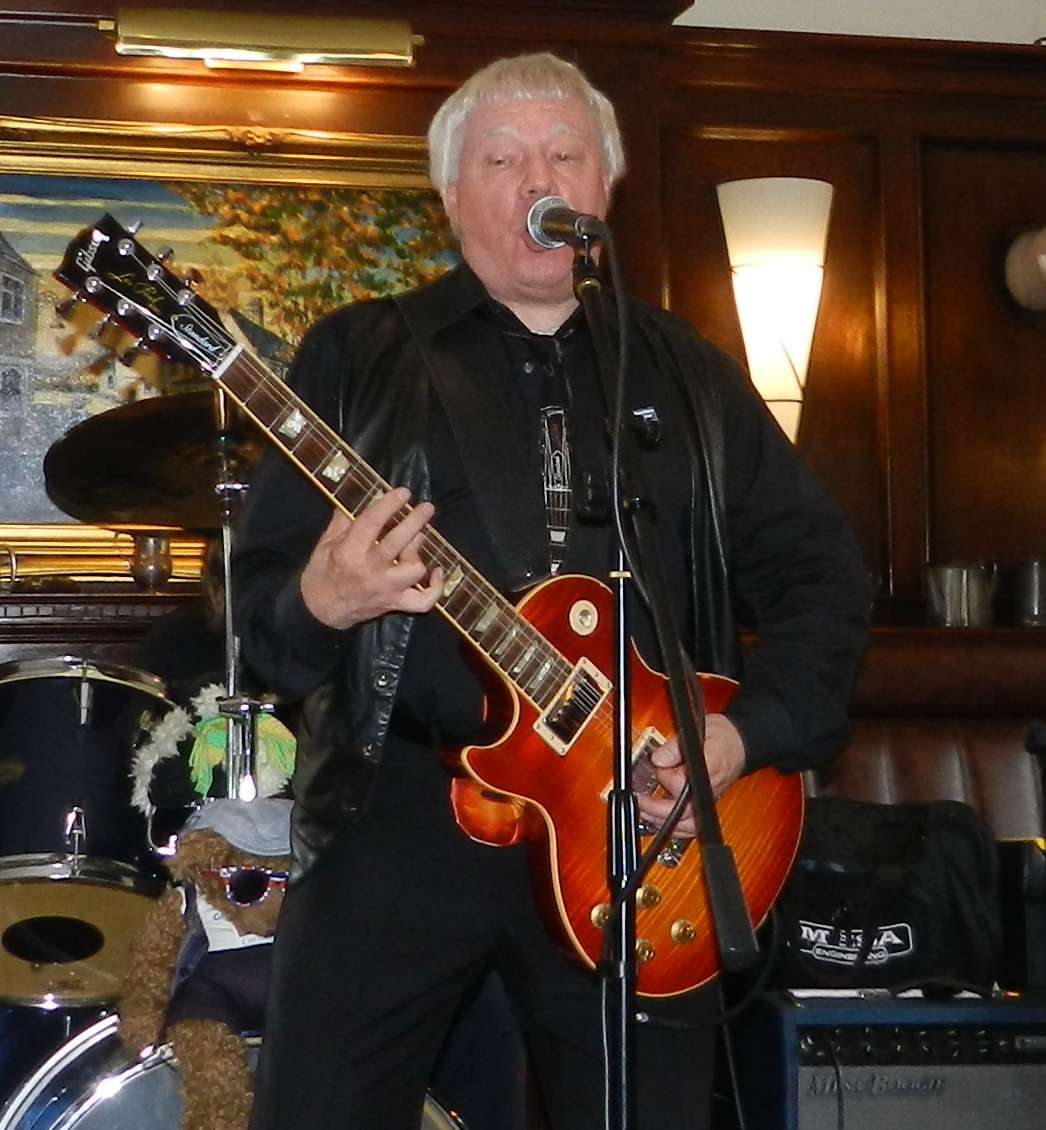
And gigging with it at the recent Dereham Blues Festival:
67NzhY.jpg
 
It's a massive benefit for an EU country company to now have a presence in the UK. They still trade from their home factories and offices within the EU, but will be able to bypass the EU commission interference for RoW trading.......
In or out? When the deal is done we will never be sure. It will be out...ish
 
No-one can prove the future, but we can use the past for guidance. Economics shocks such as Brexit always create a slow down because naturally the uncertainty created slows down investment decisions which slows down economic activity.

Investors can always create models but models can never predict the unpredictable and Brexit is such an event. The effect of unpredictable events is almost always negative because given their nature they're not expected and run completely at odds with the psychological bias that pervades through Governments and boardrooms alike.

I'm not denying you your Brexit, it's going to happen, and it should as that was the will of the people - I'm saying there's a cost to the decision and that cost is a reduction in our economic performance. Definitive.


I agree, Esk. We can never quite know what's on the other side of the hill...

I think there would have been a cost whichever way the result of the referendum went.

If 'Remain' had carried the day, would Cameron & Osborn been even more swingeing in their approach to the poorer elements of society. I tend to think 'yes', but by my own earlier point, I can never prove that...
 
No-one can prove the future, but we can use the past for guidance. Economics shocks such as Brexit always create a slow down because naturally the uncertainty created slows down investment decisions which slows down economic activity.

Investors can always create models but models can never predict the unpredictable and Brexit is such an event. The effect of unpredictable events is almost always negative because given their nature they're not expected and run completely at odds with the psychological bias that pervades through Governments and boardrooms alike.

I'm not denying you your Brexit, it's going to happen, and it should as that was the will of the people - I'm saying there's a cost to the decision and that cost is a reduction in our economic performance. Definitive.
I am a definite in. You can be certain of a short term downturn but after that who knows? Depends on the eventual deal and what we can do with other countries. Suspect we can not be as powerful as an eu containing Germany though.
 
I agree, Esk. We can never quite know what's on the other side of the hill...

I think there would have been a cost whichever way the result of the referendum went.

If 'Remain' had carried the day, would Cameron & Osborn been even more swingeing in their approach to the poorer elements of society. I tend to think 'yes', but by my own earlier point, I can never prove that...

If you can point to any unexpected event (a Black Swan as defined by Taleb) having an immediate economic benefit then, you are a better person than me mate. I know hedge fund guys who spend years trying to work out how to protect against the downside of such events, they spend huge sums of money trying to create defensive strategies in such an event. They only do so because they know all of these events are negative for economies and established investment theories.
 
So we have established that the forthcoming doomsday is going to reduce the profits of those poor hedge fund managers, but how will the forthcoming doomsday effect those who are already living in poverty?
 
No-one can prove the future, but we can use the past for guidance. Economics shocks such as Brexit always create a slow down because naturally the uncertainty created slows down investment decisions which slows down economic activity.

Investors can always create models but models can never predict the unpredictable and Brexit is such an event. The effect of unpredictable events is almost always negative because given their nature they're not expected and run completely at odds with the psychological bias that pervades through Governments and boardrooms alike.

I'm not denying you your Brexit, it's going to happen, and it should as that was the will of the people - I'm saying there's a cost to the decision and that cost is a reduction in our economic performance. Definitive.

I am not so certain about that. A campaign run on lies, deceit, and half truths (all that money going into the NHS for example), certainly swayed the 'will of the people'...or at least enough to carry the day.
 
No problem, JP.

Thanks for your kind words about my guitar.

Here's a better pic of my 2009 '08 Gibson Les Paul Standard:
Iu0aHN.jpg


And gigging with it at the recent Dereham Blues Festival:
67NzhY.jpg
Always good to see another lefty Les Paul player! Remember when buying mine I had to travel quite a few miles to try just a few of them as they're so rare
 
Status
Not open for further replies.

Welcome

Join the Everton conversation today.
Fewer ads, full access, completely free.

🛒 Visit Shop

Support Grand Old Team by checking out our latest Everton gear!
Back
Top