Current Affairs EU In or Out

In or Out

  • In

    Votes: 688 67.9%
  • Out

    Votes: 325 32.1%

  • Total voters
    1,013
Status
Not open for further replies.
I would guarantee that all who complain about chlorinated chicken would, if on holiday in the USA, eat chicken without giving this a second thought......it’s the words, the descriptors that put people off........
well what about USA and GM crops?
well surprisingly the EU have now made it easier to import
https://www.google.co.uk/url?sa=t&rct=j&q=&esrc=s&source=web&cd=15&cad=rja&uact=8&ved=2ahUKEwjJwJfX3MzcAhVHIcAKHbh-DG8QqOcBMA56BAgFEAY&url=https://geneticliteracyproject.org/2018/08/01/eu-court-ruling-limiting-gene-editing-ironically-underscores-safety-of-modified-crops/&usg=AOvVaw2jPEqSf0Kjjjjr1fYSTGdT
not in that article but they have changed the way that GM crops are clarified, in layman's terms a plant that has say had a cell that makes it rot to quickly taken away , now falls into the category .
 
chlorinated chicken doesn't sound very nice that, then again most people are happy to buy bagged salad from supermarkets , which guess what are washed in chlorine solution to clean it of nasty bugs.
nothing to do with the thread just thought I would share it with you.
I would guarantee that all who complain about chlorinated chicken would, if on holiday in the USA, eat chicken without giving this a second thought......it’s the words, the descriptors that put people off........

Unfortunately gents your interpretation of the “chlorine” chicken is incorrect. The process isn’t banned because it’s washed in chlorine, this is quite effective in removing pathogens.

The issue is that the process hides poor hygiene standards within the processing of the bird, therefore the US is unable to meet the requirements of EU food safety law. The US does not have animal welfare standards therefore the chlorination hides all these issues

So again, the process is to protect the consumer
 
well what about USA and GM crops?
well surprisingly the EU have now made it easier to import
https://www.google.co.uk/url?sa=t&rct=j&q=&esrc=s&source=web&cd=15&cad=rja&uact=8&ved=2ahUKEwjJwJfX3MzcAhVHIcAKHbh-DG8QqOcBMA56BAgFEAY&url=https://geneticliteracyproject.org/2018/08/01/eu-court-ruling-limiting-gene-editing-ironically-underscores-safety-of-modified-crops/&usg=AOvVaw2jPEqSf0Kjjjjr1fYSTGdT
not in that article but they have changed the way that GM crops are clarified, in layman's terms a plant that has say had a cell that makes it rot to quickly taken away , now falls into the category .

They haven’t changed anything, that’s ECJ ruling on the application of the legislation. They’ve ruled that the current GMO legislation should be applied to new techniques which include mutagenesis, the legislation remains as is
 
[
They haven’t changed anything, that’s ECJ ruling on the application of the legislation. They’ve ruled that the current GMO legislation should be applied to new techniques which include mutagenesis, the legislation remains as is
so they have changed it to include more into there classification of GM , which is what I said
As for the chickens I was just pointing out a fact. as I stated nothing to do with this thread.
 
Unearthed

EXTRA-WEBSITE-764x505.jpg


A hard Brexit think tank told a potential donor it could influence its research reports in exchange for funding

The Institute of Economic Affairs offered a potential US agribusiness donor the chance to influence a report on ‘green Brexit’


29.07.2018
Alice Ross


Lawrence Carter


One of the UK’s most prominent think tanks told a prospective donor they could discreetly influence a report in ways that could advance their business interests, in exchange for £42,500.
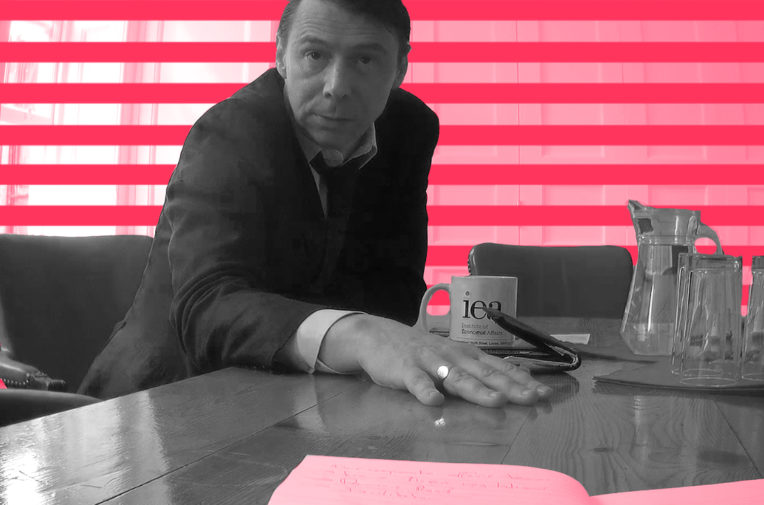
The head of the Institute of Economic Affairs, Mark Littlewood, told an undercover reporter posing as the representative of a US beef investor that funding the report on what “green Brexit” means would ensure it prominently featured the donor’s concerns.
He made the offer despite the IEA telling the Charity Commission its research is independent from corporate sponsors.
Littlewood told the undercover reporter that funders were not able to change the conclusions of IEA research, but they could influence the “content” and “salience” of issues within the paper.
He also suggested the funder would be able to attend a private dinner with its author Matt Ridley – a prominent climate change sceptic and advocate of controversial neonicotinoid pesticides – and potentially with Gove, the environment secretary, or another minister.
Littlewood said Gove was keen for the report to happen.


Green Brexit
Gove has promised a “green Brexit”, with even stronger animal welfare and environmental protections than the EU’s. European environmental rule-making follows the precautionary principle, under which products and methods must be proven to be safe before they can be introduced.
Littlewood suggested the report could be counted on to argue that the EU’s precautionary principle should be dropped – a longstanding goal of Ridley’s – and that beef reared to US standards should be allowed into UK supermarkets. Many American beef products cannot currently be imported to the UK, because of an EU ban on hormone-reared beef.
The IEA director told the undercover reporter: “[T]here is no way this report is going to say the most important thing we need to do is keep American beef out of our market in order to prop up our beef farmers, in fact exactly the opposite”.
Littlewood said Ridley had discussed the report, on innovation in agriculture, with Gove, who he said was enthusiastic about getting the ideas into the “bloodstream of Defra”.
“Yeah, he told Matt Ridley, it would be really good if you guys could get these ideas out there,” he said.
When asked by the reporter why Gove would want that, Littlewood said: “Because it would move the argument in this direction. Gove’s an intellectual… he wants these ideas floated and out there.”
He said the paper would examine what is really meant by “green Brexit” – a term coined by Gove.


A spokesman for Gove told Unearthed: “The government and the environment secretary have been very clear that food safety and animal welfare standards will not be weakened after Brexit.
“We will never be swayed on this. There will no chlorinated chicken entering the UK and we will retain the precautionary principle. That position won’t change whatever any think tank recommends,” he continued.
Green Party leader Caroline Lucas said: “It’s deeply concerning to see an organisation as influential as the Institute for Economic Affairs is willing to take cash from US agribusiness in return for favourable reports.”
“But what’s more worrying is Michael Gove’s apparent enthusiasm for a project authored by a leading climate change sceptic whose love of dangerous pesticides is well-documented. If the Government wants research-backed policies, ministers would do well to rely on their own independent civil servants,” she continued.
Ridley told Unearthed that the report was about innovation in agriculture rather than agriculture after Brexit and added that its aim is not to influence Defra officials but to “inform all debate on the topic.”
‘Substantial content’
The IEA, which is registered as an educational charity, does not disclose its donors, arguing that it is under no moral or legal obligation to do so. In 2016, the charity’s trustees told the regulator it only accepts research sponsorship from “individuals or trusts who do not have a vested commercial interest in the topic”, the Charity Commission wrote.
“[T]he trustees take considerable efforts to ensure that whatever the source of funding, IEA’s research is independent,” the commission wrote.
But Littlewood suggested donors’ interests could help shape its reports.
When asked by the Unearthed reporter whether his client, a fictional investor in US beef, would be able to fund the report and ensure its specific concerns were covered, Littlewood responded: “Oh sure and, and absolutely and we, I don’t mind our donors affecting us on salience.”
He continued: “We would assume that donors are giving us money because we are covering areas of their interest and we can make those undertakings and guarantees no problem at all… And beef is actually, it is actually an area of interest, an area that we do genuinely happen to be interested in.”
And he added: “To give you an example, we would take money from alcohol companies. We would go to alcohol companies and say we, we want to write about the cost of living being too high and actually alcohol consumption is not costing the National Health Service as much money as they often complain.”
He added that the IEA does not let donors change a report’s conclusions, but confirmed that there would be prominent “substantial content” covering their areas of interest.
Responding to the allegation that Littlewood offered the prospective donors the chance to influence the report, a spokesperson for the IEA told Unearthed: “We have no evidence or reason to believe this is the case. Mark was clear that corporate donors do not alter the conclusions of IEA work.”
“The IEA is currently working on a report on agricultural innovation, which was commissioned prior to the meeting outlined. As previously mentioned, we would carry out this work regardless but obviously do fundraise to cover the production and distribution costs of our output,” she continued.


Guests of honour
As well as being guests of honour at a launch event, Littlewood added, the donor would be able to attend a private dinner with the author, and potentially a government minister. “We might need to take one or two people to a lunch, private lunch-slash-dinner… take four seats around the table, make sure you’re sat next to … Matt Ridley and/or the minister who’s there.”
Asked if a minister would definitely attend, Littlewood said: “That’s not something I can make an absolutely [sic] guarantee on… don’t know if we could get Gove – quite possibly, but we would definitely try to get a minister from agriculture. Or it could even be a minister from the Dexeu [the Department for Exiting the European Union] or trade department, right, because it’s actually about trade rules governing agriculture rather than agriculture per se.”
The proposal for the IEA study – which is marked “strictly private and confidential” and published by Unearthed here – echoes another report on innovation in agriculture published in November by UK2020, a think tank run by Ridley and his brother-in-law, the former environment secretary Owen Paterson MP.
UK2020’s paper argues that restrictions on chlorinated chicken, hormone beef and GMOs should be dropped post-Brexit and biodiversity offsetting introduced.
Brilliant visit @michaelgove@DefraGovUK@HarperAdamsUni world-leading research in advanced agri-tech including practical application. pic.twitter.com/ED9XDZvQb6
— Owen Paterson MP (@OwenPaterson) October 27, 2017
The report recounts how that Paterson hosted Gove on an agricultural tour of his North Shropshire constituency in October, where the environment secretary was introduced to some of the ideas in the UK2020 report.
The IEA were approached for comment on this story, however following publication they released a further statement. Click here to read in full.

 
[

so they have changed it to include more into there classification of GM , which is what I said
As for the chickens I was just pointing out a fact. as I stated nothing to do with this thread.

No, when the legislation is update so is the official journal and a new piece of legislation is released, repealing or updating the older one.

That hasn’t happened, they’ve simply agreed that the current legislation already covers the area of content
 
No, when the legislation is update so is the official journal and a new piece of legislation is released, repealing or updating the older one.

That hasn’t happened, they’ve simply agreed that the current legislation already covers the area of content
The EU issued a new directive updating the 2001/18/EU one its now 2018/350/EU that covers plants ect in this field, so it has been amended. in march this year.
The previous advocate general had wanted genome editing to be placed into the same fields of GM that have excisted for years and are allowed.
This ruling has stopped that in an action brought by the French agricultural union and Greenpeace.
Anyway you look at it the EU have changed the goal posts on this field of science.
i am not really covinced either way if thats a good or a bad thing but it could have an affect on EU famers/are scientific research in the future as other countries take up this technology.
 
The EU issued a new directive updating the 2001/18/EU one its now 2018/350/EU that covers plants ect in this field, so it has been amended. in march this year.
The previous advocate general had wanted genome editing to be placed into the same fields of GM that have excisted for years and are allowed.
This ruling has stopped that in an action brought by the French agricultural union and Greenpeace.
Anyway you look at it the EU have changed the goal posts on this field of science.
i am not really covinced either way if thats a good or a bad thing but it could have an affect on EU famers/are scientific research in the future as other countries take up this technology.
I have a lot of respect for you dude, but I fear you've got this eu thing wrong and you're not seeing the proverbial frying pan/fire :)
 
I have a lot of respect for you dude, but I fear you've got this eu thing wrong and you're not seeing the proverbial frying pan/fire :)
to be honest orchard mate, the whole EU subject is beginning to bore me , we are going to get shafted by the government at the end of this , its as plain as the nose on your face.
After May bringing that rubbish to the table the other week i would honestly sooner stay in , than be half in half out
i only half heartedly post on this thread for a bit of balance, otherwise its pete, joey and oldblue against the world.
Think i will give it a rest for a while , as its getting in the way of transfer day frenzy , and me trying to rebuild my girlfriend s Samsung tablet, if i dont fix it by the weekend i might have to buy her another one as it keeps her quite while i am on here;)
 
It'll be interesting when they realise that Brexit under the Spiv's makes things a lot worse for them.


Did Austerity Cause Brexit?∗
Thiemo Fetzer
July 22, 2018
Abstract
Did austerity cause Brexit? This paper shows that the rise of popular sup-
port for the UK Independence Party (UKIP), as the single most important
correlate of the subsequent Leave vote in the 2016 European Union (EU) refer-
endum, along with broader measures of political dissatisfaction, are strongly
and causally associated with an individual’s or an area’s exposure to aus-
terity since 2010. In addition to exploiting data from the population of all
electoral contests in the UK since 2000, I leverage detailed individual level
panel data allowing me to exploit within-individual variation in exposure to
specific rules-based welfare reforms as well as broader measures of political
preferences. The results suggest that the EU referendum could have resulted
in a Remain victory had it not been for a range of austerity-induced welfare
reforms. These reforms activated existing economic grievances. Further, aux-
iliary results suggest that the underlying economic grievances have broader
origins than what the current literature on Brexit suggests. Up until 2010,
the UK’s welfare state evened out growing income differences across the skill
divide through transfer payments. This pattern markedly stops from 2010
onwards as austerity started to bite.
Keywords: Political Economy, Austerity, Globalization, Voting, EU
JEL Classification: H2,H3,H5, P16, D72
 
UK doctors think Britain’s exit from the European Union will be very bad for the NHS, reveal the results of a study from UCL, the London School of Hygiene & Tropical Medicine (LSHTM) and Queen Mary University of London.


The study, published online in the Journal of Epidemiology & Community Health, anonymously surveyed UK doctors asking questions about their political beliefs and voting patterns. It is the first large scale study to look at the political opinions of UK doctors.

The research found that as a group, UK doctors are predominantly left-wing and liberal-minded. But high earners tend to lean more to the right of the political spectrum, while surgeons are twice as likely as other specialties to express right-wing views, the responses show.

Against a backdrop of major upheavals in health and social care as well as the political landscape in the UK, the researchers wanted to find out about doctors' political beliefs and voting behaviours.

To reach as representative a sample as possible, the researchers collaborated with the online professional network, Doctors.net.uk, and validated proportionality of respondents against records from the professional regulator, the General Medical Council (GMC).

GMC members were directed by email to the survey link, which was open for a week following the 2017 UK general election. The link was also sent to a wide range of specialty associations and relevant Facebook groups.

In all, 1,172 respondents, representing 0.4% of the 282,304 doctors licensed to practice in the UK in 2016, were included in the final analysis. Nearly half (45%) were women. Most respondents had qualified in the UK, lived in England, and worked in the NHS. One in three (36%) was a consultant, around one in five was a GP, and just under 30% were junior doctors.

On a scale of 0 (extremely left wing) to 10 (extremely right wing), the average score was 4.

Surgeons were twice as likely to register a right wing score, while psychiatrists and public health doctors were half as likely to do so. And junior doctors at specialty training entry level (ST3) and above were the least likely to express right wing views relative to all other grades.

Nearly two thirds (just over 62%) of respondents described themselves as liberal while nearly one in four (23.6%) said they were conservative.

There was a shift to the left between the 2015 and 2017 elections, with the proportion of doctors voting Labour rising from just over 29% to just over 46%, while the proportion voting Conservative fell from just over 26% to just under 20%.

Among those who were ineligible/unable to vote in 2017, nearly a third (just under 30%) said they would have opted for a Labour candidate. Voter turnout among doctors for both elections was significantly higher than among the electorate.

Doctors overwhelmingly backed staying in the EU, with nearly eight out of 10 voting to remain in the 2016 referendum.

Virtually all respondents agreed that EU nationals working in the NHS should be allowed to stay in the UK after Brexit. And most thought Brexit would be very bad for the NHS, irrespective of grade, income, or specialty, giving it an average score of two on a zero (worst outcome) to 10 (best) scale. Nearly 83% scored it below five.

In terms of their views on health policy, most backed minimum unit pricing for alcohol (74%); charging patients not eligible for NHS treatment for non-urgent care (70.5%); and protected funding for the NHS (87%). And just under 66% thought there was too much private sector care funded by the NHS.

“Given the political turmoil in recent times and the importance of doctors in the functioning of the health service, we felt it was important to try to investigate the political views of doctors,” said senior author, Dr Delan Devakumar (UCL Institute of Global Health).

“Most doctors described themselves as left wing and liberal, which generally aligned with their views on health policies. They were also strongly pro-remain in the EU referendum and overwhelmingly think Brexit is bad for the NHS. Differences were seen between specialities, with surgeons tending to have more right wing views and psychiatrists and public health doctors being more left wing.”

The authors acknowledge limitations of the study, including that despite their best efforts, the sample may not be fully representative, so should be taken only as an indication of the views of the UK medical workforce.

Further work is needed to obtain a better understanding of UK doctors’ political identities, particularly the economic and societal differences, as the political ideology of doctors has been shown to influence clinical decisions on contentious issues in other contexts.

http://www.ucl.ac.uk/news/news-articles/0718/310718-brexit-nhs-doctors

The paper itself is https://jech.bmj.com/content/early/2018/07/09/jech-2018-210801
 
Then you've got this in today's Economist on the daftness of no deal.

"IN MOST negotiations, the maxim that “no deal is better than a bad deal” makes perfect sense. If you are buying a car, you must be ready to walk away or the seller has you over a barrel. The way to drive a hard bargain is to persuade him that he must offer you a good deal or there will be no deal at all.

Theresa May has made this commonsense principle the foundation of her talks with Brussels over Britain’s exit from the European Union. “No deal for Britain is better than a bad deal for Britain,” she said in January last year, setting out her red lines. With less than eight months until Britain is due to leave the EU, and only about four months left to reach an agreement on the terms of its exit, her government is still stressing its readiness to depart with no deal in place.

The trouble is that Brexit is nothing like buying a car. In most negotiations “no deal” means sticking to the status quo. If you are not prepared to pay the asking price, you can walk away none the worse and try somewhere else. The Brexit talks are different. If no deal is reached Britain will not maintain the status quo of its EU membership, but find its links to the continent abruptly and acrimoniously broken off. The metaphor is not buying a car, it is buying a parachute—having already leapt out of the aeroplane. “Walking away” would land Britain in a situation so calamitous that it should not even be on the table.

A no-deal outcome would be bad for the EU, too, particularly Ireland, whose small, open economy is closely linked to Britain’s. But Britain would be hurt most by a hard landing. Trading with the EU on the terms of the World Trade Organisation, which would raise both tariffs and regulatory barriers, would reduce Britain’s GDP by 4% within five to ten years, according to the IMF. The EU’s GDP would fall by about 1.5%. Worse still—again, for everyone, but chiefly for Britain—would be the turmoil from leaving without agreements in place over everything from airline safety to the transfer of radioactive material. The supply of such essentials as food and medicine could be disrupted, too (see article).

A hard landing

For this reason, the EU has never taken seriously Mrs May’s claim that Britain is ready to walk away from the negotiating table. It sees her threat as a bluff—and it is right, judging by the lack of preparation in Britain for a no-deal outcome. Even with extensive (and expensive) planning, leaving the EU without a deal would have been difficult. As things stand, almost no work has been done to prepare for such an eventuality. Lately, Britain has taken to outlining desperate-sounding plans to stockpile medicine and set up electricity generators. Chaos would be hard to avoid.

Yet, although the EU’s negotiators in Brussels do not buy it, Mrs May’s slogan that “no deal is better than a bad deal” has struck a chord with the voting public. As the talks have dragged on and the EU has extracted concessions, such as a promise by Britain to pay a large exit bill, the desire to walk away has only grown. Polls show that nearly twice as many Britons would leave the EU with no deal as would support a compromise along the lines Mrs May proposed last month. By this logic, her eventual settlement with Brussels, if she reaches one, will look even more like a bad deal because Britain will have to give more ground. Many voters will thus quote the prime minister’s own slogan back to her, and argue to crash out.

The government is trapped by its own rhetoric. The louder it shouts in Brussels that it is ready for no deal, the more it emboldens voters and Brexiteer MPs to call for just such an outcome. Yet the more the government argues at home that Brexiteers should avoid the miseries of crashing out by embracing Mrs May’s compromise, the more it convinces Brussels that, except as a disastrous accident, “no deal” is not credible.

It is time to drop the pretence. Leaving without a deal was never a wise option. The government ought to have spent the past two years steering the public through the painful trade-offs of leaving the EU. As we have argued, Britain’s interests are best served by a “soft Brexit” that preserves markets and security. Instead, big-mouth ministers have kept expectations sky high, claiming that the deal “will be one of the easiest in human history” and that “there will be no downside to Brexit”.

Mrs May has belatedly come to accept the need for compromise—to the fury of a small coterie of hardline Brexiteers who would sooner crash out of Europe, kamikaze-style, than maintain any kind of obligation to the EU. The prime minister’s continued claims that Britain can simply walk away play into their hands. She must cease such talk. With a bit more compromise on both sides, a deal is reachable. Britain must seize that parachute before it is too late."
 
Status
Not open for further replies.

Welcome

Join the Everton conversation today.
Fewer ads, full access, completely free.

🛒 Visit Shop

Support Grand Old Team by checking out our latest Everton gear!
Back
Top