Current Affairs EU In or Out

In or Out

  • In

    Votes: 688 67.9%
  • Out

    Votes: 325 32.1%

  • Total voters
    1,013
Status
Not open for further replies.
Nice graph, and a powerful message to the target audience.

Trouble is, its only half the story.

Post a graph showing the share of GDP that is generated by being in the single market, then that post has some credence.

I will give you a clue. Its way more than £350m a week.

That is what you have gambled with.

Now, now, roydo, you can't catch me by going off topic. You are the financial bod; I'll take you through other things.

I could ask you to post about certain things that you know little about, and then say if that post is correct it will have some credence.

Quid pro quo, old bean... :)
 
Now, now, roydo, you can't catch me by going off topic. You are the financial bod; I'll take you through other things.

I could ask you to post about certain things that you know little about, and then say if that post is correct it will have some credence.

Quid pro quo, old bean... :)

Oh the figures on what we pay in I wont quibble about. Nor that the EU spend them with little recourse to governments. Thats the whole point of it.

All I said was that if you post what we pay in, then it makes sense to post what we get out of the deal, as in the GDP, trading, freely, with the EU affords us.

A Net Spend if you like.
 
Problem is mate, you think this works. 'Hee hee, I'll leave another condescending comment then scarper, he'll sit there for hours fuming!!!'. Unfortunately, I have been around the great game a bit too long for that. You're not entertained at all, you're doing your usual passive fuming thing, a little spiteful comment here, a borderline comment there.

Roydo has had you on toast. Perhaps he should ghost-write your next book?


If you actually believe all you have written in your first paragraph, then that's sad... I'm not scarpering at all. I'm still here. I'm not passive fuming, or anything else - it's all in your imagination.

I don't need roydo, or anyone else to write my next book. I can do it all by myself. Maybe you'll buy a copy when it comes out...? ;) :D
 
If you actually believe all you have written in your first paragraph, then that's sad... I'm not scarpering at all. I'm still here. I'm not passive fuming, or anything else - it's all in your imagination.

I don't need roydo, or anyone else to write my next book. I can do it all by myself. Maybe you'll buy a copy when it comes out...? ;) :D

Christ, you dont me any where near writing a postcard mate, let alone a book.
 
Oh the figures on what we pay in I wont quibble about. Nor that the EU spend them with little recourse to governments. Thats the whole point of it.

All I said was that if you post what we pay in, then it makes sense to post what we get out of the deal, as in the GDP, trading, freely, with the EU affords us.

A Net Spend if you like.

roydo, I would be quite happy to read from yourself, or others, what the greater financial picture looks like at present. I freely admit that that area is something I know little about. The minute financial details, I know not. I will be interested to see, when we are finally out of the EU, what the Government of the day (hopefully Labour will have booted out the Tories) has to say regarding the money available once we no longer pay a rebated £350 million per week to the EU. East Anglia might finally get a motorway, for example, to darg it out of the mid-20th century! :dance:
 
roydo, I would be quite happy to read from yourself, or others, what the greater financial picture looks like at present. I freely admit that that area is something I know little about. The minute financial details, I know not. I will be interested to see, when we are finally out of the EU, what the Government of the day (hopefully Labour will have booted out the Tories) has to say regarding the money available once we no longer pay a rebated £350 million per week to the EU. East Anglia might finally get a motorway, for example, to darg it out of the mid-20th century! :dance:

Well, the money we pay into the EU coffers, the much vaunted £350m a week, equates to small % of the trade/GDP revenue we get from being part of the single market. I want to say about 8%, but would need to check.

Its a common theme of those that voted Leave to say, "yeah, but we will replace that, China and the German car makers will play ball"

Well, they might. They might not. We might get an ace trade deal with the EU. We might not.

Like I have said from day 1. That, ^^^^ represents a reckless gamble with the UK's future.

If you canny see that, I am sorry, I cant make it plainer.

But hey, we can make our own rules, and you can get your motorway. (even though there was probably a better chance of the EU funding that btw) #HS2
 
I dont know. I do know that the process of leaving the EU has weakened the pound leading to cheaper exports and more expensive imports. This has led to an overall increase in the cost of living. This is not a forecast, this is what's happening.
As for a forecast, simply put, I don't think the UK economy will be as strong outside the single market as it is inside it.

Cheaper exports means increased sales, which means increased manufacturing, which means more jobs, which means more taxation, which means more for U.K. services.....we will still sell to the EU, because they like selling to us, but we will also increase our International sales, which means more jobs, which means.......the U.K. economy will be much stronger outside of the EU........we should have done this 20 years ago.......
 
Well, the money we pay into the EU coffers, the much vaunted £350m a week, equates to small % of the trade/GDP revenue we get from being part of the single market. I want to say about 8%, but would need to check.

Its a common theme of those that voted Leave to say, "yeah, but we will replace that, China and the German car makers will play ball"

Well, they might. They might not. We might get an ace trade deal with the EU. We might not.

Like I have said from day 1. That, ^^^^ represents a reckless gamble with the UK's future.

If you canny see that, I am sorry, I cant make it plainer.

But hey, we can make our own rules, and you can get your motorway. (even though there was probably a better chance of the EU funding that btw) #HS2

It’s not a gamble Roydo. Trade to the EU will continue, there is even a new German group of ex CEO’s and Industrialist suggesting ways to get the EU to keep us in the EU, they know that they need us......we will do OK outside of the EU, you would be surprised how many countries wish to do business with us.....no need to panic......
 
Cheaper exports means increased sales, which means increased manufacturing, which means more jobs, which means more taxation, which means more for U.K. services.....we will still sell to the EU, because they like selling to us, but we will also increase our International sales, which means more jobs, which means.......the U.K. economy will be much stronger outside of the EU........we should have done this 20 years ago.......

Except exports to non eu countries are down despite the fall in sterling.
 
Cheaper exports means increased sales, which means increased manufacturing, which means more jobs, which means more taxation, which means more for U.K. services.....we will still sell to the EU, because they like selling to us, but we will also increase our International sales, which means more jobs, which means.......the U.K. economy will be much stronger outside of the EU........we should have done this 20 years ago.......

Cheaper exports also mean more expensive imports of raw materials, which means more expensive production costs, which means laying people off, which means less taxes, which means less for UK services.

Case in point:

http://www.bbc.co.uk/news/business-42088699

"Trading conditions for UK retailers continue to be difficult due to a number of factors including economic uncertainty, rising commodity prices, increasing business rates and the fall in value of the pound which has increased the cost of importing raw materials and products,"

There's your stronger economy. 550 people about to be laid off just in time for Christmas if they don't find a buyer.
 
Put up the numbers......

ONS figures showed the the non-eu trade deficit increased by 2.4bn by August this year despite the weakened £. The goods deficit stood at 12.7bn in June - the widest it's been in 9 months and significantly greater than the predicted 11bn. All this despite our currency losing 13% of its value since the referendum.

One factor cited was: "rising import costs affect the raw materials and part-finished goods that UK factories buy in from abroad, meaning they do not feel the full benefit of the weaker pound."
 
In relation to the following from Oxford University, a question for @Old Blue 2. @peteblue et al. I know you don't like forecasting, but it seems reasonable to believe that a government who are keen on reducing migration and are enacting a policy for which a large part was about 'taking back control' of migration will have fewer workers coming from abroad. Therefore you might also assume it would be sensible to invest heavily in training native people to fill that gap. Do you believe the government are doing enough to ensure Britain has the skills required to thrive? Are they doing enough to equip the 'left behind' with the skills they need to not be left behind? As an example, whilst the chancellor has expressed support for autonomous vehicles this week, have they offered any support to help drivers retrain? Or is that kind of forecasting just a bit silly?

From Oxford University:

"A new and dramatic wrinkle seems to be added to the process of Brexit talks every week. But rumbling underneath the political positioning are some fundamental problems for business. Perhaps the most startling challenge is the prospect of a cavernous skills gap.

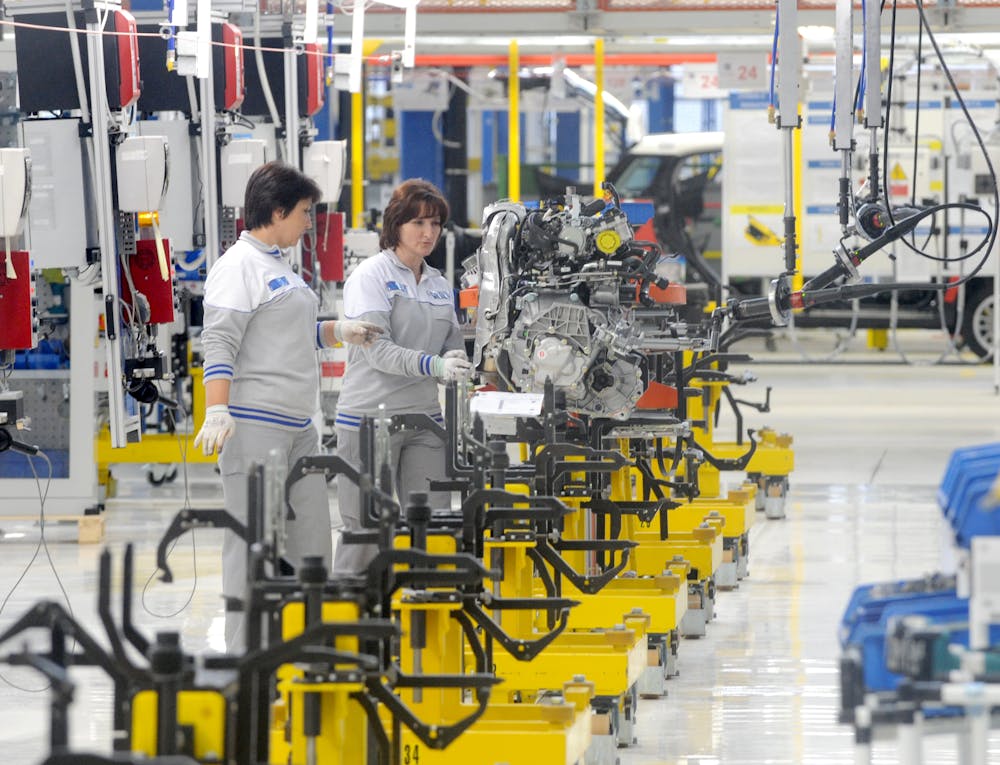
A lot of attention has been paid to the problems of low-skilled workers – the “left-behind” who voted for Brexit in the first place, and the migrants who are currently propping up the agricultural economy and doing the jobs that UK workers don’t want to do. But a more pressing issue is the fact that for too long a large proportion of our skilled labour has been coming from outside the UK.

This is not only in the form of skilled individuals who are recruited to work for companies and public sector organisations in the UK, but also in the way Britain outsources the manufacture of complex parts to companies in the rest of Europe.


Can the UK bring skills back home? bibiphoto/Shutterstock
Qualified successes
After Brexit – and already people are starting to drain away from the country – there will be virtually nobody to fill the gap between low skilled and unskilled labour at the bottom, and highly specialised professionals at the top.

This is because over the past 20 years the UK has lost the training habit for skilled technician-level people. The country will soon pay the price unless the government and the business sector can work together quickly to redress the balance.

First, we need to reduce our current obsession with the “traditional” academic education route, in which GCSEs lead to A-levels, which lead inexorably to university degrees. This has resulted in qualification inflation, whereby jobs that were once trained for through apprenticeships and college courses are now accessible only to graduates. Young people are racking up large amounts of debt in pursuit of degrees that will never “pay for themselves” in terms of large salaries. And yet there seems to be no alternative.

Second, we need to increase both the quality and status of technical education and training. It should not be the B-stream option for students whose A-level results are not good enough for university, but a positive choice that is seen to lead to solid employment opportunities.


A new approach to higher ed. Rawpixel.com/Shutterstock
It is ironic that, when polytechnics became universities after the Further and Higher Education Act in 1992, one of the first things they did was phase out BTECs and other sub-degree technical qualifications, passing them on to colleges of further education.

This sent out a clear message about the worth of these qualifications, and therefore of the benefits of pursuing them. Reversing this perception, and raising the profile and prestige of the technical training route, will require new leadership from the sector.

Staying put
Finally, there needs to be a fundamental rethink of recruitment, training, and HR policies on the part of employers. Recruitment has become very lazy: almost every job description now seems to start with the word “graduate”. Training, too, has become truncated and superficial – so-called “apprenticeships” tend to last no longer than a year, and are more like work experience than developing the next generation of skilled workers.

It’s as if employers have believed the hype about people who expect to move jobs every couple of years, and have given up rather than giving them reason to stay.

There are some honourable exceptions. Accountant and consultancy firm PwC introduced a Higher Apprenticeship that provides a work-based route to chartered accountant status straight from school. And Rolls Royce’s engineering apprenticeships are successfully competing with top universities to attract talented young people.


Engineering a new deal for apprentices. Jonathan Weiss/Shutterstock
The benefits to both sides are clear. New recruits are paid throughout their training – not a lot at first, maybe, but it’s better than accumulating debt. And the companies can train them in precisely the skills and behaviours they need. In addition, if the trainees are treated well and can see a clear path to progress through the company, there is little reason for them to leave. Employers can continue to reap the benefits of their investment.

There will always be people for whom a traditional academic education is the best choice, and jobs that are particularly suited to graduates. Similarly, there will always be people who are naturally inclined to move about, eager to change jobs, employers, and even careers at regular intervals. But there is no reason to assume that everyone is like this – and nothing to suggest that it would be good for employers or the economy if they were.

If nothing else, the spectre of Brexit has at least forced many within the UK to take a long, hard look at our highly unbalanced economy and recognise where we have let things slide. Whatever happens in the future, the balance has to be restored, and that means starting now."

 
Status
Not open for further replies.

Welcome

Join the Everton conversation today.
Fewer ads, full access, completely free.

🛒 Visit Shop

Support Grand Old Team by checking out our latest Everton gear!
Back
Top