Current Affairs EU In or Out

In or Out

  • In

    Votes: 688 67.9%
  • Out

    Votes: 325 32.1%

  • Total voters
    1,013
Status
Not open for further replies.
Bit in the Economist this week about the risk for Labour, as UKIP nibble away at the northern stronghold, the Lib Dems nibble away at the metro stronghold, and Labour are left with very little. It seems very hard for Labour to serve two masters, and the difference between their urban voters and smaller town/rural voters is huge at the minute.

Glad to hear The Economist is catching up with me!

Labour was always a Siamese twin, I think: it's now been separated & results next time around may well see a rump of true believers in the faith based in London, Liverpool, Manchester and Newcastle as well as the Valleys.

There's a place for identity politics (of course there is) but it isn't enough of a platform for the whole country IMO.

If there were less a concern for nomenclature (Labour / Lib Dem) and more concern for ideas, with a new Social Democratic party, I'd jump to support that.
 
Glad to hear The Economist is catching up with me!

Labour was always a Siamese twin, I think: it's now been separated & results next time around may well see a rump of true believers in the faith based in London, Liverpool, Manchester and Newcastle as well as the Valleys.

There's a place for identity politics (of course there is) but it isn't enough of a platform for the whole country IMO.

If there were less a concern for nomenclature (Labour / Lib Dem) and more concern for ideas, with a new Social Democratic party, I'd jump to support that.

The sad thing is that other than being pro immigration (when many of the Labour supporters in the areas where they are at risk to UKIP are anti) Corbynite labour probably does represent the hopes and aspirations of those voters better any other party.

That they are not getting this across is IMO equally due to Corbyns own failure to communicate his policies clearly (in Farage or Trump like tweets and sound-bites), the intense media bias against him and equally the failure of the rest of the labour party to come together and back him (which the Tories will always do to win an election, regardless of their own disagreements).

I wonder if Labour is heading for a split as you have wondered
 
Propaganda. It's often said that the Leave side lied through their teeth whereas the Remain campaign while not exactly pure, were guilty only of slight exaggeration.

I could do a daily unmasking but let's stick to one claim about workers' rights for the moment. It was said fairly frequently that paid holidays came about through the good work of the E U. Alan Johnson, lead remainer, will have known perfectly well that this claim was nonsense. Paid holidays as a eight came about thanks to the Holidays With Pay Act of 1938.

This Act was revoked in 2004 as part of a tidying up process across government that Blair's administration undertook. The Act was a bit frayed around the edges and didn't take into account some of the more modern working practises but could have been freshened up without EU intervention.

The sad thing is that other than being pro immigration (when many of the Labour supporters in the areas where they are at risk to UKIP are anti) Corbynite labour probably does represent the hopes and aspirations of those voters better any other party.

That they are not getting this across is IMO equally due to Corbyns own failure to communicate his policies clearly (in Farage or Trump like tweets and sound-bites), the intense media bias against him and equally the failure of the rest of the labour party to come together and back him (which the Tories will always do to win an election, regardless of their own disagreements).

It could also be that they communicate only too well - it's conjecture, I think. Labour's problems - apart from fraternal hatred - are:
Corbyn's view on nuclear disamament; the party's trustworthiness with the economy; the leadership's perceived record with terrorists; immigration, and the suitability of Corbyn himself to be Prime Minister.

They're very lucky to have Stahmer leading on Europe, though even this able man is likely to be kiboshed to an extent by overly ardent supporters of the Remain side.
 
After Jo Cox: the unsung MPs quietly making Britain better
Following the murder of the MP in June, readers asked us to write more about other inspiring parliamentarians. So here we profile five tireless campaigners

Peter Walker Political correspondent
Published:09:00 CET Sat 24 December 2016

Follow Peter Walker
Shortly after Jo Cox was murdered by a far-right terrorist in June, newspapers began to detail the work this relatively new and previously somewhat low-profile Labour MP had quietly undertaken on issues including Syria, refugees and child welfare.

This prompted a number of readers to contact the Guardian. Why, they asked, had they not known about this before? With most polls showing politicians held in roughly similar public regard to estate agents, was it not time to redress the balance?

“I’d love to hear all the good things that our MPs up and down the country are doing and fighting for on a daily basis,” one wrote.

AdvertisementHide

Talk to more or less any MP and they’ll agree that while a handful of their number remain somewhat detached from constituents, the vast majority are almost boringly diligent.

Many of the long hours in the job tend to be taken up with the minutiae of constituency work. As with Cox, however, many also branch out into campaigning. Below are five MPs, and their personal crusades.


Alison Thewliss

The SNP MP who, like Cox, joined the Commons in June 2015, says she understands why many people get the wrong impression of politicians.
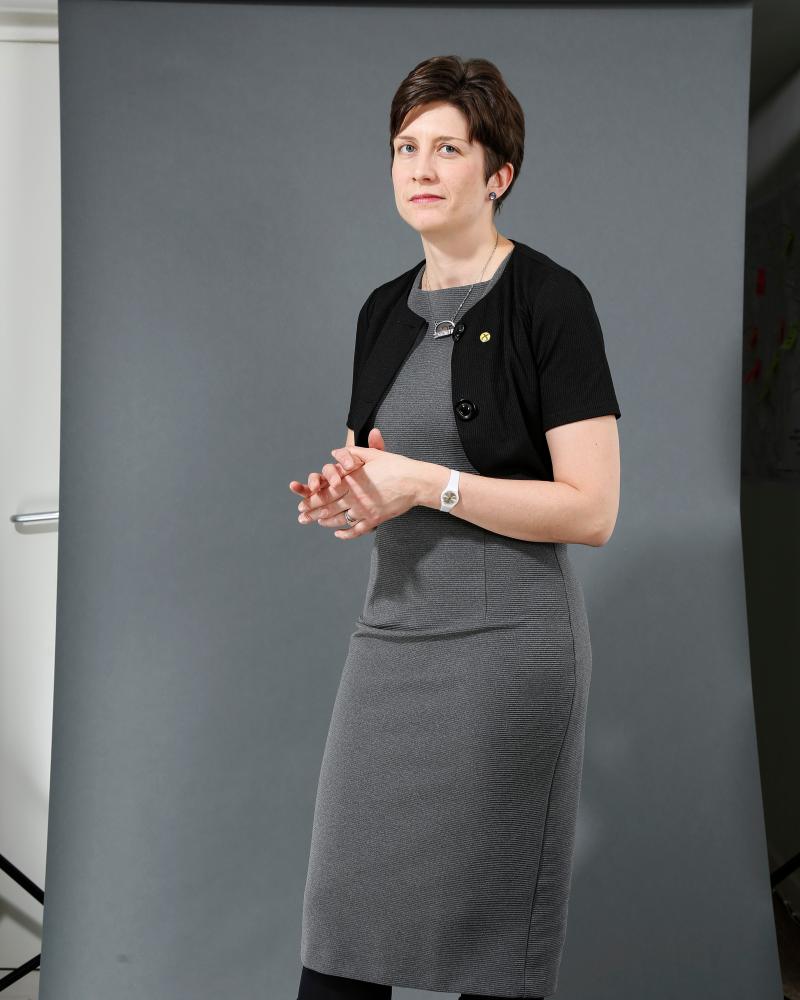

Alison Thewliss, SNP MP for Glasgow Central. Photograph: Murdo Macleod for the Guardian
“You turn on the television and the chamber’s either completely empty or it’s full of people hurling insults at one another,” she says. “People get the impression that it’s about going to the Commons and just sitting on the green benches. Some days can be like that, but most days you’re out doing all kinds of different things as well.”

Most of those different things are done out of the public gaze. For Thewliss, it generally involves a “huge” volume of work from her Glasgow Central constituency, much related to convoluted problems linked to immigration, housing or benefits.

Thewliss has a background as a councillor in Glasgow, where she learned the trick of reading all official reports from the back, on the assumption the interesting details will be buried there.

She did this with George Osborne’s 2015 budget, where she unearthed the so-called rape clause – the proposal to allow women to claim tax credit for a third child only if they can show the pregnancy happened because of rape.

This has turned into something of an accidental crusade. “I didn’t expect it to turn into any campaign,” she says. “I expected somebody might have some kind of explanation for what this was all about. That just hasn’t been the case. So I’ve kept pushing and I’ve kept asking questions.”

Alan Mak
Another 2015 entrant, Mak formerly worked as a City lawyer and ran his own finance firm, so is used to a punishing work regime. But even he says he is surprised at the demands on his time as an MP.
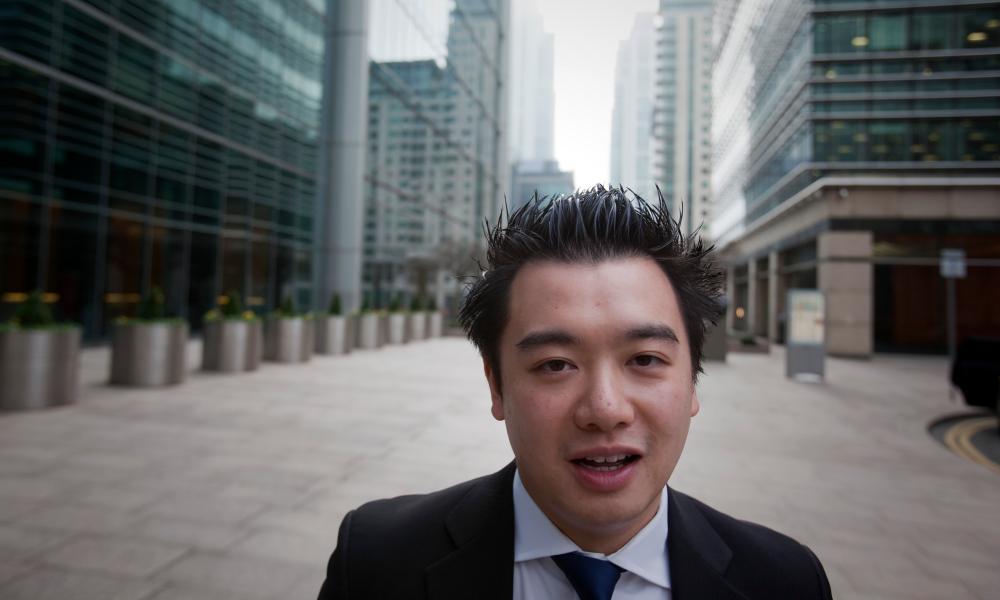

Alan Mak, Conservative MP for Havant.Photograph: Graham Turner for the Guardian
“You can never switch off. In the private sector you’d work very long hours, even over months, but there would be an end point of some kind. Here, the hours are ongoing, sustained and public. I enjoy it, a lot, so I don’t have any regrets, but it is a fact – MPs work longer hours than people may think.”

Mak, the Conservative MP for Havant, campaigns on an issue he was involved in before entering parliament. The son of first-generation immigrants from south China, Mak grew up in working-class community in York, where he would see classmates arrive at school hungry.

While still working in the City he became involved in Magic Breakfast, a charity that supplies healthy meals to more than 30,000 children a day.

Carmel McConnell, who set up Magic Breakfast, says it is “really helpful” that the charity’s former trustee and president has since become an MP and can liaise with other politicians in Westminster.

“A lot of politicians I’ve met have gone into the job because they do have a sense of service and they do have a sense of wanting to make the country the best it can be,” McConnell says. “Of course, there are some who are pure egotists, but that’s the same in every profession.”

Mak says he can’t think of another group of people as broadly in touch with their communities as MPs, or who see so many in the community who have exhausted all other options for help.

“You see people at their toughest moment, when they’ve tried all other options,” he says. “Many of my emails begin, ‘Dear Mr Mak, I’m contacting you because I don’t know who else to turn to.’”

This can be emotionally tricky, he says: “If I allow it to affect me too much it makes me potentially less able to help them. And my job is to help them.”

Norman Lamb
Mak is not the only MP to campaign on an subject with which they have a personal connection. Lamb, the Liberal Democrat MP for North Norfolk, a junior health minister in the former coalition, says he saw first hand the problems with mental health services a dozen years ago when his son was diagnosed with obsessive-compulsive disorder.
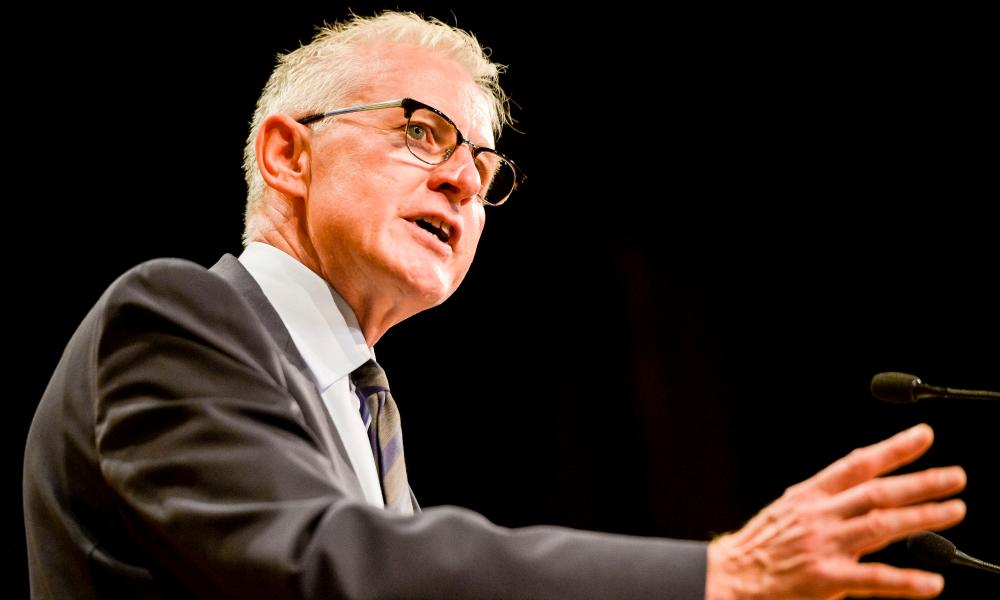

Norman Lamb, Liberal Democrat MP for North Norfolk. Photograph: Ben Birchall/PA
Lamb is now known as one of the most effective single-issue campaigners in parliament, lobbying for a more holistic and better-funded government approach to mental health care.

Lamb “gets it” over mental health, says Vicki Nash, head of campaigns at the charity Mind. “He knows what it’s like, that fight to get the right services and the right support,” she says. “He speaks with an authenticity and a legitimacy about that issue.”

The MP says his own experiences have helped. “It gives you a degree of empathy, when you get endless people coming to see you, whether locally or nationally, who’ve in one way or another been let down by the same system,” he says.

Like almost all MPs, Lamb says the advent of email and social media means it is far easier for voters to discover his area of interest and to contact him. And many do.

“MPs are like any other profession,” he says. “There are some people who are very motivated, very driven, work very hard, and there are others who are much less so. But if you are accessible locally, a lot of people contact you.”

Nonetheless, a big part of the job remains the weekly constituents’ surgery, he says.

“Yes, it is unglamorous. You’re sitting there on a Friday night, in a church hall, doing your advice surgery. It’s 8.30pm and you’re still going. You can’t say to people, ‘You’ve got 15 minutes, that’s it.’ You’ve got to give people time. And this work goes on unseen by most members of the public.”


Siobhain McDonagh

It is the detailed constituency aspect of an MP’s job that can surprise outsiders, says McDonagh, who represents Mitcham and Morden for Labour.
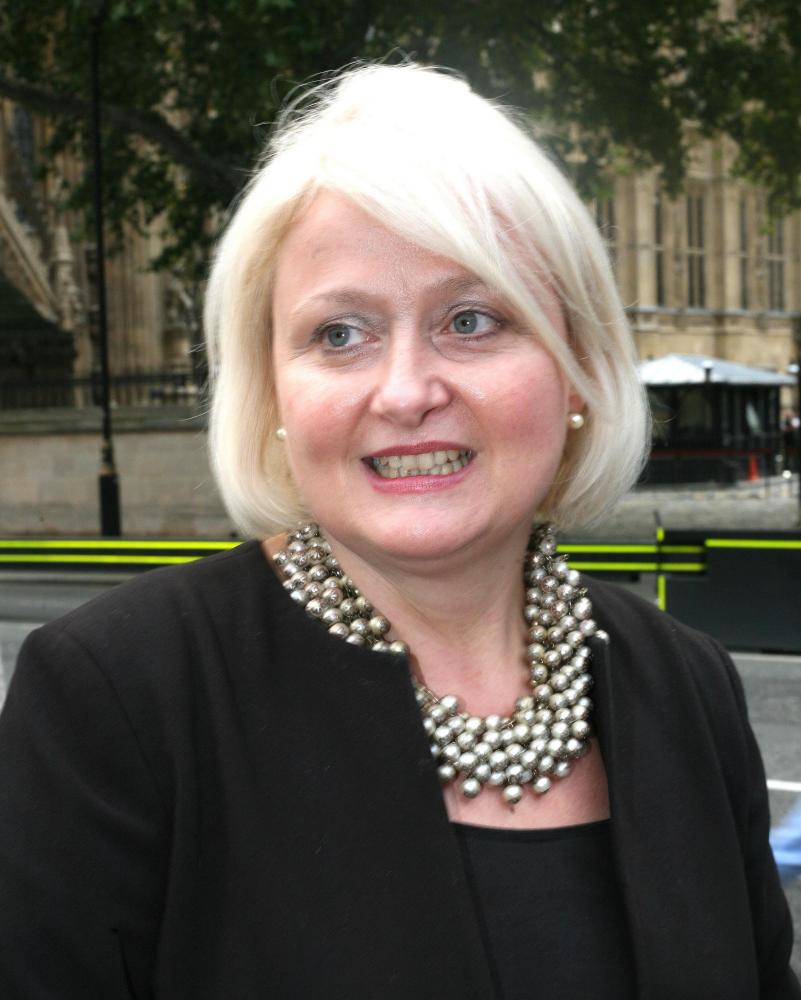

Siobhain McDonagh, Labour MP for Mitcham and Morden. Photograph: Katie Collins/PA
“We occasionally get work experience people from the US,” she explains. “They say, ‘Wow, we didn’t realise elected representatives did this sort of thing.’”

For all the generalised public cynicism about her profession, McDonagh says, individual constituents routinely share their most private problems and personal details with her.

Housing-related problems in her south London constituency are now the most common issues – “It’s often the thing that wakes you up in the middle of the night,” McDonagh says – and often her job involves explaining a sometimes baffling system to people ill equipped to deal with it.

At other times, however, her six-hour surgery sessions every Friday throw up more general injustices. One constituent arrived to complain that despite the national living wage, her pay packet from B&Q was going down, not up.

McDonagh and her staff found the DIY chain had been quietly stripping out extra pay for weekends, and bonuses. After examining the woman’s payslips they found she constituent stood to lose £2,600 in a year, despite supposedly getting a pay rise.

Other shopworkers, some from inside her constituency, some not, came forward to say their employers were doing the same.

“It started us on this odyssey, which has been absolutely fascinating, and tragic,” she recalls. “When we started explaining this to people, they didn’t quite believe it.”

With the first case, McDonagh met bosses from B&Q and its parent company, and secured a deal to delay the pay changes for two years pending a review. “Now is that the answer?” she says. “No it’s not, but it’s one thing a backbench MP has been able to do, just by using the parliamentary process, and getting media exposure.”

Claire Perry
The Conservative MP for Devizes also began a campaign after hearing a story of injustice at a constituency surgery. She was visited by the parents of James Gilbey, a 25-year-oldrun over and left for dead on a pedestrian crossing by two men who had been racing their cars at nearly 80mph through Leeds.
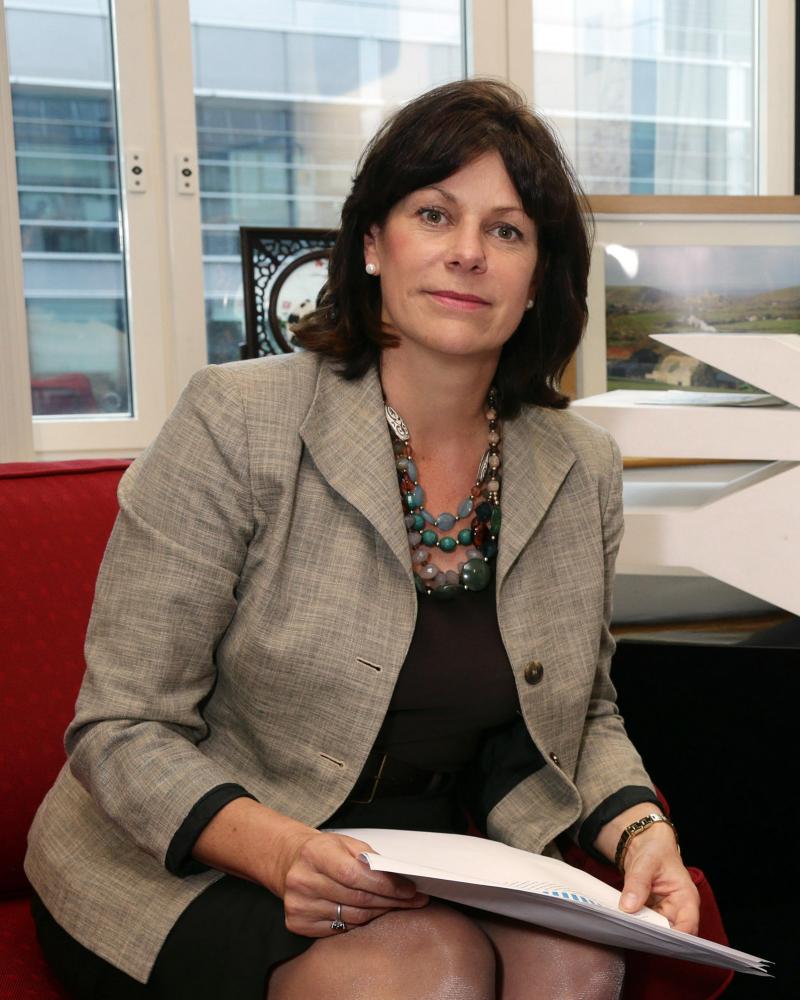

Claire Perry, Conservative MP for Devizes.Photograph: Yui Mok/PA
The parents’ devastation was compounded by watching the families of the drivers whoop and cheer in court after they were jailed for just eight years.

Meeting constituents embroiled in such tragedy – Gilbey’s father, an army physical training instructor, arrived “broken and in tears”, Perry recalls – can take an emotional toll. “You just cry, but what you have to do is see how you can help,” she explains.

Perry has since been lobbying hard for tougher statutory penalties for drivers who kill, a campaign that has begun to see success.

“None of this brings James back,” Perry says. “But I think it helps people feel that the government gets it. There’s so many people pushing against a system that seems incomprehensible, and if you can sometimes say, ‘Yes, it is incomprehensible, let’s try and change it,’ then all the better.”

For all the outside focus on set piece events such as prime minister’s questions, Perry says, much of the real change happens more quietly, and often with cooperation between rival parties.

“You actually realise that parliament is quite a powerful place – it’s the ability to question ministers, to unify, to bring in third party organisations,” she explains. “It’s a wise MP who uses that power, because after all we’re only here for a period of time, and we can make a difference.”

Perry was a junior minister under David Cameron, but says she feels she can achieve more on the backbenches.

“The ministerial stuff comes and goes and that’s great, but this is where you go home at night and think, ‘This job is worth it, I actually did something today.’”

 
After Jo Cox: the unsung MPs quietly making Britain better
Following the murder of the MP in June, readers asked us to write more about other inspiring parliamentarians. So here we profile five tireless campaigners

Peter Walker Political correspondent
Published:09:00 CET Sat 24 December 2016

Follow Peter Walker
Shortly after Jo Cox was murdered by a far-right terrorist in June, newspapers began to detail the work this relatively new and previously somewhat low-profile Labour MP had quietly undertaken on issues including Syria, refugees and child welfare.

This prompted a number of readers to contact the Guardian. Why, they asked, had they not known about this before? With most polls showing politicians held in roughly similar public regard to estate agents, was it not time to redress the balance?

“I’d love to hear all the good things that our MPs up and down the country are doing and fighting for on a daily basis,” one wrote.

AdvertisementHide

Talk to more or less any MP and they’ll agree that while a handful of their number remain somewhat detached from constituents, the vast majority are almost boringly diligent.

Many of the long hours in the job tend to be taken up with the minutiae of constituency work. As with Cox, however, many also branch out into campaigning. Below are five MPs, and their personal crusades.


Alison Thewliss

The SNP MP who, like Cox, joined the Commons in June 2015, says she understands why many people get the wrong impression of politicians.


Alison Thewliss, SNP MP for Glasgow Central. Photograph: Murdo Macleod for the Guardian
“You turn on the television and the chamber’s either completely empty or it’s full of people hurling insults at one another,” she says. “People get the impression that it’s about going to the Commons and just sitting on the green benches. Some days can be like that, but most days you’re out doing all kinds of different things as well.”

Most of those different things are done out of the public gaze. For Thewliss, it generally involves a “huge” volume of work from her Glasgow Central constituency, much related to convoluted problems linked to immigration, housing or benefits.

Thewliss has a background as a councillor in Glasgow, where she learned the trick of reading all official reports from the back, on the assumption the interesting details will be buried there.

She did this with George Osborne’s 2015 budget, where she unearthed the so-called rape clause – the proposal to allow women to claim tax credit for a third child only if they can show the pregnancy happened because of rape.

This has turned into something of an accidental crusade. “I didn’t expect it to turn into any campaign,” she says. “I expected somebody might have some kind of explanation for what this was all about. That just hasn’t been the case. So I’ve kept pushing and I’ve kept asking questions.”

Alan Mak
Another 2015 entrant, Mak formerly worked as a City lawyer and ran his own finance firm, so is used to a punishing work regime. But even he says he is surprised at the demands on his time as an MP.


Alan Mak, Conservative MP for Havant.Photograph: Graham Turner for the Guardian
“You can never switch off. In the private sector you’d work very long hours, even over months, but there would be an end point of some kind. Here, the hours are ongoing, sustained and public. I enjoy it, a lot, so I don’t have any regrets, but it is a fact – MPs work longer hours than people may think.”

Mak, the Conservative MP for Havant, campaigns on an issue he was involved in before entering parliament. The son of first-generation immigrants from south China, Mak grew up in working-class community in York, where he would see classmates arrive at school hungry.

While still working in the City he became involved in Magic Breakfast, a charity that supplies healthy meals to more than 30,000 children a day.

Carmel McConnell, who set up Magic Breakfast, says it is “really helpful” that the charity’s former trustee and president has since become an MP and can liaise with other politicians in Westminster.

“A lot of politicians I’ve met have gone into the job because they do have a sense of service and they do have a sense of wanting to make the country the best it can be,” McConnell says. “Of course, there are some who are pure egotists, but that’s the same in every profession.”

Mak says he can’t think of another group of people as broadly in touch with their communities as MPs, or who see so many in the community who have exhausted all other options for help.

“You see people at their toughest moment, when they’ve tried all other options,” he says. “Many of my emails begin, ‘Dear Mr Mak, I’m contacting you because I don’t know who else to turn to.’”

This can be emotionally tricky, he says: “If I allow it to affect me too much it makes me potentially less able to help them. And my job is to help them.”

Norman Lamb
Mak is not the only MP to campaign on an subject with which they have a personal connection. Lamb, the Liberal Democrat MP for North Norfolk, a junior health minister in the former coalition, says he saw first hand the problems with mental health services a dozen years ago when his son was diagnosed with obsessive-compulsive disorder.


Norman Lamb, Liberal Democrat MP for North Norfolk. Photograph: Ben Birchall/PA
Lamb is now known as one of the most effective single-issue campaigners in parliament, lobbying for a more holistic and better-funded government approach to mental health care.

Lamb “gets it” over mental health, says Vicki Nash, head of campaigns at the charity Mind. “He knows what it’s like, that fight to get the right services and the right support,” she says. “He speaks with an authenticity and a legitimacy about that issue.”

The MP says his own experiences have helped. “It gives you a degree of empathy, when you get endless people coming to see you, whether locally or nationally, who’ve in one way or another been let down by the same system,” he says.

Like almost all MPs, Lamb says the advent of email and social media means it is far easier for voters to discover his area of interest and to contact him. And many do.

“MPs are like any other profession,” he says. “There are some people who are very motivated, very driven, work very hard, and there are others who are much less so. But if you are accessible locally, a lot of people contact you.”

Nonetheless, a big part of the job remains the weekly constituents’ surgery, he says.

“Yes, it is unglamorous. You’re sitting there on a Friday night, in a church hall, doing your advice surgery. It’s 8.30pm and you’re still going. You can’t say to people, ‘You’ve got 15 minutes, that’s it.’ You’ve got to give people time. And this work goes on unseen by most members of the public.”


Siobhain McDonagh

It is the detailed constituency aspect of an MP’s job that can surprise outsiders, says McDonagh, who represents Mitcham and Morden for Labour.


Siobhain McDonagh, Labour MP for Mitcham and Morden. Photograph: Katie Collins/PA
“We occasionally get work experience people from the US,” she explains. “They say, ‘Wow, we didn’t realise elected representatives did this sort of thing.’”

For all the generalised public cynicism about her profession, McDonagh says, individual constituents routinely share their most private problems and personal details with her.

Housing-related problems in her south London constituency are now the most common issues – “It’s often the thing that wakes you up in the middle of the night,” McDonagh says – and often her job involves explaining a sometimes baffling system to people ill equipped to deal with it.

At other times, however, her six-hour surgery sessions every Friday throw up more general injustices. One constituent arrived to complain that despite the national living wage, her pay packet from B&Q was going down, not up.

McDonagh and her staff found the DIY chain had been quietly stripping out extra pay for weekends, and bonuses. After examining the woman’s payslips they found she constituent stood to lose £2,600 in a year, despite supposedly getting a pay rise.

Other shopworkers, some from inside her constituency, some not, came forward to say their employers were doing the same.

“It started us on this odyssey, which has been absolutely fascinating, and tragic,” she recalls. “When we started explaining this to people, they didn’t quite believe it.”

With the first case, McDonagh met bosses from B&Q and its parent company, and secured a deal to delay the pay changes for two years pending a review. “Now is that the answer?” she says. “No it’s not, but it’s one thing a backbench MP has been able to do, just by using the parliamentary process, and getting media exposure.”

Claire Perry
The Conservative MP for Devizes also began a campaign after hearing a story of injustice at a constituency surgery. She was visited by the parents of James Gilbey, a 25-year-oldrun over and left for dead on a pedestrian crossing by two men who had been racing their cars at nearly 80mph through Leeds.


Claire Perry, Conservative MP for Devizes.Photograph: Yui Mok/PA
The parents’ devastation was compounded by watching the families of the drivers whoop and cheer in court after they were jailed for just eight years.

Meeting constituents embroiled in such tragedy – Gilbey’s father, an army physical training instructor, arrived “broken and in tears”, Perry recalls – can take an emotional toll. “You just cry, but what you have to do is see how you can help,” she explains.

Perry has since been lobbying hard for tougher statutory penalties for drivers who kill, a campaign that has begun to see success.

“None of this brings James back,” Perry says. “But I think it helps people feel that the government gets it. There’s so many people pushing against a system that seems incomprehensible, and if you can sometimes say, ‘Yes, it is incomprehensible, let’s try and change it,’ then all the better.”

For all the outside focus on set piece events such as prime minister’s questions, Perry says, much of the real change happens more quietly, and often with cooperation between rival parties.

“You actually realise that parliament is quite a powerful place – it’s the ability to question ministers, to unify, to bring in third party organisations,” she explains. “It’s a wise MP who uses that power, because after all we’re only here for a period of time, and we can make a difference.”

Perry was a junior minister under David Cameron, but says she feels she can achieve more on the backbenches.

“The ministerial stuff comes and goes and that’s great, but this is where you go home at night and think, ‘This job is worth it, I actually did something today.’”

Merry Christmas Clint.
 
Status
Not open for further replies.

Welcome

Join the Everton conversation today.
Fewer ads, full access, completely free.

🛒 Visit Shop

Support Grand Old Team by checking out our latest Everton gear!
Back
Top