I had a quick look at the links you provided, a couple of things I notice.Given that all those articles I shared had links to data , I'd say they were pretty reliable.
Not sure what else you want as evidence? I gave you stats and even the who website.
But as I said yesterday , didn't matter what I shared, it would be dismissed out of hand anyway so there you go.
My point is that basing an opinion on a series of numbers without taking into account varying factors doesn't make them true. Which in that case, the information was out of date, didn't factor medical history, the point disregarded the age bracket and other external factors such as smoking.
The overall point is that just because you are told something doesn't make it true, especially when you are just repeating said data without any real context.
After all I did say the numbers were exagerated and so has scientists recently with an urgent review taking place by the government.
The point is, I challenged the data with actual logical variables. Variables that do change the narrative of the data but if variables are just disregarded now then there's no value in data.
Saying it kills men more than women without any context or reason why (which was said to me , that's not an assumption) is ridiculous. Medical history , health , age and even smoking history factor into it and change the narrative. If more men smoked for example and therefore does at an old age because of a respiratory virus then that isn't down to mast cells and more to do with medical history. Completely different story.
Except apparantly none of that matters. Noone is I retested in actually having a discussion rather than shouting you are wrong because of this list of numbers form 3 months ago.
1. None of them are stating conclusions (as I expected) Epidemiology is not an exact science and by nature, requires interpretation of data. That will be the same for all epidemiological data, it is all down to interpretation. That is where peer review really comes into it. Without peer review, any conclusions can be made, no matter how spurious or fanciful. Proper peer review reduces that likelihood.
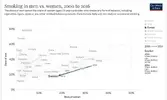
2. One of the articles state that 35% of men smoke compared to 6% women. If smoking were a significant factor, one would expect there to be a much higher percentage of men succumbing to Covid. As it is something like 55% male, a fair conclusion is that smoking plays a very minor role at best.
3. The links you provided raised more questions than answers (as a lot of good scientific studies do). However there is nothing in there that would shift me from the current accepted narrative. It would be interesting though to review those links again in a few weeks when they have completed further research and analysis.
4. It is great that lots of different organisations and research bodies are asking these questions and trying to drill the data as far as it can go.
5. The guys who are making decisions for us will have access to a lot more data than we do. While the governments may not always apply their recommendations, I have a lot of faith in the information and analysis they provide. I don't have faith in the media to accurately and fully report their findings.