As campuses reopen without adequate testing, universities fault young people for a lack of personal responsibility.

www.theatlantic.com
Americans are making decisions every day about coronavirus risk and social contact, but people’s calculations are not all the same. Risk taking typically peaks during young adulthood, when people are most responsive to the rewards of a risky choice. During the pandemic, young people face different risks from older adults: Although the former may transmit the virus to others, they are at substantially
lower risk of complications from coronavirus infection than older people—but at
far greater risk of
psychiatric disordersthat can be triggered or worsened by social isolation. People feel
lonely when they experience a mismatch between the relationships they want and those they have. In a pandemic, that discrepancy may be greatest for college students, who are experiencing the yawning gap between dorm life and quarantine life. “A lot of people are calling attention to coronavirus because it’s right in front of us,” an 18-year-old named Audrey
told NPR earlier this month. “But at the same time, teens’ depression rate—it’s a silent threat.” The issue isn’t that young people are universally unconcerned about the pandemic; it’s that they realize it’s not the only—or even the greatest—risk they face.
Nor is socializing the only route by which the coronavirus spreads. The recent rise in cases among young adults was predictable based on
labor-force statistics alone. In the bars, restaurants, and retail establishments that have resumed service as part of most states’ reopening plans, the
majority of employees are 34 or younger. But rather than taking responsibility for reopening high-risk environments prematurely, officials have
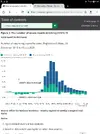
again shiftedthe blame to the young people who keep those industries running. California Governor Gavin Newsom recently described those under 35 as “the age cohort that believes in many cases that they are invincible, and they are somehow immune from the impacts of COVID-19.” New York City’s official Twitter feed recently circulated a chart showing that rates of coronavirus infection had plateaued or were increasing in younger age groups. The accompanying message, complete with a wide-eye emoji,
declared, “Looking at you, millennials and Gen X. Do better.” From statements such as these, one might conclude that saving the country from the coronavirus isn’t up to those who decide which establishments are open or closed; rather, it’s the
personal responsibility of young people—and never mind that, for them, exposure isn’t always a choice.