
You are using an out of date browser. It may not display this or other websites correctly.
You should upgrade or use an alternative browser.
You should upgrade or use an alternative browser.
The Olympics Thread, London 2012, Games of the XXX Olympiad, 27th July - 12th August
- Thread starter Cena
- Start date
- Status
- Not open for further replies.


bluejock
Boss coat aficionado
Awesome day at Wembley!
Awful journey home. Literally just in. I'll put my pics up tomorrow.
MEHICO MEHICO MEHICO!
Can someone give me a run down of what has happened in Olympics today? Ta
Chris Hoy was a beast. The wee cute Trott lassie got a gold. Couple of brothers got gold and bronze in triathlon. Dancing horses won gold.

davek
Player Valuation: £150m
Awesome day at Wembley!
Awful journey home. Literally just in. I'll put my pics up tomorrow.
MEHICO MEHICO MEHICO!
Can someone give me a run down of what has happened in Olympics today? Ta
*points to signature VVVVV*

Wasn't it Boardman who won British medals inj the 90's when he developed a new 'type' of bike to compete on? The one which they basically all ride on now? You think that a team lead by him couldn't find a way to get an advantage over the other teams without cheating? As far as I can see it's just great talent, and the best in training and preperation.
Quite. In a flat race, as in the veledrome or most time trials, far and away the biggest factor slowing riders down is drag, so if they can reduce their frontal area they go faster. If you look at Andy/Frank Schleck in a time trial and their position on the bike is pretty awful, hence why they go so slowly. Wiggins by contrast looks fantastic in a time trial, his position never changes. It's the same in the sprints. Greipel produces far more in terms of raw power, but Cavendish beats him because he gets lower on the bike than any other rider.
As Boardman said this week, the British guys are spending hours and hours in the wind tunnel perfecting their riding positions so as to reduce drag as much as possible. I believe their suits have borrowed ideas taken from ski-ing to reduce drag as well, whilst Hoy was the only rider in the Kieren to have a full aero helmet. Likewise on the road the riders have those peculiar looking helmets with the vents filled in, again designed to reduce drag. Doesn't reduce it by much but over a 6 hour race it contributes.
Of course Boardman's going to be a little bit coy about what they do. If you work hard to create advantages you're not going to blab it to the world so they can copy right away, but most of the differences are there to see. Cycling is a sport with a huge culture and tradition surrounding it. There are things that are done because that's how they've always been done. A fresh pair of eyes can find ways to do things differently. A good example is Tim Kerrison coming from the swimming world and massively changing Wiggins training/racing so that his priority was training. Historically racing would be part of training and you'd race your way into form for the summer. He changed that so his race days were massively cut down, thus allowing proper training (and proper recovery), and then only entered races with good form and the intention to win.
The results kinda speak for themselves. Likewise with the way the riders train. Traditionally riders would only come together as a team either for races or short training camps. The rest of the time they'd be at home training on their own. It's well known that Wiggins and the other main TDF riders spent huge chunks of time together training in Tenerife. It isn't rocket science but allowed the team to monitor training more effectively whilst of course building up a strong team.
It's all there if you open your eyes.


Quite. In a flat race, as in the veledrome or most time trials, far and away the biggest factor slowing riders down is drag, so if they can reduce their frontal area they go faster. If you look at Andy/Frank Schleck in a time trial and their position on the bike is pretty awful, hence why they go so slowly. Wiggins by contrast looks fantastic in a time trial, his position never changes. It's the same in the sprints. Greipel produces far more in terms of raw power, but Cavendish beats him because he gets lower on the bike than any other rider.
As Boardman said this week, the British guys are spending hours and hours in the wind tunnel perfecting their riding positions so as to reduce drag as much as possible. I believe their suits have borrowed ideas taken from ski-ing to reduce drag as well, whilst Hoy was the only rider in the Kieren to have a full aero helmet. Likewise on the road the riders have those peculiar looking helmets with the vents filled in, again designed to reduce drag. Doesn't reduce it by much but over a 6 hour race it contributes.
Of course Boardman's going to be a little bit coy about what they do. If you work hard to create advantages you're not going to blab it to the world so they can copy right away, but most of the differences are there to see. Cycling is a sport with a huge culture and tradition surrounding it. There are things that are done because that's how they've always been done. A fresh pair of eyes can find ways to do things differently. A good example is Tim Kerrison coming from the swimming world and massively changing Wiggins training/racing so that his priority was training. Historically racing would be part of training and you'd race your way into form for the summer. He changed that so his race days were massively cut down, thus allowing proper training (and proper recovery), and then only entered races with good form and the intention to win.
The results kinda speak for themselves. Likewise with the way the riders train. Traditionally riders would only come together as a team either for races or short training camps. The rest of the time they'd be at home training on their own. It's well known that Wiggins and the other main TDF riders spent huge chunks of time together training in Tenerife. It isn't rocket science but allowed the team to monitor training more effectively whilst of course building up a strong team.
It's all there if you open your eyes.
No Bruce, it's the drugs mate

davek
Player Valuation: £150m
Quite. In a flat race, as in the veledrome or most time trials, far and away the biggest factor slowing riders down is drag, so if they can reduce their frontal area they go faster. If you look at Andy/Frank Schleck in a time trial and their position on the bike is pretty awful, hence why they go so slowly. Wiggins by contrast looks fantastic in a time trial, his position never changes. It's the same in the sprints. Greipel produces far more in terms of raw power, but Cavendish beats him because he gets lower on the bike than any other rider.
As Boardman said this week, the British guys are spending hours and hours in the wind tunnel perfecting their riding positions so as to reduce drag as much as possible. I believe their suits have borrowed ideas taken from ski-ing to reduce drag as well, whilst Hoy was the only rider in the Kieren to have a full aero helmet. Likewise on the road the riders have those peculiar looking helmets with the vents filled in, again designed to reduce drag. Doesn't reduce it by much but over a 6 hour race it contributes.
Of course Boardman's going to be a little bit coy about what they do. If you work hard to create advantages you're not going to blab it to the world so they can copy right away, but most of the differences are there to see. Cycling is a sport with a huge culture and tradition surrounding it. There are things that are done because that's how they've always been done. A fresh pair of eyes can find ways to do things differently. A good example is Tim Kerrison coming from the swimming world and massively changing Wiggins training/racing so that his priority was training. Historically racing would be part of training and you'd race your way into form for the summer. He changed that so his race days were massively cut down, thus allowing proper training (and proper recovery), and then only entered races with good form and the intention to win.
The results kinda speak for themselves. Likewise with the way the riders train. Traditionally riders would only come together as a team either for races or short training camps. The rest of the time they'd be at home training on their own. It's well known that Wiggins and the other main TDF riders spent huge chunks of time together training in Tenerife. It isn't rocket science but allowed the team to monitor training more effectively whilst of course building up a strong team.
It's all there if you open your eyes.
That's such a ropey explanation parroting the strictly for the birds official line. Wind tunnel training, aerodynamic helmets and gear, and cross sports training methods? Are you for real? This is all basic industry stuff that's been around for ages.
The stuff you mention about Boardman being coy is the only germaine point, especially about bike advances. They looked to have hogged the technology and that is an issue to be dealt with. Years ago the Germans used to get major stick about unfair advantages in the level of technology they brought to the bvelodrome. Well, what's sauce for the goose...

Woke up this mornin feelin fine..
But then Davek came online,
Last night he had an idea that he thought was good.. oh yeah
something tells me Daves in a miserable mood..........
But then Davek came online,
Last night he had an idea that he thought was good.. oh yeah
something tells me Daves in a miserable mood..........
Phyllis Stein
Player Valuation: £8m
Quite. In a flat race, as in the veledrome or most time trials, far and away the biggest factor slowing riders down is drag, so if they can reduce their frontal area they go faster. If you look at Andy/Frank Schleck in a time trial and their position on the bike is pretty awful, hence why they go so slowly. Wiggins by contrast looks fantastic in a time trial, his position never changes. It's the same in the sprints. Greipel produces far more in terms of raw power, but Cavendish beats him because he gets lower on the bike than any other rider.
As Boardman said this week, the British guys are spending hours and hours in the wind tunnel perfecting their riding positions so as to reduce drag as much as possible. I believe their suits have borrowed ideas taken from ski-ing to reduce drag as well, whilst Hoy was the only rider in the Kieren to have a full aero helmet. Likewise on the road the riders have those peculiar looking helmets with the vents filled in, again designed to reduce drag. Doesn't reduce it by much but over a 6 hour race it contributes.
Of course Boardman's going to be a little bit coy about what they do. If you work hard to create advantages you're not going to blab it to the world so they can copy right away, but most of the differences are there to see. Cycling is a sport with a huge culture and tradition surrounding it. There are things that are done because that's how they've always been done. A fresh pair of eyes can find ways to do things differently. A good example is Tim Kerrison coming from the swimming world and massively changing Wiggins training/racing so that his priority was training. Historically racing would be part of training and you'd race your way into form for the summer. He changed that so his race days were massively cut down, thus allowing proper training (and proper recovery), and then only entered races with good form and the intention to win.
The results kinda speak for themselves. Likewise with the way the riders train. Traditionally riders would only come together as a team either for races or short training camps. The rest of the time they'd be at home training on their own. It's well known that Wiggins and the other main TDF riders spent huge chunks of time together training in Tenerife. It isn't rocket science but allowed the team to monitor training more effectively whilst of course building up a strong team.
It's all there if you open your eyes.
It is also worth reminding the board that Boardman won the solo time trial at the tour in the early 90's and set the fastest average speed over a set time trial distance ever. The record still stands.
He also broke Eddie Mercks distance pursuit record, a record that had stood for something like 40 years.
Believe it when Boardman is spoken about with reverence, he is no mug, he is in fact a very smart chap.

Some of the wheelchair racers got caught with N20.

Posted in the Late Show, re posting for unbelievability.
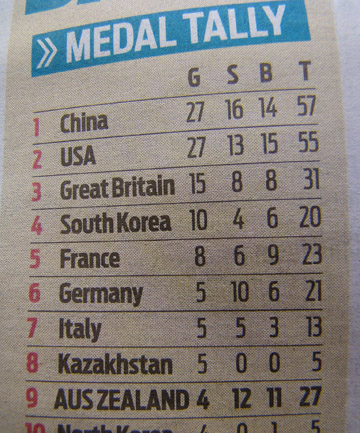
Seen the NZ media latch on to this like it was serious. Did you not read the entire article (it was News Ltd though) in how it was just taking the p**s about how we should claim the NZ medal tally like we have claimed Phar Lap and Russell Crowe?
In other news, loving that Mears could at least get one gold over GB! She is a great rider and a true champion. Showed in the second race why she deserved it.
Steaming up the medal tally!!!
- Status
- Not open for further replies.
Welcome
Join the Everton conversation today.
Fewer ads, full access, completely free.