Thank you for giving it a shot. You should try to stick with it.. it gets more interesting as it becomes less abstract.
I am not saying that Britain should run its debt/gdp level as high as Japan, but lamenting that the conversation about public debt in the UK is so illiterate. The sooner we stop running around like the sky is falling every time the Tory press spews nonsense about Labour spending, the better we will all be. There is currently enormous leeway for government investment - it has never been cheaper to borrow - and beyond the question of fiscal capacity, it is also the economically and morally appropriate response to the conditions Britain faces. Again, the IMF, the pension market, the bond market are all
begging!!! governments to spend, because the entire global financial system is put at risk by the quantitative easing and asset bubbles necessitated/generated by mindless UK/Eurozone austerity.
The risks are
not doing so are terrifying. When a government reduces its deficits,
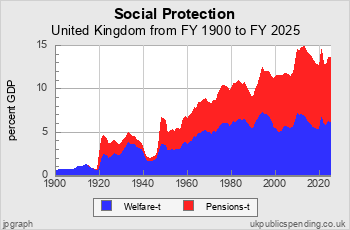
by definition private sector debts swell. This takes the form of corporate debt (a far, far bigger problem today than public debt because firms are borrowing to fund stocks buybacks and mergers rather than productive growth), bloated mortgages and household non-mortgage debt, usually at usurious credit card rates. This is not a case of indiscipline and lax morality, but a mathematical relationship between the public and private/household sectors. When the economy next melts down, it will almost certainly be caused by a combination of the first two factors, and seriously exacerbated by the third. The political consequences for liberal democracy could well be fatal. And this will take place precisely because in Britain and the Eurozone, and to a much lesser extent the United States, governments opted for austerity when stimulus was the only viable response.
Government debt is the entire basis of the financial sector. You cannot have pensions without it. You cannot have a finance industry without it. Cutting spending and contracting the economy at the height of the crash is just about the dumbest thing that any British government since Richard III has ever done. It is beyond madness, and probably a thousand times less economically sound than Brexit (not least because it is increasingly clear that it also caused Brexit).
Huge state investment in infrastructure, transit, hospitals, schools, recovering assets like housing or utilities, the green new deal... anything, really, is not only the appropriate political response to the sense of betrayal people rightly feel at the hands of the ideologues and con men running the Tory/Liberal coalition, but also the only sensible economic means of productively soaking up the trillions of QE Pounds that the BoE has had to invent because the government was too busy experimenting with Victorian Social Darwinism on people they regard as a subspecies to manage the economy properly. The sooner we are led by people who approach economics as a technical discipline rather than a medieval morality lesson, the better off we'll all be.
This is wrong. When government contracts spending during an economic slowdown, the
only effect will be to further accelerate the slowdown (again, assuming that the debt is owed in the government's own currency). This is not a question of opinion, but of mathematics.
Government should
only attempt to reduce the deficit when the private economy starts growing too quickly.