Monday, 6 August 2018
A decade of political deceit
It is tempting sometimes to portray the Brexiters (the politicians and the media leading the Brexit campaign, not those who voted Leave) as bumbling fools who just are not very good with reality in all its detail. Boris Johnson encourages that idea, particularly when you know his true reason for supporting Brexit is personal ambition.
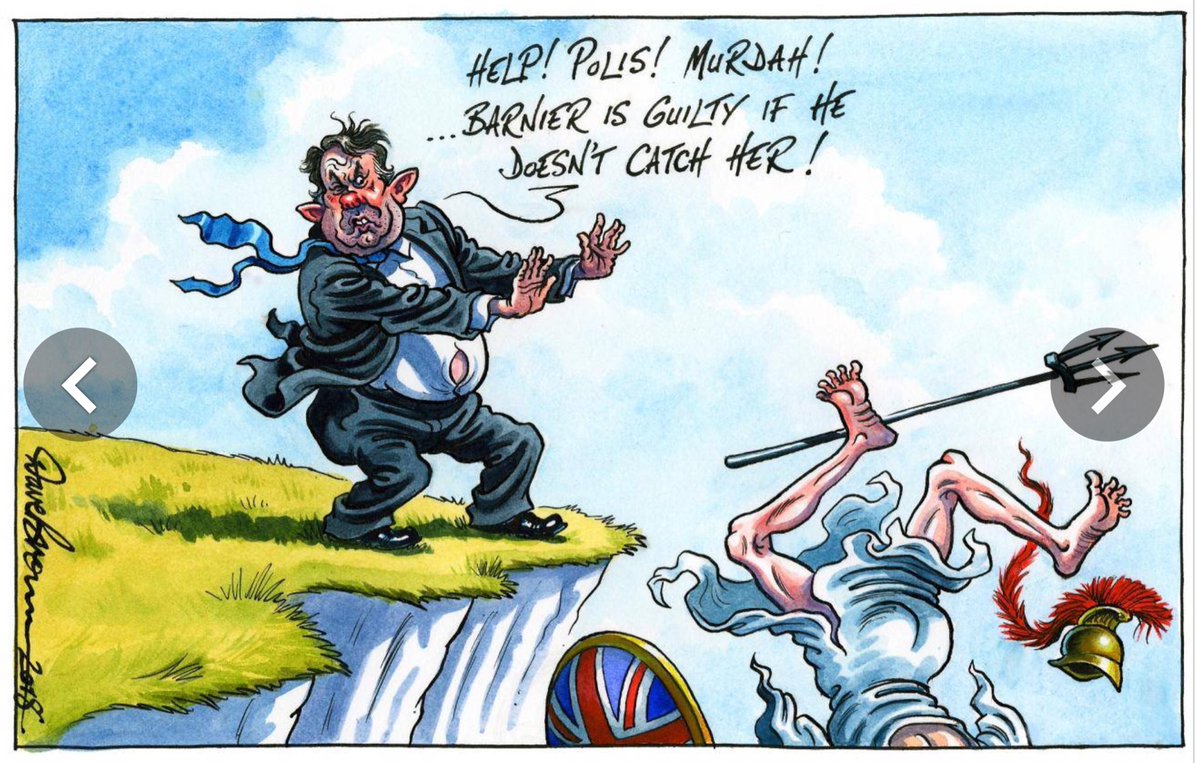
I considered writing up a little fantasy shortly after water was discovered on Mars, Johnson had resigned as Foreign Secretary and May had won a vote by breaking pairing. I imagined the PM had convinced Johnson to captain a spaceship put together by the New UK Space Agency so he and David Davis could sign a trade agreement with whatever lived on Mars. It had to be hush hush so the EU did not try and get there first. When Johnson expressed concern that he might miss the vote on the final deal May assured him his vote would be paired, and when he returned in triumph the leadership would be his. After days when the press asked where is Boris, NASA reported receiving distress calls from what seemed like a spaceship heading in the direction of the sun.
But while Boris is in it for himself, the motives of many members of the ERG are rather different. As Time Bale describes, they need Brexit to be able to fulfill their vision for the UK, ably described in Britannia Unchained, written in 2012 by Kwasi Kwarteng, Priti Patel, Dominic Raab, Chris Skidmore and Elizabeth Truss. He calls them hyperglobalists. It is a UK of less welfare provision and even more ‘flexible’ labour markets, so that UK firms can compete ‘unhindered’ with the rest of the world like some kind of imagined Asian dynamo. Sort of Thatcher on steroids.
I’m not too interested on this occasion in the idiocy of such a plan, but the fact that this was never on the side of any red bus. It is another example of political deceit of the highest order. Their plan is not why most people voted Leave: quite the opposite in the case of many. As Tim writes:
“Does this disjunction between what “the people” currently say they want and what they supposedly need actually bother Tory hyperglobalists, except insofar as it prevents them, at least for the moment, from revealing all?
No – the reason being that they are Leninists, in the same way that Margaret Thatcher, their inspiration and icon, was a Leninist. Just like her, in 1979, they believe they know what we want better than we do ourselves right now. And just like her, they have a crusading vision whose details, inasmuch as they’ve been fully worked out, are best kept under wraps until the time is right and we can be made to realise – they hope gratefully rather than grudgingly – that there truly is no alternative.”
We have been seeing rather a lot of this Leninist deceit lately, similar to what Naomi Klein called the shock doctrine, or what John Harris describes as "the odorous whiff of the hypocrisies and deceptions that tend to come with privilege". Austerity as a very costly device to shrink the state, for example. And immigration targets which Cameron and Osborne knew would hurt the economy if they were seriously pursued, but made them nevertheless to help attract social conservatives to vote Conservative. Pretending immigration was a problem for the NHS or welfare payments was also a useful way to deflect criticism over the impact of austerity.
I know some people will respond that all politicians deceive, and of course they do in minor ways to sell policies that help ‘their side’. But politicians who deceive at such a high level because they are Leninists at heart are something less common. It is hard to argue that any of the Prime Ministers before Thatcher were so willing to hide their true intent. Occasionally perhaps for certain foreign ventures: Eden, and then Blair. But not Brown or Miliband. The SNP over the cost of Independence, certainly. But austerity, lying about immigration and Brexit still seem an order greater in terms of the extent of the deception: promising X to really get an undisclosed Y.
There may be a reason for why this total deceit is relatively new, and it has to do with how the political process is perceived as part of neoliberalism. If you see politics like a market place, policies have to be sold like products, and politicians are the salesmen as Chris Dillow describes here. So if you can sell a car by creating an image of what that car embodies, so you can sell a policy by pretending it is something else. The fact that you do not have the equivalent of the Advertising Standards Authority for political advertising just makes doing that more attractive.
Just look at the lack of shame in pretending that austerity was all about clearing up the mess Labour made (a claim easily refuted by looking at the data), or that the economy was strong when it was actually very weak in 2015. But that was dwarfed by what was to come with Brexit. Nothing was sacred in doing whatever it took to win that vote. And when it was shown that this included overspending during the campaign, they had no shame in spinning this as a mere allegation by Remainers. Anything goes, including disrespecting our pluralist democracy, just so they get what they want.
This is all related to what I called neoliberal overreach, and whether it was something we could have easily avoided or something that was bound to happen. For many neoliberal politicians and advocates their ideal economy and society is not achievable through honest campaigning, because it is not what the great majority of people want. In 2016 48% of people wanted higher spending and taxes, while less than 5% wanted lower spending and taxes. Rather than patient persuasion they prefer complete deception, and crucially the ideology can be seen as endorsing that. For this reason, I am happy to add Brexit to austerity and anti-immigration rhetoric as examples of probably inevitable neoliberal overreach.
Chris Dillow suggests that one of the first great neoliberals, Margaret Thatcher, did not share this view. Perhaps her ideas were sufficiently popular - at least for a time - that she didn’t need to pretend they were something else. It would be interesting to know if Tim Bale agrees.