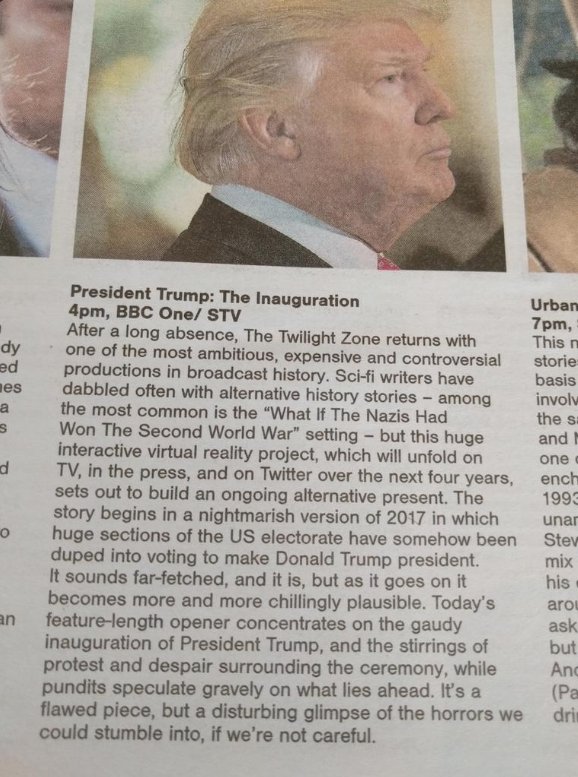
Current Affairs Donald Trump POS: Judgement cometh and that right soon

Status
Not open for further replies.
Would the banking crisis of 2007-8 count?

From 2010 and a source you'll likely never see unless directed there.
I recommend the linked article, which pretty accurately predicts what you've seen since.

As over-leveraged investment houses began to fail in September 2008, the leaders of the Republican and Democratic parties, of major corporations, and opinion leaders stretching from the National Review magazine (and the Wall Street Journal) on the right to the Nation magazine on the left, agreed that spending some $700 billion to buy the investors’ “toxic assets” was the only alternative to the U.S. economy’s “systemic collapse.” In this, President George W. Bush and his would-be Republican successor John McCain agreed with the Democratic candidate, Barack Obama. Many, if not most, people around them also agreed upon the eventual commitment of some 10 trillion nonexistent dollars in ways unprecedented in America. They explained neither the difference between the assets’ nominal and real values, nor precisely why letting the market find the latter would collapse America. The public objected immediately, by margins of three or four to one.

When this majority discovered that virtually no one in a position of power in either party or with a national voice would take their objections seriously, that decisions about their money were being made in bipartisan backroom deals with interested parties, and that the laws on these matters were being voted by people who had not read them, the term “political class” came into use. Then, after those in power changed their plans from buying toxic assets to buying up equity in banks and major industries but refused to explain why, when they reasserted their right to decide ad hoc on these and so many other matters, supposing them to be beyond the general public’s understanding, the American people started referring to those in and around government as the “ruling class.” And in fact Republican and Democratic office holders and their retinues show a similar presumption to dominate and fewer differences in tastes, habits, opinions, and sources of income among one another than between both and the rest of the country. They think, look, and act as a class.
...
Today’s ruling class, from Boston to San Diego, was formed by an educational system that exposed them to the same ideas and gave them remarkably uniform guidance, as well as tastes and habits. These amount to a social canon of judgments about good and evil, complete with secular sacred history, sins (against minorities and the environment), and saints. Using the right words and avoiding the wrong ones when referring to such matters — speaking the “in” language — serves as a badge of identity. Regardless of what business or profession they are in, their road up included government channels and government money because, as government has grown, its boundary with the rest of American life has become indistinct. Many began their careers in government and leveraged their way into the private sector. Some, e.g., Secretary of the Treasury Timothy Geithner, never held a non-government job. Hence whether formally in government, out of it, or halfway, America’s ruling class speaks the language and has the tastes, habits, and tools of bureaucrats. It rules uneasily over the majority of Americans not oriented to government.

The two classes have less in common culturally, dislike each other more, and embody ways of life more different from one another than did the 19th century’s Northerners and Southerners — nearly all of whom, as Lincoln reminded them, “prayed to the same God.” By contrast, while most Americans pray to the God “who created and doth sustain us,” our ruling class prays to itself as “saviors of the planet” and improvers of humanity. Our classes’ clash is over “whose country” America is, over what way of life will prevail, over who is to defer to whom about what. The gravity of such divisions points us, as it did Lincoln, to Mark’s Gospel: “if a house be divided against itself, that house cannot stand.”


https://spectator.org/39326_americas-ruling-class-and-perils-revolution/
 
C2T1cf2VQAQ3qsZ.jpg

Excellent.
 
From 2010 and a source you'll likely never see unless directed there.
I recommend the linked article, which pretty accurately predicts what you've seen since.

As over-leveraged investment houses began to fail in September 2008, the leaders of the Republican and Democratic parties, of major corporations, and opinion leaders stretching from the National Review magazine (and the Wall Street Journal) on the right to the Nation magazine on the left, agreed that spending some $700 billion to buy the investors’ “toxic assets” was the only alternative to the U.S. economy’s “systemic collapse.” In this, President George W. Bush and his would-be Republican successor John McCain agreed with the Democratic candidate, Barack Obama. Many, if not most, people around them also agreed upon the eventual commitment of some 10 trillion nonexistent dollars in ways unprecedented in America. They explained neither the difference between the assets’ nominal and real values, nor precisely why letting the market find the latter would collapse America. The public objected immediately, by margins of three or four to one.

When this majority discovered that virtually no one in a position of power in either party or with a national voice would take their objections seriously, that decisions about their money were being made in bipartisan backroom deals with interested parties, and that the laws on these matters were being voted by people who had not read them, the term “political class” came into use. Then, after those in power changed their plans from buying toxic assets to buying up equity in banks and major industries but refused to explain why, when they reasserted their right to decide ad hoc on these and so many other matters, supposing them to be beyond the general public’s understanding, the American people started referring to those in and around government as the “ruling class.” And in fact Republican and Democratic office holders and their retinues show a similar presumption to dominate and fewer differences in tastes, habits, opinions, and sources of income among one another than between both and the rest of the country. They think, look, and act as a class.
...
Today’s ruling class, from Boston to San Diego, was formed by an educational system that exposed them to the same ideas and gave them remarkably uniform guidance, as well as tastes and habits. These amount to a social canon of judgments about good and evil, complete with secular sacred history, sins (against minorities and the environment), and saints. Using the right words and avoiding the wrong ones when referring to such matters — speaking the “in” language — serves as a badge of identity. Regardless of what business or profession they are in, their road up included government channels and government money because, as government has grown, its boundary with the rest of American life has become indistinct. Many began their careers in government and leveraged their way into the private sector. Some, e.g., Secretary of the Treasury Timothy Geithner, never held a non-government job. Hence whether formally in government, out of it, or halfway, America’s ruling class speaks the language and has the tastes, habits, and tools of bureaucrats. It rules uneasily over the majority of Americans not oriented to government.

The two classes have less in common culturally, dislike each other more, and embody ways of life more different from one another than did the 19th century’s Northerners and Southerners — nearly all of whom, as Lincoln reminded them, “prayed to the same God.” By contrast, while most Americans pray to the God “who created and doth sustain us,” our ruling class prays to itself as “saviors of the planet” and improvers of humanity. Our classes’ clash is over “whose country” America is, over what way of life will prevail, over who is to defer to whom about what. The gravity of such divisions points us, as it did Lincoln, to Mark’s Gospel: “if a house be divided against itself, that house cannot stand.”


https://spectator.org/39326_americas-ruling-class-and-perils-revolution/
I'm always a bit sceptical of the term political class, especially when it's conflated with ruling class. In my opinion, many governments and political parties exist, in part, to protect the interests of a ruling bourgeois class. Additionally, i feel that The distrust of politicians and government is a rhetoric that further suits the ruling class, not undermining it. With regards to the current american context, the idea that a billionaire is somehow not part of the system and an outsider, seems confusing to say the least.
 
I'm always a bit sceptical of the term political class, especially when it's conflated with ruling class. In my opinion, many governments and political parties exist, in part, to protect the interests of a ruling bourgeois class. Additionally, i feel that The distrust of politicians and government is a rhetoric that further suits the ruling class, not undermining it. With regards to the current american context, the idea that a billionaire is somehow not part of the system and an outsider, seems confusing to say the least.

It's very confusing, even from the domestic perspective. Lord knows what it looks like elsewhere. The linked article goes on forever, but the read is worthwhile in explaining many outwardly confusing aspects of our condition. Basically, we have a religious/culture conflict. Trump is aligned with the traditionalists in some ways and not in others, but they'll take what they can get to avoid what Clinton represented.

Read the whole thing.
 
From 2010 and a source you'll likely never see unless directed there.

it's not got the greatest track record, to be fair


^ lavished with funds from conservative heirs' oil fortunes, it made famous all the things that the man in the video - once a leading enthusiast - is shown recanting and denying outright. nonetheless many still take these sorts of things as gospel, as more recent elections have shown.

@mezzrow i'm sure you've learned the counter-arguments to the above, and the counter-counter arguments, and the counter-counter-counter arguments all by heart, but others might be interested to know

not that it necessarily has any bearing on your particularly article, of course

one quick question though:
As over-leveraged investment houses began to fail in September 2008, the leaders of the Republican and Democratic parties, of major corporations, and opinion leaders stretching from the National Review magazine (and the Wall Street Journal) on the right to the Nation magazine on the left, agreed that spending some $700 billion to buy the investors’ “toxic assets” was the only alternative to the U.S. economy’s “systemic collapse.”

is this not true? why not?

and when was the US ever not divided along the lines the author describes? the founding fathers didn't think anyone who wasn't white, male, and in possession of a minimum value of property should be allowed to vote. "those who own the country ought to govern it," as John Jay put it. talk about a ruling class! or read about the "culture wars" of the twenties. beyond that, it's a pretty clumsy attempt at cherry-picking here and mischaracterizing there to impose a contemporary agenda on the past

both sides - left, right - are always prone to harking back to some halcyon age where everything was good and right - and which never actually existed. the founding fathers are practically religious figures among many Trump supporters... which is partly why the former didn't believe the latter should ever be remotely involved with government.
 
Venezuela is exceptionally badly managed, but the commodities market giveth and the commodities market taketh away, and all petro-states have suffered from the price of oil collapsing. unlike, say, Alberta, Venezuela doesn't have a higher authority it can blame for everything and take bailouts from. and it's not as though the opposition would have handled it much better.

in the nineteenth century, and, for slower learners, up until the Great Depression, when enlightened rulers used to take people like David Ricardo seriously and devote entire national economies to cash crops, commodities crises used to really sting. Chile = nitrates, Guatemala = cochineal, Cuba = sugar etc.

I love how you used the term "badly managed."

I'd have preferred the term "looted."

The people got screwed over by Hugo and now Maduro and it isn't down to "bad management."
 
both sides - left, right - are always prone to harking back to some halcyon age where everything was good and right - and which never actually existed. the founding fathers are practically religious figures among many Trump supporters... which is partly why the former didn't believe the latter should ever be remotely involved with government.

You got a problem with James Madison? [redacted] burned his house down, man...

[redacted]
 
I love how you used the term "badly managed."

I'd have preferred the term "looted."

The people got screwed over by Hugo and now Maduro and it isn't down to "bad management."

More than $1 trillion has disappeared — some of it wasted on social programs that produced nothing — and a staggering amount has ended up in bank accounts in Andorra, Panama, New York, Hong Kong and Switzerland.
...
Imagine a group of 20-something American-educated Venezuelans who have never had any experience whatsoever in government contracting, let alone building power plants.

In 14 months, they obtained 12 contracts to build electric power plants for the government. They hired an American company to build nonfunctioning plants and then overbilled Venezuela’s government by more than $1 billion. These “Chavezkids” (Bolichicos) shamelessly bribed government officials.

And what did they do with the stolen money? They used US, Canadian and Andorran banks to launder and conceal the cash.

Then they lived like kings, purchasing real estate all over the world, including a $30 million hunting estate in Spain; renting a Fifth Avenue brownstone at 75th Street; buying an Olympic Tower penthouse across from Rockefeller Center, million-dollar beachfront condos in Miami’s Sunny Isles neighborhood, apartments in Paris, fancy cars and a $20 million passenger jet. Recently, they put $53 million of the stolen Venezuelan money into a sunglass startup in Spain called Hawkers.

http://nypost.com/2017/01/10/how-venezuelas-corrupt-socialists-are-looting-the-country-to-death/
 
I'd have preferred the term "looted."

Being a gringo, you'd know all about that:

Wiki "Banana Republic"

The history of the first banana republic begins with the introduction of the banana to the US in 1870, by Lorenzo Dow Baker, captain of the schooner Telegraph. He initially bought bananas in Jamaica and sold them in Boston at a 1,000 percent profit.[3] The banana proved popular with Americans, as a nutritious tropical fruit that was less expensive than fruit grown locally in the U.S., such as apples. In 1913, for example, twenty-five cents (equivalent to $6.06 in 2016) bought a dozen bananas, but only two apples.[4] Its popularity among Americans was also spurred by the American railroad tycoons Henry Meiggs and his nephew, Minor C. Keith, who in 1873 began establishing banana plantations along the railroads they built in Costa Rica to produce food for their railroad workers. This experience led them to recognize the potential profitability of exporting bananas for sale, and they began exporting the fruit to the Southeastern United States.[4]

In the mid-1870s, to manage the new industrial-agriculture business enterprise in the countries of Central America, Keith founded the Tropical Trading and Transport Company: one-half of what would later become the United Fruit Company (Chiquita Brands International, created in 1899 by corporate merger with the Boston Fruit Company and owned by Andrew Preston). By the 1930s, the international political and economic tensions of the United Fruit Company had enabled it to gain control of 80 to 90 per cent of the U.S. banana trade.[5] Nonetheless, despite the UFC monopoly, in 1924, the Vaccaro Brothersestablished the Standard Fruit Company (Dole Food Company) to export Honduran bananas to the port of New Orleans in the Gulf of Mexico coast of the U.S. The fruit exporters were able to keep U.S. prices so low because the banana companies, through their manipulation of the producing countries' national land use laws, were able to cheaply buy large tracts of prime agricultural land for banana plantations in the countries of the Caribbean Basin, the Central American isthmus, and the tropical South American countries—and, having rendered the native peoples landless through a policy of legalistic dispossession, were therefore able to employ them as low-wage workers.

 
Being a gringo, you'd know all about that:

Wiki "Banana Republic"

The history of the first banana republic begins with the introduction of the banana to the US in 1870, by Lorenzo Dow Baker, captain of the schooner Telegraph. He initially bought bananas in Jamaica and sold them in Boston at a 1,000 percent profit.[3] The banana proved popular with Americans, as a nutritious tropical fruit that was less expensive than fruit grown locally in the U.S., such as apples. In 1913, for example, twenty-five cents (equivalent to $6.06 in 2016) bought a dozen bananas, but only two apples.[4] Its popularity among Americans was also spurred by the American railroad tycoons Henry Meiggs and his nephew, Minor C. Keith, who in 1873 began establishing banana plantations along the railroads they built in Costa Rica to produce food for their railroad workers. This experience led them to recognize the potential profitability of exporting bananas for sale, and they began exporting the fruit to the Southeastern United States.[4]

In the mid-1870s, to manage the new industrial-agriculture business enterprise in the countries of Central America, Keith founded the Tropical Trading and Transport Company: one-half of what would later become the United Fruit Company (Chiquita Brands International, created in 1899 by corporate merger with the Boston Fruit Company and owned by Andrew Preston). By the 1930s, the international political and economic tensions of the United Fruit Company had enabled it to gain control of 80 to 90 per cent of the U.S. banana trade.[5] Nonetheless, despite the UFC monopoly, in 1924, the Vaccaro Brothersestablished the Standard Fruit Company (Dole Food Company) to export Honduran bananas to the port of New Orleans in the Gulf of Mexico coast of the U.S. The fruit exporters were able to keep U.S. prices so low because the banana companies, through their manipulation of the producing countries' national land use laws, were able to cheaply buy large tracts of prime agricultural land for banana plantations in the countries of the Caribbean Basin, the Central American isthmus, and the tropical South American countries—and, having rendered the native peoples landless through a policy of legalistic dispossession, were therefore able to employ them as low-wage workers.

Thanks for the history lesson.

YW0409H_Banana-Cream-Pudding_s4x3.jpg.rend.sni12col.landscape.jpeg


Trisha Yearwood's Banana Pudding

Ingredients
4 large eggs
3/4 cup sugar
3 tablespoons all-purpose flour
1/2 teaspoon plus a pinch salt
2 cups whole milk
1/2 teaspoon vanilla extract
30 to 40 vanilla wafers
3 to 4 medium ripe bananas

Separate the yolks from the whites of 3 of the eggs; set aside the whites. Add the remaining whole egg to the yolks.
In a saucepan, whisk together 1/2 cup sugar, the flour and 1/2 teaspoon salt. Stir in the whole egg and 3 yolks, and then stir in the milk. Cook uncovered, stirring often, until the mixture thickens, about 10 minutes. Remove from the heat and stir in the vanilla.
Preheat the oven to 425 degrees F.
Spread a thin layer of the pudding in a 1 1/2-quart casserole dish. Arrange a layer of vanilla wafers on top of the pudding. Thinly slice the bananas crosswise, about 1/8 inch thick, and arrange a layer of banana slices over the wafers. Spread one-third of the remaining pudding over the bananas and continue layering wafers, bananas and pudding, ending with pudding.
To make the meringue, beat the reserved egg whites with a pinch of salt until they are stiff. Gradually beat in the remaining 1/4 cup sugar and continue beating until the whites will not slide out of the mixing bowl when it is tilted.
Spread the meringue over the pudding with a spatula, making a few decorative peaks on top, and bake until the meringue is lightly browned, 5 minutes.

Read more at: http://www.foodnetwork.com/recipes/trisha-yearwood/banana-pudding.print.html?oc=linkback
 
We're already killing people over parking tickets.

The city of DeLand pilfered $550,000 from local tax victims to pay off Brown’s family, while refusing to admit wrongdoing. The State Attorney for FLorida’s 7th Judicial District, R.J. Larizza, declined to file charges. A grand jury, acting on the principle of qualified immunity for state-licensed killers, refused to indict Harris.

https://www.lewrockwell.com/lrc-blog/capital-punishment-for-traffic-violations/

It's not just an old comedy routine. Let's deal with what's real. There's plenty out there.

"local tax victims" lol

still, best not to lose sight of the real victims here:
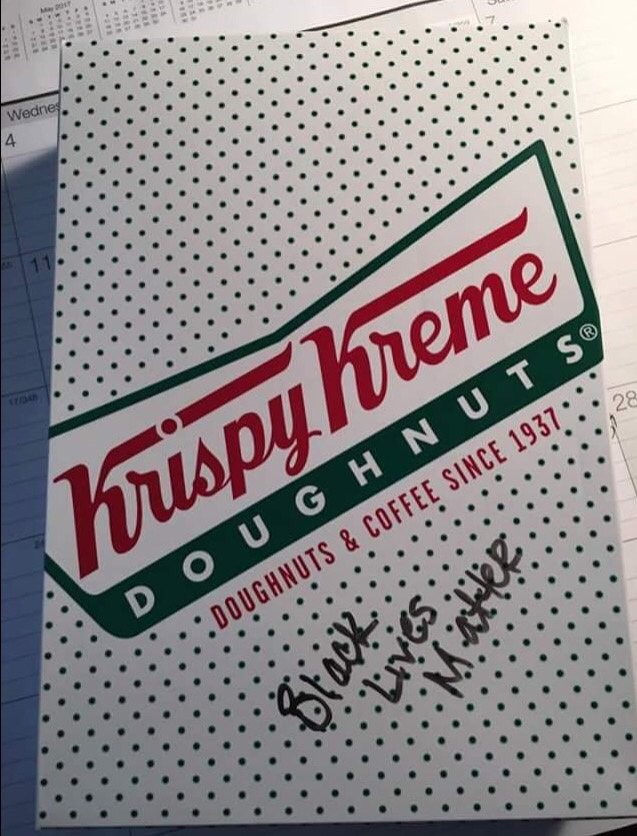
https://pjmedia.com/lifestyle/2017/...-doughnuts-gets-a-side-of-black-lives-matter/

C1-4MypWIAAFJXd.jpg


"Last week, a policeman ordered a box of doughnuts from Krispy Kreme in a suburb of Atlanta, Georgia. Upon receiving the box, he saw an unpleasant message scribbled in permanent marker: "Black Lives Matter."

Many Americans might not think twice about such a message; police rightly suspect it may be akin to a threat.

***

"The Blue Lives Matter blog found this apology "disgraceful." The blog also explained why the "Black Lives Matter" message would be considered so offensive: For those who are not aware, this is extremely disrespectful to law enforcement. Ever since Officer Darren Wilson was forced to defend his life by shooting Michael Brown, Black Lives Matter has been spreading misinformation and lies about police which have resulted in the assassinations of police officers.

Indeed, the Black Lives Matter movement has pushed discredited narratives — like the "Hands Up, Don't Shoot!" myth — and denounced certain cases as unjust despite evidence and findings to the contrary."
 
Status
Not open for further replies.

Welcome

Join the Everton conversation today.
Fewer ads, full access, completely free.

🛒 Visit Shop

Support Grand Old Team by checking out our latest Everton gear!
Back
Top