Current Affairs The WOKE

Status
Not open for further replies.
If what you're saying is true, that there are more than 2 genders. Then there must have been more than 2 genders 100 years ago and at any other time in history. Funny how we don't have any record of that. Where were they all hiding?

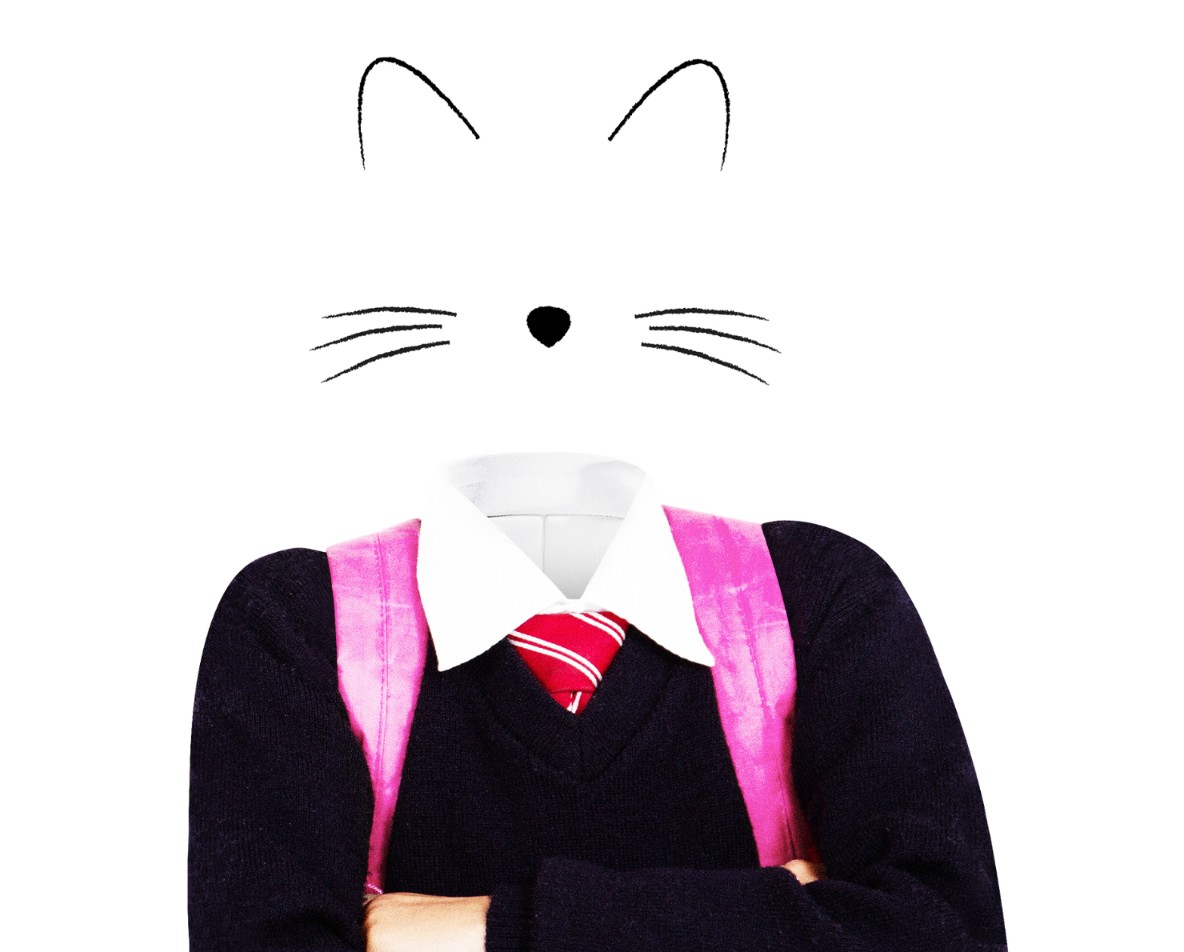
I had quite disruptive classes in school, but I never witnessed any child miaowing in class.

2 genders has worked fine for 2000 years of human civilization and while kids are in the school system they should be protected from the insanity of the outside world. When they leave school they can become weird whatever and that's there choice.
Civilization changes - it progresses. And for 2000 years some of human civilization has tried to prevent that, but always fail in the end.

It's a story as old as time and you're on the wrong side of the arguement, I'm afraid.
 
If what you're saying is true, that there are more than 2 genders. Then there must have been more than 2 genders 100 years ago and at any other time in history. Funny how we don't have any record of that. Where were they all hiding?

I had quite disruptive classes in school, but I never witnessed any child miaowing in class.

2 genders has worked fine for 2000 years of human civilization and while kids are in the school system they should be protected from the insanity of the outside world. When they leave school they can become weird whatever and that's there choice.
Are you one of those people who think kids shouldn't be protected from guns in school? But protected from the knowledge of what actually exists in the world
 

‘They meow rather than answer a question’: The school children now identifying as animals

An extraordinary report from a Sussex school has shed light on the growing trend of pupils insisting on being addressed as animals


1687189877302.jpg


Difficult as it may be to believe, children at a school in East Sussex were reprimanded last week for refusing to accept a classmate’s decision to self-identify as a cat.

The Year 8 pupils were told they would be reported to a senior leader after their teacher said they had “really upset” the fellow pupil by telling them: “You’re a girl.”

The incident at Rye College, first reported by The Daily Telegraph yesterday, was not a one-off. Inquiries by this newspaper have established that other children at other schools are also identifying as animals, and the responses of parents suggest that the schools in question are hopelessly out of their depth on the question of how to handle the pupils’ behaviour.

The Telegraph has discovered that a pupil at a secondary school in the South West is insisting on being addressed as a dinosaur. At another secondary school in England, a pupil insists on identifying as a horse. Another wears a cape and wants to be acknowledged as a moon.

Stories about children self-identifying as animals – sometimes referred to as “furries” – have been circulating for some time. Some of them, such as tales of schools providing litter trays to cater for children identifying as cats, have turned out to be hoaxes, which has made it all too easy to assume that the problem is either a myth or is wildly exaggerated.

‘One student wears a cape and wants to be acknowledged as a moon’

But it is not difficult to find genuine examples of children in UK schools insisting on being addressed as animals, raising two important questions: why is it happening, and how should teachers respond?

Perhaps tellingly, the incident at Rye College – a Church of England school – happened at the end of a class on “life education” in which children were told by their teacher that there were lots of genders, including “agender – people who don’t believe that they have a gender at all”.

An argument ensued in which two pupils disagreed with the teacher, saying there was no such thing as agender, because “if you have a vagina, you’re a girl and if you have a penis, you’re a boy – that’s it”.

When the pupils told their classmate: “How can you identify as a cat when you’re a girl?” the teacher reprimanded them for “questioning [the child’s] identity”.

In this instance, the teacher in charge of the class appears to have bracketed a child’s desire to be treated as a cat with other children’s desire to be treated as another gender, or genderless.

The school, which does not dispute that the incident happened, said it was committed to inclusive education, but would be “reviewing our processes to ensure such events do not take place in the future”.

The school, then, seems to have accepted that the teacher in question was wrong, but it is hardly surprising if teachers find themselves struggling to make sense of the fast-paced societal changes in which pupils can not only decide to change their preferred pronouns overnight but also their preferred species.

Schools have established protocols when it comes to transgender pupils, but the issue of “furries” is more complex.

Is it simply a spillover from early childhood imaginative play, or the growing phenomenon of cosplay – in which participants dress up as superheroes, aliens, animals or whatever else they choose – being brought into the classroom, where children should be politely told to leave their fantasies at the gates?

Is it a mental health issue, used as a coping mechanism by children who have autism or other difficulties, and who should be treated sympathetically in the same way as other pupils with special needs?

Or does it conceal something much darker going on in the child’s life?

Tracy Shaw, of the grassroots Safe Schools Alliance, said children coming to school and insisting on being addressed as an animal should sound loud alarm bells, and teachers already have all the tools they need to deal with the issue, if they would stop conflating it with gender diversity.

‘Teachers have a blind spot where anything involving identity comes in’

“Teachers should be dealing with this under existing safeguarding frameworks,” she says. “If a child is coming to school identifying as a cat or a horse, that should immediately raise red flags.

“The teacher should be asking themselves, what are these children looking at online? What forums are they on? What is going on in the home? What is happening in that child’s life and who else is involved?

“The problem is that teachers have a blind spot where anything involving identity comes in, because they are frightened of doing the wrong thing. They think they are being kind by affirming these behaviours, but they are not being kind, because they are likely to be missing all sorts of things that are going on in that child’s life.”

The teachers are also letting down other pupils whose education is being disrupted by the affirming of children with abnormal behaviour.

One pupil at a state secondary school in Wales told The Telegraph of a fellow pupil who “feels very discriminated against if you do not refer to them as ‘catself’”. She added: “When they answer questions, they meow rather than answer a question in English. And the teachers are not allowed to get annoyed about this because it’s seen as discriminating.”

The student in question is in Year 11, but began using the pronoun “catself” in Year 9 “when the whole thing with neo pronouns started”, the pupil said.

She described how lessons could be completely derailed if a teacher attempted to get the child to reply to a question in English rather than meowing.

“It’s affecting other people and their education and everybody in their lessons. It’s distracting to sit in a lesson and have someone meow to a teacher rather than answer in English, especially at secondary school age.

“That’s going to take a lot out of a lesson because people are going to spend the entire lesson talking about whoever it is over there meowing to the teacher.

“It’s a big ask to sit there and listen to someone answer like that and not have that be the main talk of the classroom rather than the lesson going on.”

‘They meow rather than answer a question in English. It’s distracting [us] in the lesson’

The pupil blamed social media, saying students were being influenced by accounts run by people who identify as trees and animals. It started “around Covid”, she says.

“When it first started, it didn’t really go out into real life that much. It stayed confined to social media, but then as it got more popular and more people were finding out about it, people then started bringing it into real life situations.”

The Telegraph also spoke to a pupil at a school where one student, who identifies as “moonself”, wears a cloak to school, described by a fellow pupil as “like a Harry Potter wizard cape”.

The child in question did not identify as the Moon, but as a moon, and said they could put curses on people.

But while other pupils would be pulled up for wearing non-uniform items, such as facial piercings or dyed hair, children who identified as cats or moons would be allowed to wear cat ears or cloaks to express their “true self”, breeding resentment among other pupils.

Teachers are not helped by the fact that respected organisations to which they might turn for guidance can themselves be caught up in the confusion between cosplay and self-identity.

The Safer Schools organisation (not to be confused with the Safer Schools Alliance), which claims to be a “multi-award-winning safeguarding ecosystem” has issued guidance to parents and teachers in which it says: “The furry community itself is a complex one, made up of many different identities and definitions of what it means to be a ‘furry’.”

It also advises parents and teachers to “engage in conversation about what it means to be a furry and the benefits of the furry community”.

It hardly constitutes clear instructions on how to react to a child who insists on being recognised as a cat or a dog, and does not mention the fact that children identifying as an animal may be highly vulnerable and in need of help.

If teachers – or parents – hope that the Government will clear up the whole mess when it issues its new guidance on self-identity this week, then they will be sorely disappointed.

The Department for Education said the issue of children identifying as animals will not be addressed in the guidance, with a spokesman saying that the department trusted teachers to apply “common sense” in each individual case.

Unfortunately, as parents up and down the country are finding, the problem with common sense is that it is not so common.

My brain is turning into blancmange just reading this.
 
If what you're saying is true, that there are more than 2 genders. Then there must have been more than 2 genders 100 years ago and at any other time in history. Funny how we don't have any record of that. Where were they all hiding?

I had quite disruptive classes in school, but I never witnessed any child miaowing in class.

2 genders has worked fine for 2000 years of human civilization and while kids are in the school system they should be protected from the insanity of the outside world. When they leave school they can become weird whatever and that's there choice.
That is not what I said at all, stop purposely misqouting what I said so you can create an arguement and a point for you debate against with someone you sad little goblin.

As for the hiding part, history is literally filled with gender lines being blurred for thousands of years wether in art, politics and general culture.

And kids arent protected from the outside world at all in school. Anyone who thinks that is possible or is the role of a school is deluded.

The internet rules the world, teachers and schools should adapt to the times to better provide inforomation on important issues than letting children discover it all online without guidance and end turning into you
 

‘They meow rather than answer a question’: The school children now identifying as animals

An extraordinary report from a Sussex school has shed light on the growing trend of pupils insisting on being addressed as animals


1687189877302.jpg


Difficult as it may be to believe, children at a school in East Sussex were reprimanded last week for refusing to accept a classmate’s decision to self-identify as a cat.

The Year 8 pupils were told they would be reported to a senior leader after their teacher said they had “really upset” the fellow pupil by telling them: “You’re a girl.”

The incident at Rye College, first reported by The Daily Telegraph yesterday, was not a one-off. Inquiries by this newspaper have established that other children at other schools are also identifying as animals, and the responses of parents suggest that the schools in question are hopelessly out of their depth on the question of how to handle the pupils’ behaviour.

The Telegraph has discovered that a pupil at a secondary school in the South West is insisting on being addressed as a dinosaur. At another secondary school in England, a pupil insists on identifying as a horse. Another wears a cape and wants to be acknowledged as a moon.

Stories about children self-identifying as animals – sometimes referred to as “furries” – have been circulating for some time. Some of them, such as tales of schools providing litter trays to cater for children identifying as cats, have turned out to be hoaxes, which has made it all too easy to assume that the problem is either a myth or is wildly exaggerated.

‘One student wears a cape and wants to be acknowledged as a moon’

But it is not difficult to find genuine examples of children in UK schools insisting on being addressed as animals, raising two important questions: why is it happening, and how should teachers respond?

Perhaps tellingly, the incident at Rye College – a Church of England school – happened at the end of a class on “life education” in which children were told by their teacher that there were lots of genders, including “agender – people who don’t believe that they have a gender at all”.

An argument ensued in which two pupils disagreed with the teacher, saying there was no such thing as agender, because “if you have a vagina, you’re a girl and if you have a penis, you’re a boy – that’s it”.

When the pupils told their classmate: “How can you identify as a cat when you’re a girl?” the teacher reprimanded them for “questioning [the child’s] identity”.

In this instance, the teacher in charge of the class appears to have bracketed a child’s desire to be treated as a cat with other children’s desire to be treated as another gender, or genderless.

The school, which does not dispute that the incident happened, said it was committed to inclusive education, but would be “reviewing our processes to ensure such events do not take place in the future”.

The school, then, seems to have accepted that the teacher in question was wrong, but it is hardly surprising if teachers find themselves struggling to make sense of the fast-paced societal changes in which pupils can not only decide to change their preferred pronouns overnight but also their preferred species.

Schools have established protocols when it comes to transgender pupils, but the issue of “furries” is more complex.

Is it simply a spillover from early childhood imaginative play, or the growing phenomenon of cosplay – in which participants dress up as superheroes, aliens, animals or whatever else they choose – being brought into the classroom, where children should be politely told to leave their fantasies at the gates?

Is it a mental health issue, used as a coping mechanism by children who have autism or other difficulties, and who should be treated sympathetically in the same way as other pupils with special needs?

Or does it conceal something much darker going on in the child’s life?

Tracy Shaw, of the grassroots Safe Schools Alliance, said children coming to school and insisting on being addressed as an animal should sound loud alarm bells, and teachers already have all the tools they need to deal with the issue, if they would stop conflating it with gender diversity.

‘Teachers have a blind spot where anything involving identity comes in’

“Teachers should be dealing with this under existing safeguarding frameworks,” she says. “If a child is coming to school identifying as a cat or a horse, that should immediately raise red flags.

“The teacher should be asking themselves, what are these children looking at online? What forums are they on? What is going on in the home? What is happening in that child’s life and who else is involved?

“The problem is that teachers have a blind spot where anything involving identity comes in, because they are frightened of doing the wrong thing. They think they are being kind by affirming these behaviours, but they are not being kind, because they are likely to be missing all sorts of things that are going on in that child’s life.”

The teachers are also letting down other pupils whose education is being disrupted by the affirming of children with abnormal behaviour.

One pupil at a state secondary school in Wales told The Telegraph of a fellow pupil who “feels very discriminated against if you do not refer to them as ‘catself’”. She added: “When they answer questions, they meow rather than answer a question in English. And the teachers are not allowed to get annoyed about this because it’s seen as discriminating.”

The student in question is in Year 11, but began using the pronoun “catself” in Year 9 “when the whole thing with neo pronouns started”, the pupil said.

She described how lessons could be completely derailed if a teacher attempted to get the child to reply to a question in English rather than meowing.

“It’s affecting other people and their education and everybody in their lessons. It’s distracting to sit in a lesson and have someone meow to a teacher rather than answer in English, especially at secondary school age.

“That’s going to take a lot out of a lesson because people are going to spend the entire lesson talking about whoever it is over there meowing to the teacher.

“It’s a big ask to sit there and listen to someone answer like that and not have that be the main talk of the classroom rather than the lesson going on.”

‘They meow rather than answer a question in English. It’s distracting [us] in the lesson’

The pupil blamed social media, saying students were being influenced by accounts run by people who identify as trees and animals. It started “around Covid”, she says.

“When it first started, it didn’t really go out into real life that much. It stayed confined to social media, but then as it got more popular and more people were finding out about it, people then started bringing it into real life situations.”

The Telegraph also spoke to a pupil at a school where one student, who identifies as “moonself”, wears a cloak to school, described by a fellow pupil as “like a Harry Potter wizard cape”.

The child in question did not identify as the Moon, but as a moon, and said they could put curses on people.

But while other pupils would be pulled up for wearing non-uniform items, such as facial piercings or dyed hair, children who identified as cats or moons would be allowed to wear cat ears or cloaks to express their “true self”, breeding resentment among other pupils.

Teachers are not helped by the fact that respected organisations to which they might turn for guidance can themselves be caught up in the confusion between cosplay and self-identity.

The Safer Schools organisation (not to be confused with the Safer Schools Alliance), which claims to be a “multi-award-winning safeguarding ecosystem” has issued guidance to parents and teachers in which it says: “The furry community itself is a complex one, made up of many different identities and definitions of what it means to be a ‘furry’.”

It also advises parents and teachers to “engage in conversation about what it means to be a furry and the benefits of the furry community”.

It hardly constitutes clear instructions on how to react to a child who insists on being recognised as a cat or a dog, and does not mention the fact that children identifying as an animal may be highly vulnerable and in need of help.

If teachers – or parents – hope that the Government will clear up the whole mess when it issues its new guidance on self-identity this week, then they will be sorely disappointed.

The Department for Education said the issue of children identifying as animals will not be addressed in the guidance, with a spokesman saying that the department trusted teachers to apply “common sense” in each individual case.

Unfortunately, as parents up and down the country are finding, the problem with common sense is that it is not so common.
Excellent reading this TL. Thanks for bringing to our attention. Some of the clique on here might doubt your findings as they say you’re not allowed within 500 metres of a classroom. Not me though. You can teach me all day 😘
 
If what you're saying is true, that there are more than 2 genders. Then there must have been more than 2 genders 100 years ago and at any other time in history. Funny how we don't have any record of that. Where were they all hiding?

I had quite disruptive classes in school, but I never witnessed any child miaowing in class.

2 genders has worked fine for 2000 years of human civilization and while kids are in the school system they should be protected from the insanity of the outside world. When they leave school they can become weird whatever and that's there choice.
erm, they were hiding, from bigots like you.

Now,people like me have allowed them space to exist and yet bigots like you continue to oppress them. Bravo!
 
If what you're saying is true, that there are more than 2 genders. Then there must have been more than 2 genders 100 years ago and at any other time in history. Funny how we don't have any record of that. Where were they all hiding?

I had quite disruptive classes in school, but I never witnessed any child miaowing in class.

2 genders has worked fine for 2000 years of human civilization and while kids are in the school system they should be protected from the insanity of the outside world. When they leave school they can become weird whatever and that's there choice.
Not a history scholar are you?
 

‘They meow rather than answer a question’: The school children now identifying as animals

An extraordinary report from a Sussex school has shed light on the growing trend of pupils insisting on being addressed as animals


1687189877302.jpg


Difficult as it may be to believe, children at a school in East Sussex were reprimanded last week for refusing to accept a classmate’s decision to self-identify as a cat.

The Year 8 pupils were told they would be reported to a senior leader after their teacher said they had “really upset” the fellow pupil by telling them: “You’re a girl.”

The incident at Rye College, first reported by The Daily Telegraph yesterday, was not a one-off. Inquiries by this newspaper have established that other children at other schools are also identifying as animals, and the responses of parents suggest that the schools in question are hopelessly out of their depth on the question of how to handle the pupils’ behaviour.

The Telegraph has discovered that a pupil at a secondary school in the South West is insisting on being addressed as a dinosaur. At another secondary school in England, a pupil insists on identifying as a horse. Another wears a cape and wants to be acknowledged as a moon.

Stories about children self-identifying as animals – sometimes referred to as “furries” – have been circulating for some time. Some of them, such as tales of schools providing litter trays to cater for children identifying as cats, have turned out to be hoaxes, which has made it all too easy to assume that the problem is either a myth or is wildly exaggerated.

‘One student wears a cape and wants to be acknowledged as a moon’

But it is not difficult to find genuine examples of children in UK schools insisting on being addressed as animals, raising two important questions: why is it happening, and how should teachers respond?

Perhaps tellingly, the incident at Rye College – a Church of England school – happened at the end of a class on “life education” in which children were told by their teacher that there were lots of genders, including “agender – people who don’t believe that they have a gender at all”.

An argument ensued in which two pupils disagreed with the teacher, saying there was no such thing as agender, because “if you have a vagina, you’re a girl and if you have a penis, you’re a boy – that’s it”.

When the pupils told their classmate: “How can you identify as a cat when you’re a girl?” the teacher reprimanded them for “questioning [the child’s] identity”.

In this instance, the teacher in charge of the class appears to have bracketed a child’s desire to be treated as a cat with other children’s desire to be treated as another gender, or genderless.

The school, which does not dispute that the incident happened, said it was committed to inclusive education, but would be “reviewing our processes to ensure such events do not take place in the future”.

The school, then, seems to have accepted that the teacher in question was wrong, but it is hardly surprising if teachers find themselves struggling to make sense of the fast-paced societal changes in which pupils can not only decide to change their preferred pronouns overnight but also their preferred species.

Schools have established protocols when it comes to transgender pupils, but the issue of “furries” is more complex.

Is it simply a spillover from early childhood imaginative play, or the growing phenomenon of cosplay – in which participants dress up as superheroes, aliens, animals or whatever else they choose – being brought into the classroom, where children should be politely told to leave their fantasies at the gates?

Is it a mental health issue, used as a coping mechanism by children who have autism or other difficulties, and who should be treated sympathetically in the same way as other pupils with special needs?

Or does it conceal something much darker going on in the child’s life?

Tracy Shaw, of the grassroots Safe Schools Alliance, said children coming to school and insisting on being addressed as an animal should sound loud alarm bells, and teachers already have all the tools they need to deal with the issue, if they would stop conflating it with gender diversity.

‘Teachers have a blind spot where anything involving identity comes in’

“Teachers should be dealing with this under existing safeguarding frameworks,” she says. “If a child is coming to school identifying as a cat or a horse, that should immediately raise red flags.

“The teacher should be asking themselves, what are these children looking at online? What forums are they on? What is going on in the home? What is happening in that child’s life and who else is involved?

“The problem is that teachers have a blind spot where anything involving identity comes in, because they are frightened of doing the wrong thing. They think they are being kind by affirming these behaviours, but they are not being kind, because they are likely to be missing all sorts of things that are going on in that child’s life.”

The teachers are also letting down other pupils whose education is being disrupted by the affirming of children with abnormal behaviour.

One pupil at a state secondary school in Wales told The Telegraph of a fellow pupil who “feels very discriminated against if you do not refer to them as ‘catself’”. She added: “When they answer questions, they meow rather than answer a question in English. And the teachers are not allowed to get annoyed about this because it’s seen as discriminating.”

The student in question is in Year 11, but began using the pronoun “catself” in Year 9 “when the whole thing with neo pronouns started”, the pupil said.

She described how lessons could be completely derailed if a teacher attempted to get the child to reply to a question in English rather than meowing.

“It’s affecting other people and their education and everybody in their lessons. It’s distracting to sit in a lesson and have someone meow to a teacher rather than answer in English, especially at secondary school age.

“That’s going to take a lot out of a lesson because people are going to spend the entire lesson talking about whoever it is over there meowing to the teacher.

“It’s a big ask to sit there and listen to someone answer like that and not have that be the main talk of the classroom rather than the lesson going on.”

‘They meow rather than answer a question in English. It’s distracting [us] in the lesson’

The pupil blamed social media, saying students were being influenced by accounts run by people who identify as trees and animals. It started “around Covid”, she says.

“When it first started, it didn’t really go out into real life that much. It stayed confined to social media, but then as it got more popular and more people were finding out about it, people then started bringing it into real life situations.”

The Telegraph also spoke to a pupil at a school where one student, who identifies as “moonself”, wears a cloak to school, described by a fellow pupil as “like a Harry Potter wizard cape”.

The child in question did not identify as the Moon, but as a moon, and said they could put curses on people.

But while other pupils would be pulled up for wearing non-uniform items, such as facial piercings or dyed hair, children who identified as cats or moons would be allowed to wear cat ears or cloaks to express their “true self”, breeding resentment among other pupils.

Teachers are not helped by the fact that respected organisations to which they might turn for guidance can themselves be caught up in the confusion between cosplay and self-identity.

The Safer Schools organisation (not to be confused with the Safer Schools Alliance), which claims to be a “multi-award-winning safeguarding ecosystem” has issued guidance to parents and teachers in which it says: “The furry community itself is a complex one, made up of many different identities and definitions of what it means to be a ‘furry’.”

It also advises parents and teachers to “engage in conversation about what it means to be a furry and the benefits of the furry community”.

It hardly constitutes clear instructions on how to react to a child who insists on being recognised as a cat or a dog, and does not mention the fact that children identifying as an animal may be highly vulnerable and in need of help.

If teachers – or parents – hope that the Government will clear up the whole mess when it issues its new guidance on self-identity this week, then they will be sorely disappointed.

The Department for Education said the issue of children identifying as animals will not be addressed in the guidance, with a spokesman saying that the department trusted teachers to apply “common sense” in each individual case.

Unfortunately, as parents up and down the country are finding, the problem with common sense is that it is not so common.
 
If what you're saying is true, that there are more than 2 genders. Then there must have been more than 2 genders 100 years ago and at any other time in history. Funny how we don't have any record of that. Where were they all hiding?

I had quite disruptive classes in school, but I never witnessed any child miaowing in class.

2 genders has worked fine for 2000 years of human civilization and while kids are in the school system they should be protected from the insanity of the outside world. When they leave school they can become weird whatever and that's there choice.

I would heavily assume that there has been more than 2 genders for that long. Just because something doesn't have a name yet does not mean it doesn't exist.

I would be utterly shocked if there were no non-binary people living in roman, medieval or Elizabethan periods of history. Especially Roman, they were mental bastards who loved a bit of everything.

Also, why are you now obsessed with furries, as I believe they are called. I will admit, I find that very strange. Just like this people who get surgery to look like lizards, etc., but just because we find something strange and/or don't understand it does not make it inherently wrong.

So, kids should be protected from the insanity of the world. So you will also agree that there should be massive changes in gun laws to protect them from the insanity of the world, or is teaching them about different cultures, different ways of living, different thought processes and teaching them to love not hate worse than the gun culture insanity?
 
Kids aren't capable of informed consent. We don't need to make any determination of gender or weird identity in a classroom. They have names call them by it.

My problem in this case though is not the students. It is the teachers and the rules. If a stupid system exists, the students are quite entitled to push that system to the extremes of ridiculousness. They aren't to blame.

Incidentally, the students did a good job of critiquing the teacher and gave a fine example to others, particularly some on here, of how to argue with someone you disagree with respectfully. It was the teacher that became emotional and lost perspective calling them despicable and to change schools.

I agree that based on the alleged transcript in the news article that the teacher in this instance seems like a reactionary who did a poor job, but poor teachers are not a new thing and when it comes to any system you take the crunchy with the smooth.

That doesn't answer the question though because I assume you are not against sex education being taught, so how are you thinking about the intersection of sex and gender?
Do you think sex and gender are identical concepts?
If we could rewind the clock 2 billion years and observe the first organisms that evolved to reproduce using sex, did they have gender?
 
Civilization changes - it progresses. And for 2000 years some of human civilization has tried to prevent that, but always fail in the end.

It's a story as old as time and you're on the wrong side of the arguement, I'm afraid.
I don't really care about the bigger discussion here but this comment is a microcosm of the whole lack of debate people have on the subject and it is mainly part of the problem to it all. Not everyone agrees with this and there is no actual science to back the point up other than hand selected science that proves the person's point. Whether or not there is science is a talking point but to this day there isn't irrefutable evidence that it is correct and most of the argument for is based on people's feelings which is by no means a credible standpoint.

So my question to you is why are certain people on the right side of the argument and the majority aren't given that part of the against are biological women who do not feel their biological identity can be so easily adopted by simply announcing it?

If there is a right or wrong answer to this then why is the people making the argument right but those who are already in that 'identity' wrong in saying it? To use a real life example , why is lia Thomas the swimmer right in saying that they are a woman but the other female swimmers wrong in saying Lia isn't?
 
Status
Not open for further replies.

Welcome

Join the Everton conversation today.
Fewer ads, full access, completely free.

🛒 Visit Shop

Support Grand Old Team by checking out our latest Everton gear!
Back
Top