Barnacre All Saints Church
All Saints’ Church is a small, picturesque and much loved early 20th century church, situated in beautiful farming countryside near Garstang, Lancashire.
The church has a very faithful, warm and welcoming congregation, with new people joining the church over time. It has a good village choir which includes 5 younger members. It shares an organist with St. John’s Church, Calder Vale.
Found on Delph Lane, Barnacre-with-Bonds, Lancashire, England, it is an active Anglican parish church in the deanery of Garstang, the archdeaconry of Lancaster, and the diocese of Blackburn. Its benefice is united with those of St Peter, Scorton, and St John the Evangelist, Calder Vale.
The church is built from sandstone rocks and has red tiled roofs. It has a main hall called a nave and a special area for the altar called a chancel. These two parts are under one continuous roof. On the north side, there is a transept. This is a part of the church that sticks out, like the arms of a cross. It holds the organ and a room called the vestry, where priests prepare. On the south side, there is a small chapel. At the west end, there is a tall tower.
The windows on the sides of the church have two or three sections.
The chapel has a round window at its east end. The main east window in the chancel has four sections with beautiful stone tracery. Inside the church, there is an arcade, which is a row of arches, leading to the chapel. In the chancel, there are special seats for the clergy called a sedilia and a basin for washing sacred vessels called a piscina. The font, where baptisms take place, is under the tower. It has a large bowl with buttressed sides.
The colorful stained glass windows in the church were made by a company called Shrigley and Hunt. The church also has a large pipe organ with two keyboards. This organ was made around 1875 and was originally in a place called Barnacre Lodge. The church is recorded in the National Heritage List for England as a designated Grade II listed building.HistoryAll Saints was built between 1905 and 1906, and designed by the Lancaster architects Austin and Paley. It was dedicated on 28 July 1905 by Edmund Knox, Bishop of Manchester, and was originally a chapel of ease to St Thomas, Garstang.
All Saints became a separate parish in its own right in 1911, and the church and churchyard were consecrated on 23 October 1911. In 1936 James Lever Rushton died, and the southeast chapel, designed by Henry Paley, of the same firm of Lancaster architects, was built in his memory.
Paul.




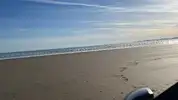 Just got back from swimming in the sea at Black Rock Sands…. Stunning evening but the water could have been a bit warmer



 ), he's just a victim of circumstance.



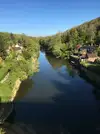
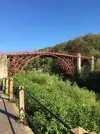


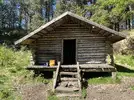
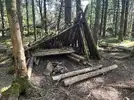
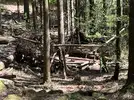 Went for a little wander in the woods today, the bothy is a place I’ve visited before but it looks like someone has been busy in the area.