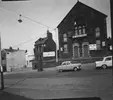
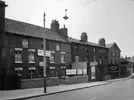
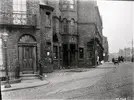
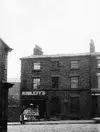
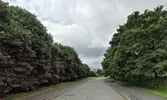
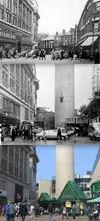
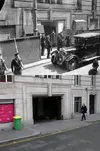
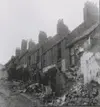
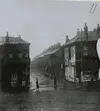
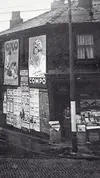
Merseyside is famous for its football history, but this is where it all began on what is now the spectacular modern Everton Park. When I saw this Village Street image, reproduced on the excellent Netherfield Road & District Faceboook platform, it demanded I offer some more details. The same picture, in a smaller format, appears further down this picture reel along with an artist's impression of the site from the late 1800s when it played a remarkable part in the birth of big time football on Merseyside, The fact that this is heartland Everton will give you a clue. So let's start with this image of Everton Labour Club with electioneering posters up for local Labour candidate of the day Syd Jacob. Many people will remember the building which was finally demolished in the 1960s. However, it belies the real significance of the property which had previously been a well known local dairy that had emerged from a cow keeper's house, supplying fresh milk to the Everton locals for many decades. Before that, this was the Queen's Head pub where the committee of the fledgling St Domingo's Methodist chapel football team, playing at that time in the fairly new Stanley Park, had begun to hold their meetings. At one such gathering, in November 1879, their main agenda item was a potential new name with the team now attracting significant interest in the new game of Association football. After a few hours (and almost certainly a few pints) that night they emerged to proudly declare that St Domingo's would now play under the wider district name of Everton FC. The rest, as they say, is football history. Not only was the Queens Head EFCs first headquarters, it provided the club's first secretary in the shape of John W. Clarke,son of Queens Head landlord John Clarke. On July 18, 2015, I arranged for an archaeological dig to take place at this site to unearth the foundations of the Queens Head Hotel. I got the support of Dr Mark Adams, lead archaeologist from the Museum of Liverpool, along with his colleague Dr Liz Stewart, In the presence of the Everton FC Heritage Society and members of the Friends of Everton Park, this successful dig was a complete success. Victorian bricks and distinctive pub wall tiles began to emerge as did many oyster shells, oysters being a cheap and very popular local pub delicacy in those days. Most significantly, we discovered a Victorian stoneware inkwell. I mused with Dr Adams if this might have been used to sign off the name change from St Domingo's to Everton FC. We could never prove it, of course, but it demonstrated that even archaeologists who deal only in facts can sometimes share a romantic vision. This was all part a research project I undertook for my 2016 book 'Born Not Manufactured'. Along with thousands of other kids, I played my own early football on the steep streets of Everton. I would later progress to become the Liverpool Echo's Everton & Liverpool football correspondent and later sports editor, covering local and national football events, but nothing would give me as much pride and pleasure as discovering where it all began for our massive football city, the site of the Queens Head Hotel . . . Yes, the birthplace of big time football on Merseyside within 30 yards of the tower on Everton FC's badge - Ken Rogers